
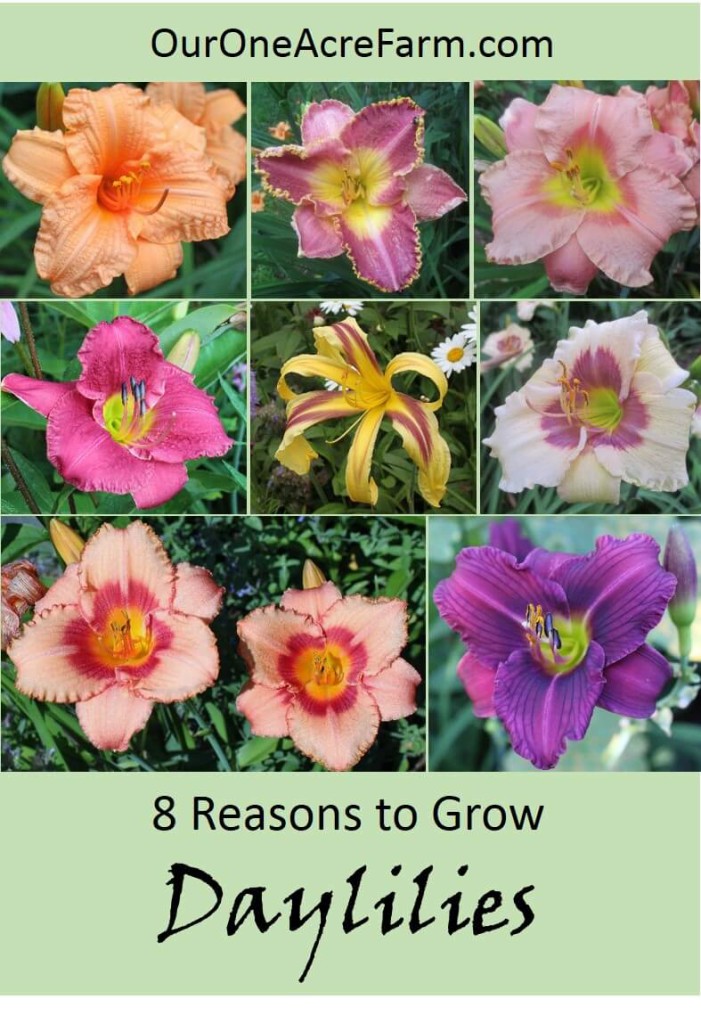
8 Reasons to Grow Daylilies
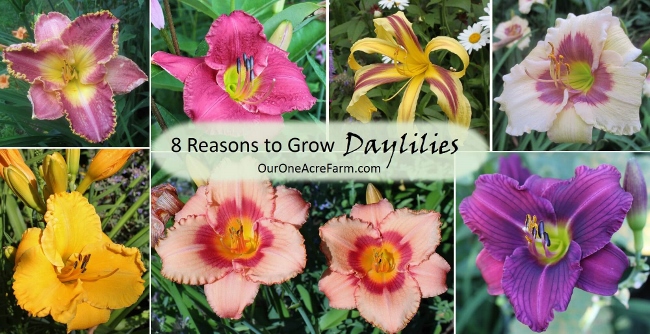
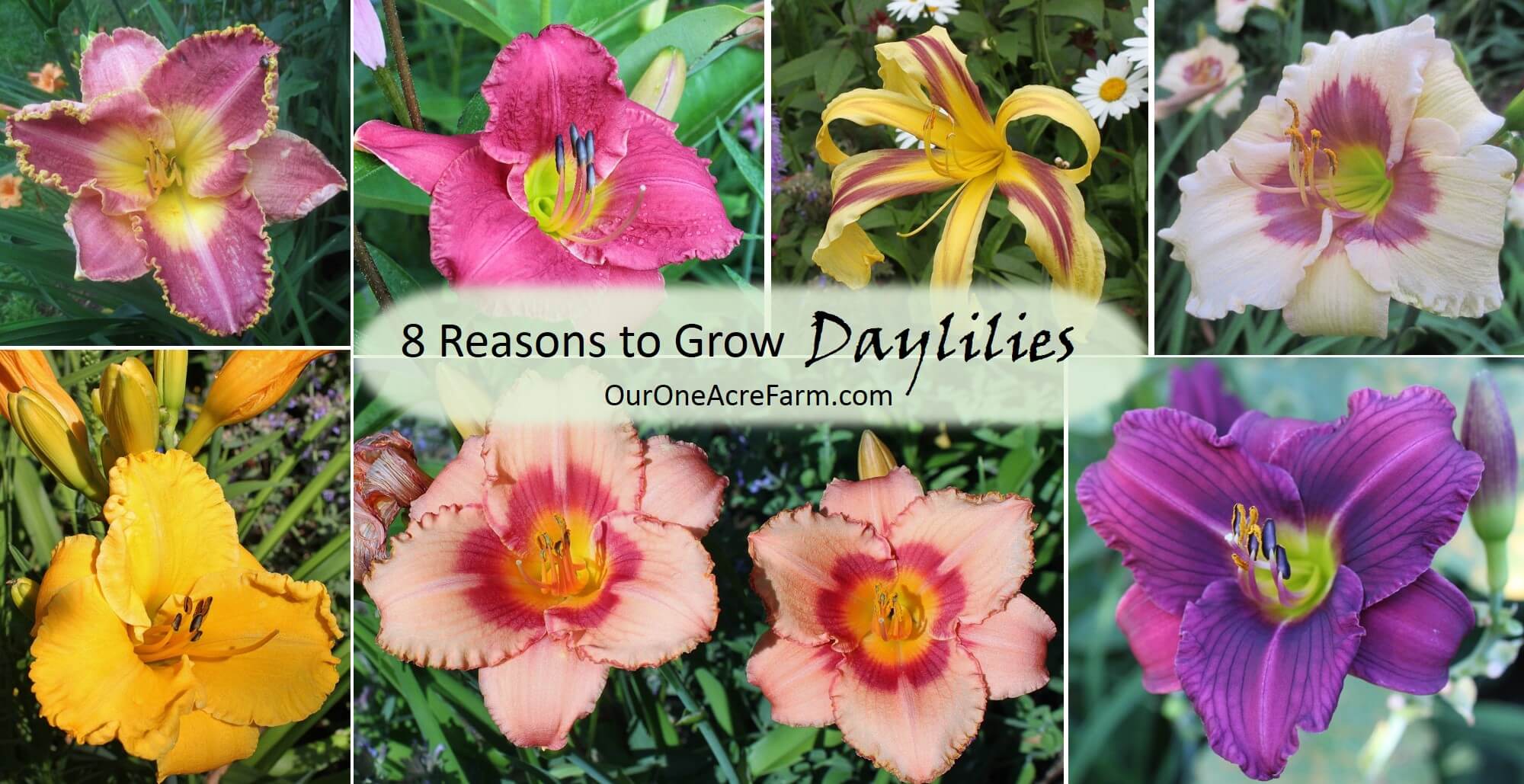 I’ve had a passion for daylilies (Hemerocallis) for over 20 years now, ever since the lily leaf beetle reached our garden in eastern Massachusetts, and devastated my true lilies. I decided then that daylily blooms are just as beautiful, and lily leaf beetles and most other pests don’t bother them. So I purchased a few Hemerocallis varieties to fill the ugly void created by the voracious insects, and began dividing and trading daylilies with a friend to expand my collection. I love them most of all for their beauty and vigor, but here are 8 good reasons to grow daylilies in a backyard farm, homestead, or any type of garden.
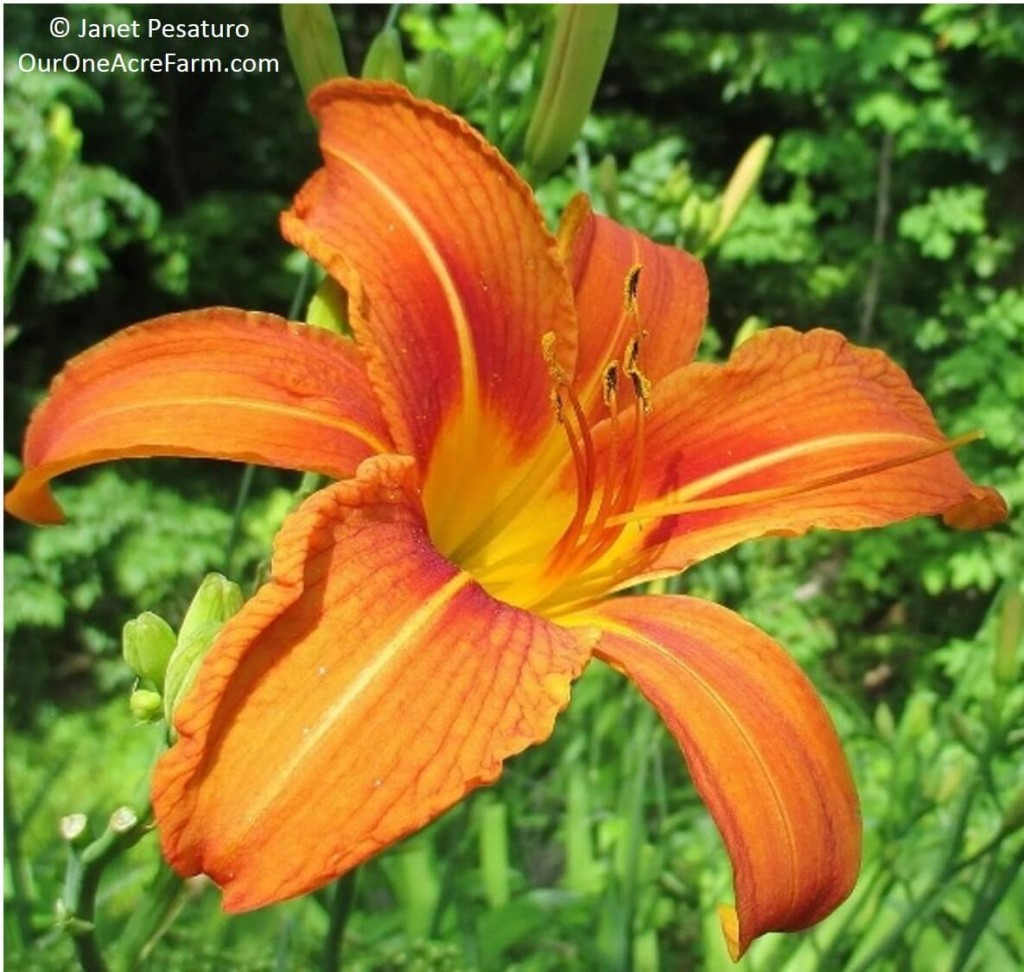
Hemerocallis fulva, the common roadside daylily.
8 Reasons to Grow Daylilies
Purists might scold me for promoting a non-native plant. But I’m no fan of strict of native plant gardening. I might slog through that quagmire in a future post, but for now I’m going to ignore the issue and simply say that I grow both native and non-native plants for food, pleasure, and/or wildlife. However, I avoid planting non-native invasive plants and urge you to think carefully before planting the common roadside daylily, Hemerocallis fulva. That edible, non-native, widespread species is sometimes considered an invasive threat to native plants. If you want it for food, it would be better to forage for it. Most, if not all, of the hybrids are considerably less aggressive, and some are edible, as discussed below.
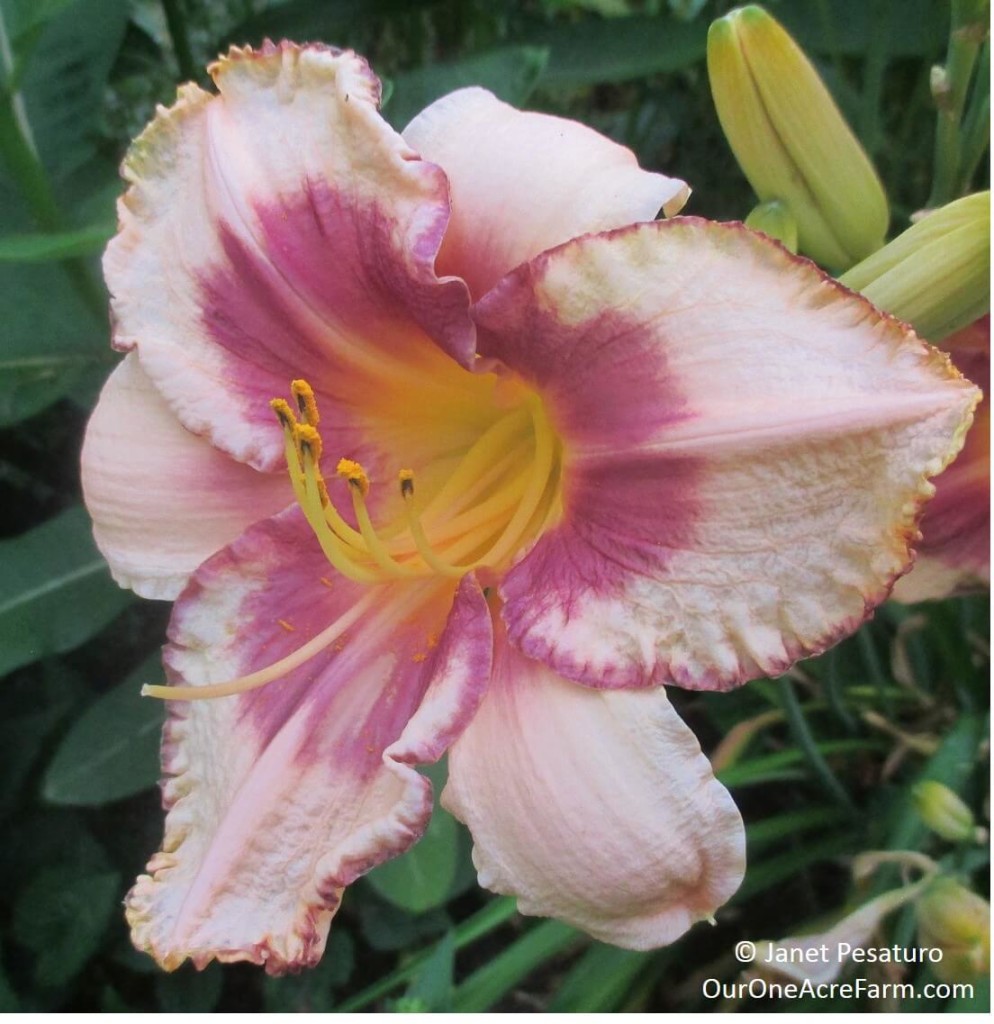
A fancy, modern daylily variety, grown for its ornamental value. The large, bright eye and ruffled edges are fashionable these days among daylily enthusiasts.
1. Ornamental value
Thanks to creative selective breeding, there is a daylily for almost any garden. Some have understated 2 inch flowers, while others boast showy blooms the size of a dinner plate. Some are tall enough for the back of the border, and others are short enough for the front. Flowers come in all colors but true blue and pure white, and range greatly in form. Some have frilly ruffled edges, and others are clean cut. The petals of some are so wide that the flower appears round, while the petals of others are long and narrow, giving the flower a spidery appearance. There are also many double flowered varieties, with full, fluffy blooms. And, while the peak blooming period (here in New England) is July, some varieties bloom in early summer, and others in late summer.
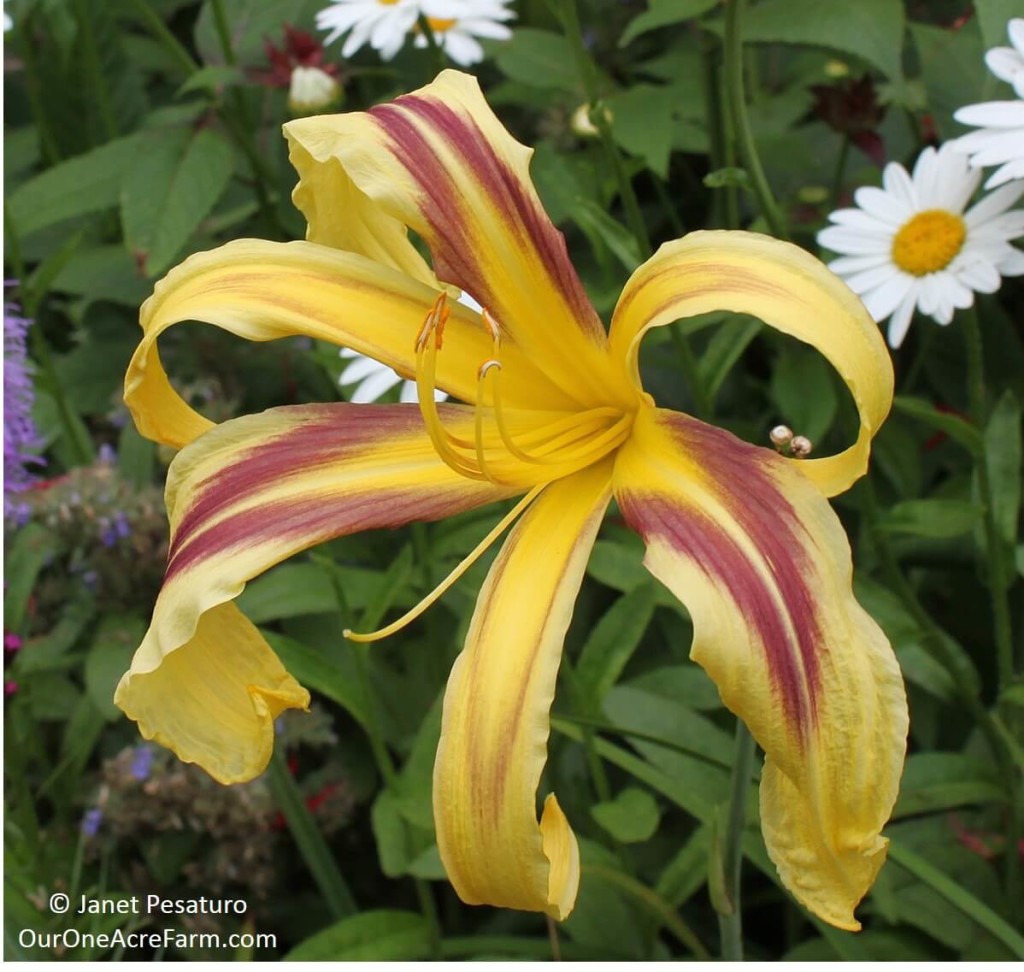
The spider form daylily, as exemplified by this variety, is less popular among collectors, but looks stunning in the garden.
2. Adaptability
Daylilies grow in a wide range of climatic zones, they aren’t fussy about soil pH, and they bloom well in full sun to part shade. This means there’s a good spot for them in all but the shadiest backyards. They are somewhat drought tolerant and laugh at most pests and diseases. All of the approximately 50 varieties I grow thrive in ordinary garden soil and about a half day of sun exposure. Some of the more aggressive perennials, such as Rudbeckia, Echinacea, and Monarda tend to crowd them out, but weeding a ring around each daylily clump once each spring is enough to keep the daylilies happy.
A word of advice regarding adaptability, however: Hybrids which were bred in climatic conditions similar to yours are most likely to thrive in your garden. Any of the common varieties available in nurseries will probably succeed anywhere, as most of them have been tested around the country, but avoid new introductions bred in a climate different from yours. I have a show stopper with gorgeous double, peach blooms, but it was developed in Florida, and still, after 15 years in my garden, it’s a pathetic performer, with just 3 or 4 blooms each summer.
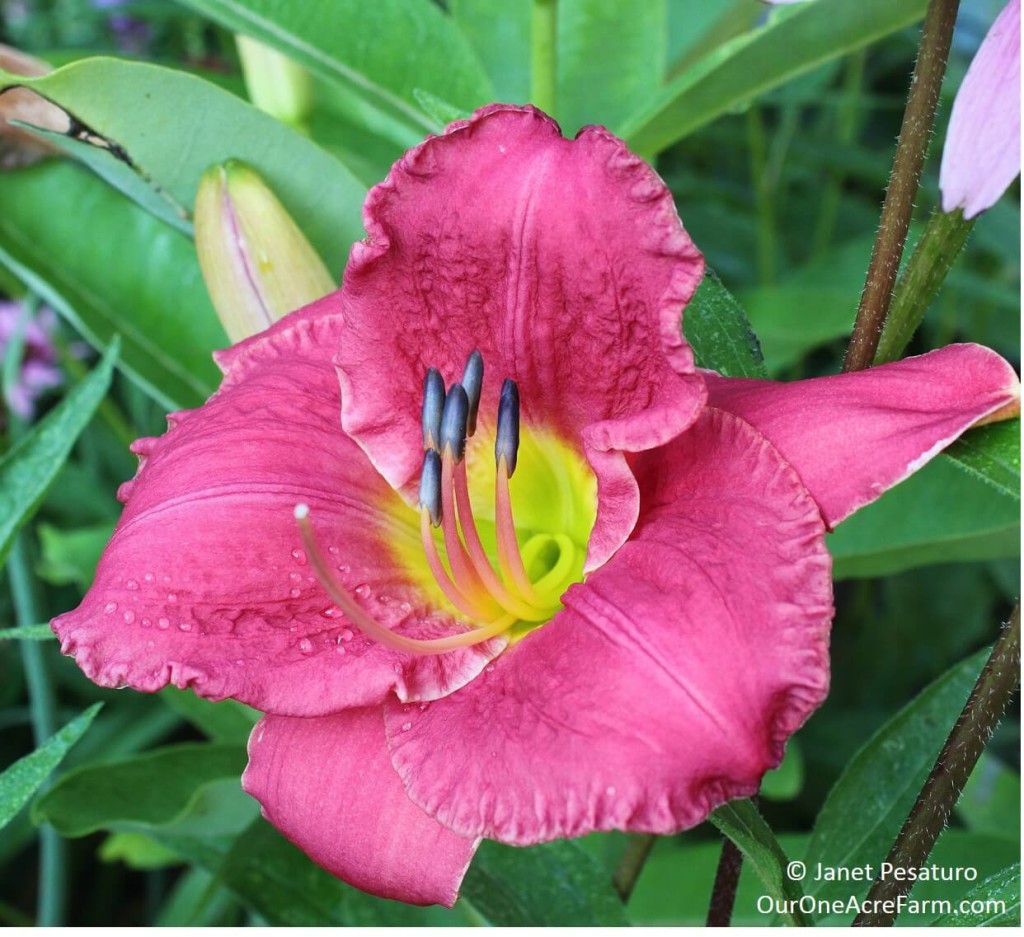
This solid color, older variety is passe, but I love the contrast between the deep pink petals and glowing green throat, and it remains one of my favorites.
3. Edibility
There is a tremendous amount of confusion online about daylilies, and I suggest that you study them carefully and consult an expert forager before eating any of them. Be sure you know what they are and what they aren’t. Know the few species which are well known to be edible, and understand the difference between wild species and hybrids. Here are some useful facts and pointers:
- Daylilies are in the family Hemerocallidaceae and do not grow from bulbs, while lilies are in the family Liliaceae and do grow from bulbs. An error could be lethal: Don’t even think about eating daylilies until you can easily identify them with certainty.
- There are about 20 species of wild daylily, and all are native to Eurasia. A summary of wild daylily species can be found at the site of Olallie Daylily Garden (1).
- Many online sources say that the common, tawny orange roadside daylily (Hemerocallis fulva), is the edible daylily used in Chinese cuisine. However, daylily breeders Lewis and Nancy Hill say, in their book Daylilies: The Perfect Perennial (2), that the species used in Asian cuisine is H. Middendorffii. That species has also escaped cultivation in the US but its yellow-orange flowers look quite different from those of H. fulva).
- Many Americans claim to eat H. fulva, and there are many online recipes using it. Some interesting recipes can be found at the blogs “Eat the Weeds” (3) and “Hunter Angler Gardener Cook” (4). These authors state that the flowers, flower buds, and roots are edible. Young spring shoots and leaves can also be eaten but are hallucinogenic in large quantities.
- Some people are allergic to Hemerocallis fulva, so just because your neighbor can eat it with no untoward events, doesn’t mean you can.
- All hybrid daylilies were bred from wild daylilies. It is sometimes assumed that all daylilies, hybrids included, are edible. In fact, there is a study comparing palatability of 15 hybrids (5), but there is no mention of how they determined edibility.
- It’s hard to evaluate edibility of hybrid daylilies without an actual study, due to the possibility of allergic reactions. Just because one plant makes one person sick, doesn’t mean it would make everyone sick.
Bottom line: Use caution when contemplating consumption of any daylily, including H. fulva and H. middendorffii. Try it first in very small amounts, and stick with roots, flowers, and flower buds, leaving behind the potentially hallucinogenic shoots and leaves. If you choose to eat any other daylily, including any of the tens of thousands of hybrids, use extreme caution. Some are probably edible; others may be toxic.
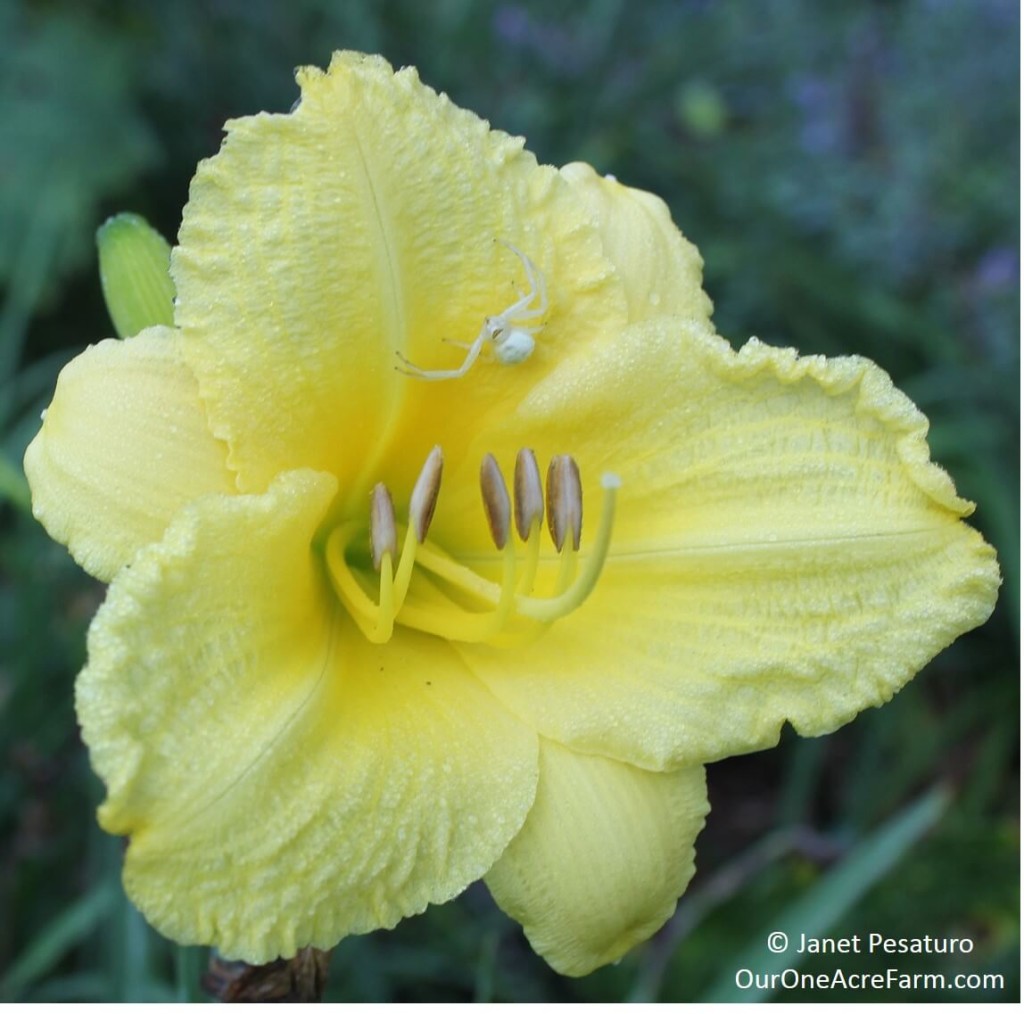
This is “Happy Returns”, a reblooming variety widely used in landscaping. It’s quite vigorous and it’s one of the best bloomers in part shade in my garden, so I would consider it an excellent choice for a food forest…However, I can’t guarantee it’s edible.
4. Permaculture Possibilities
As an edible perennial (with the caveats described above), the daylily is often recommended for permaculture gardens and farms. (Not sure what permaculture is? For a concise introduction without all the politics, read my article Permaculture Principles for Practical Gardeners and Farmers.) There are 3 main uses for daylilies in permaculture:
- In fruit tree guilds. In Gaia’s Garden (6), a popular book on home scale permaculture, author Toby Hemenway uses them in a persimmon fruit tree guild in his Portland, Oregon property. He calls them an “edible daylily”, without indicating a certain species or hybrid.
- In graywater wetlands. Hemenway lists daylilies (this time specifically H. fulva) as an alkaline tolerant plant suitable for a graywater wetland.
- In a food forest, which is basically a larger version of a backyard fruit tree guild. Because daylilies tolerate part shade, they can succeed in the dappled shade of a relatively open tree canopy.
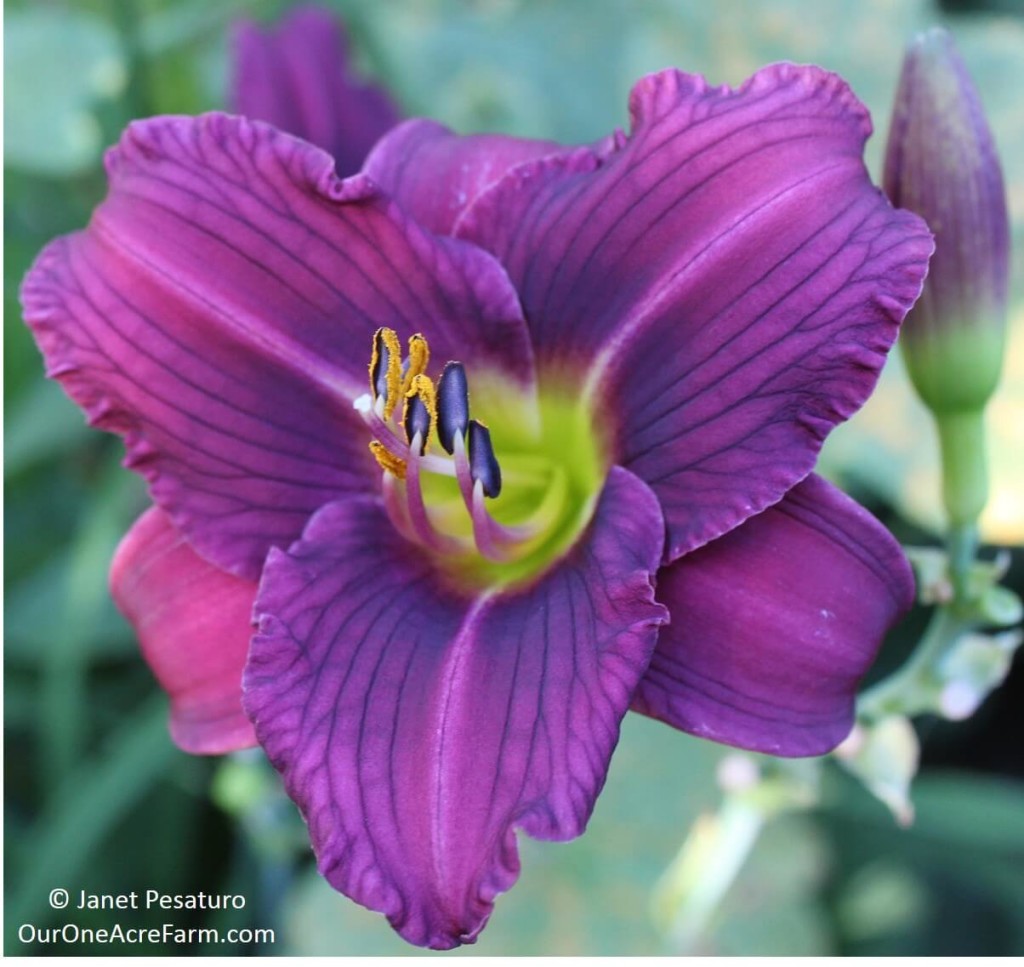
“Little Grapette” is stunning in the garden, but use it as food or medicine at your own risk.
5. Medicinal properties
If you’re into medicinal plants, it could be interesting to work the the daylily (though at your own risk — be careful!). Daylilies do have a rich ethnobotanical history in Asia. The roots of H. fulva have been used in preparations to treat jaundice and bladder infections, and applied topically to breast abscesses (7). A 2013 study of H. fulva indeed found evidence of effectiveness in some types of jaundice and bladder infection. The chemical constituents of roots and flowers have anti-schistosomiasis (schistosomiasis is an infection of urinary or intestinal tract by a Schistosoma worm), anti-tuberculous, antibacterial, anti-tumor, and anti-depressant activity (8). However, I was able to view only the abstract of this study, not the entire report, so I cannot speak to its validity.
I’ve not been able to find any reference to either food or medicinal use of Hemerocallis by Native Americans, who did make use of some early Eurasian botanical imports (9). This could mean that daylilies arrived in the Americas relatively recently. Online sources time the introduction of H. fulva to anywhere from the 1600’s to the 1800’s, but not one (that I could find) cites an authoritative source. Since it seems that Native Americans did not use it, I suspect that H. fulva arrived later than the 1600’s.
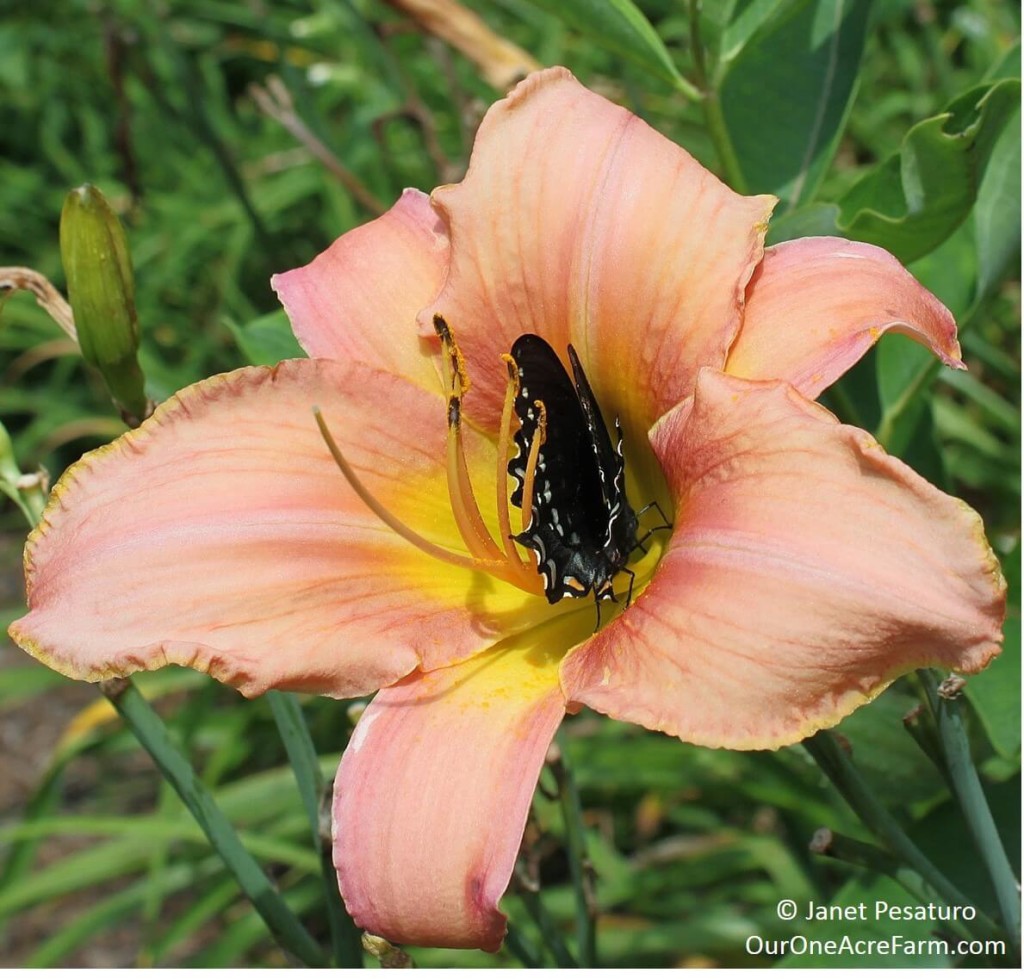
Swallowtail butterflies, in this case a spicebush swallowtail, are attracted to daylilies.
6. Butterfly Appeal
Daylilies are not generally recognized as pollinator attractants, but I have noticed that swallowtail butterflies visit them quite frequently, and daylilies are a suggested plant on the Clemson University Butterfly Gardening fact sheet (10). I’ve not noticed a clear preference for any particular color or variety. However, double flowering varieties are probably not useful, because the extra petal material obstructs access to nectar.
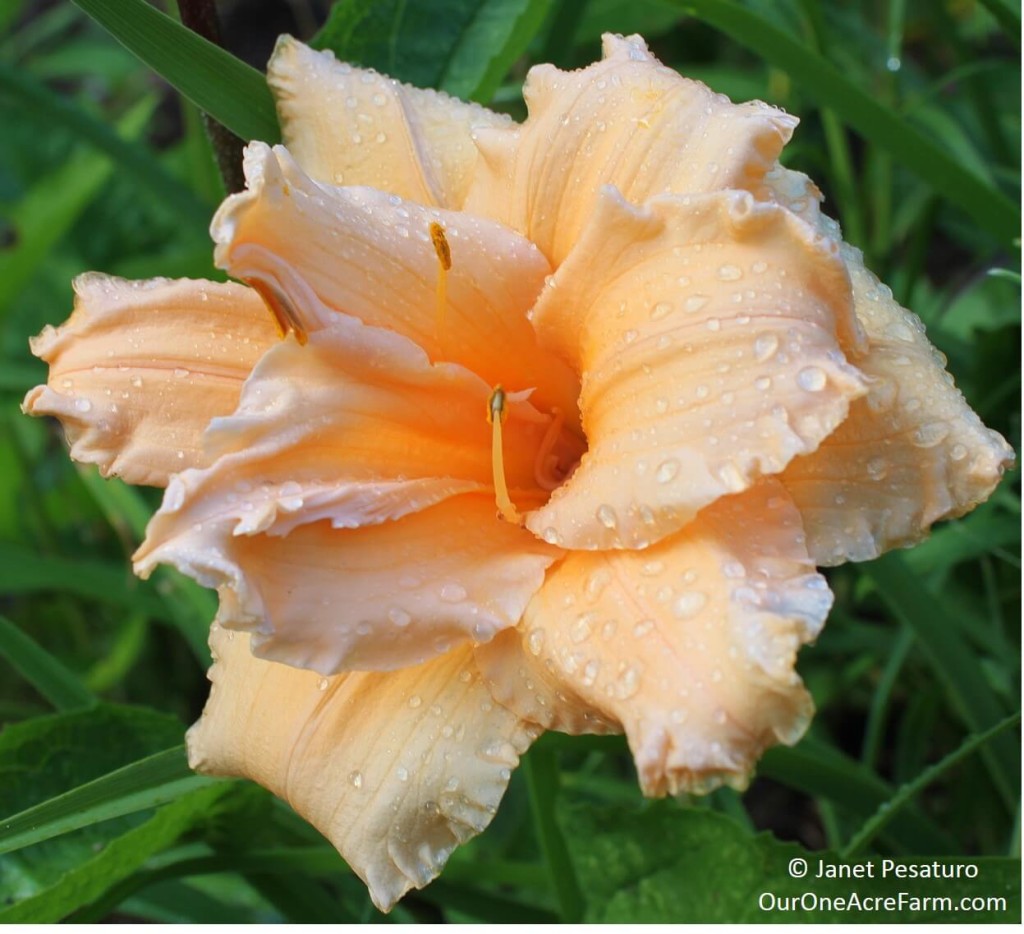
Double flowering daylilies like this peach colored one are not useful to butterflies because the extra petal material makes it hard for them to reach the nectar.
7. Opportunity for trading or selling
Hemerocallis has a passionate following, and here in New England I’ve seen more daylily farms than any other type of flower farm. Collectors trade them and sell them from small backyard patches as well as huge fields. It’s no surprise that Better Homes and Gardens ranked daylilies as one of the 20 best perennials (11).
Beauty isn’t the only reason daylilies are desirable for trading and selling. They’re also easy to divide and can survive bare root for a long time. Dig up a few fans, hand them to your friends or customers, and they’ll be fine, even if they’re not planted till the next day…or the next…or the next. When we were moving to this house, I dug small clumps of daylilies from our old yard, wrapped them in newspaper, and left them for 2 months on a shelf in the garage with no other care before planting them in our new yard. They all survived and bloomed the following year.
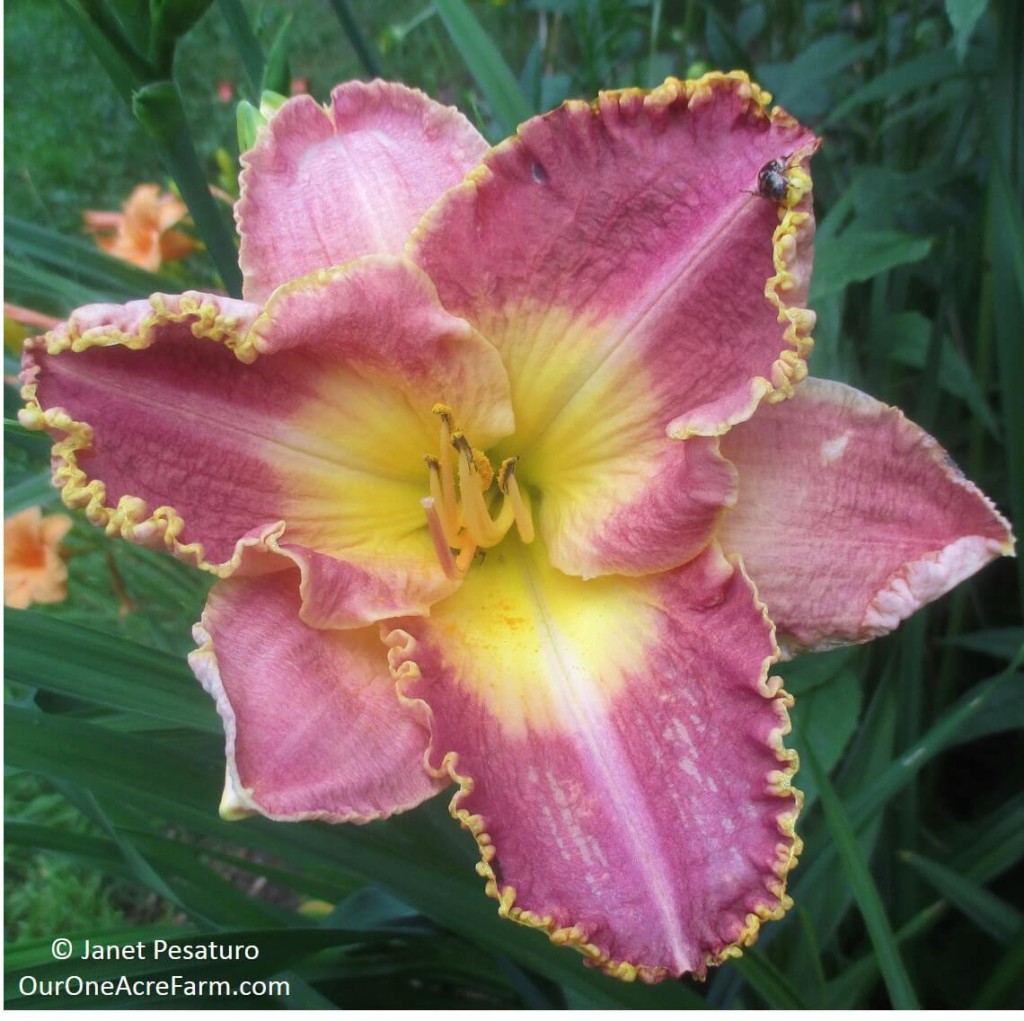
Modern cultivars with prominent ruffled edges and light colored eyes (called “watermarks”) are desirable among daylily fans. A good one to trade or sell!
8. Creative Breeding Possibilities
I’m not sure what is about daylilies that has attracted so many people into recreational and competitive plant breeding, but the quest for the perfect flower continues. True pink, round flower form, spider form, ruffled edges, prominent eyes, and double flowers have all been achieved. But the quest for true white and true blue continues, and one can always improve upon the other colors and forms!
I am told that some successful daylily breeders have nothing more than a modest backyard to work with. For example, Pauline Henry of Siloam Springs, Arkansas, is said to have developed her several hundred cultivars in an average suburban lot. Unfortunately, I can’t find confirmation of this tidbit, which was passed on to me by a local breeder, so take with a grain of salt. While some would consider her varieties to be old fashioned by today’s standards, I think they are still among the most beautiful and grow several of them in my yard.
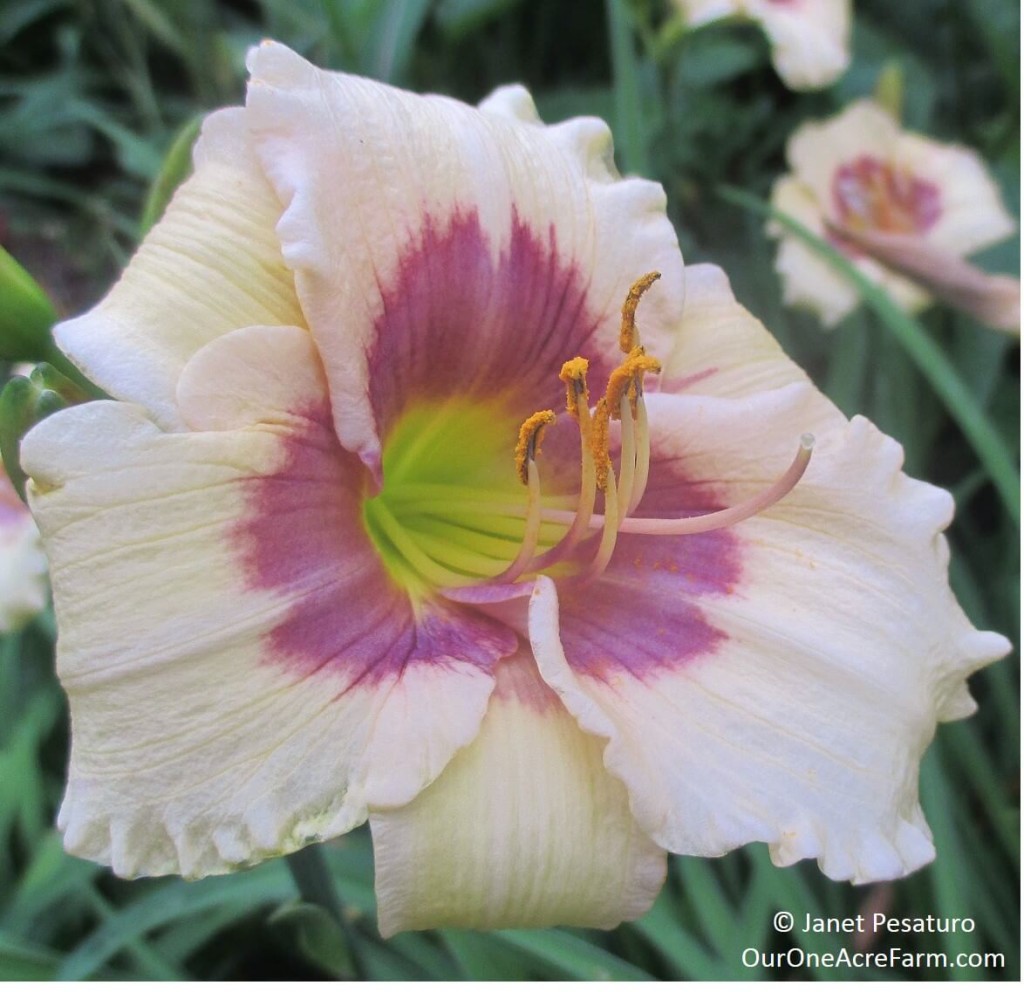
This is one of Pauline Henry’s introductions. The blue in the eye could make this cultivar useful in a breeding program for a true blue daylily,
Sources:
- Hemerocallis Species (from Olallie Daylily Gardens)
- Hill, L. and N. Hill. 1991. Daylilies: The Perfect Perennial. Storey Communications, Inc. Pownal, VT.
- Daylily Dilemma
- Dining on Daylilies
- Pollard, A. N. et al. 2004. Sensory Evaluation of Edible Daylilies. HortScience. 39(4): 783.
- Hemenway, T. 2009. Gaia’s Garden: A guide to Home-Scale Permaculture, 2nd Edition. Chelsea Green Publishing Company, White River Junction, VT.
- The Institute of Chinese Materia Medica. 1989. Medicinal Plants in China: A Selection of 150 Commonly Used Species. World Health Organization.
- Guo, L. et al. Chemical constituents and pharmacological research progress of Hemerocallis fulva roots and flowers. 2013. Chinese Archives of Traditional Medicine.
- Henshaw, R. E. 2011. Environmental History of the Hudson River. State University of New York Press.
- Butterfly Gardening Fact Sheet (U. of Clemson)
- 20 Best Perennials for your Garden
Please pin THIS image!