
Prevent Frostbite of Chicken Combs
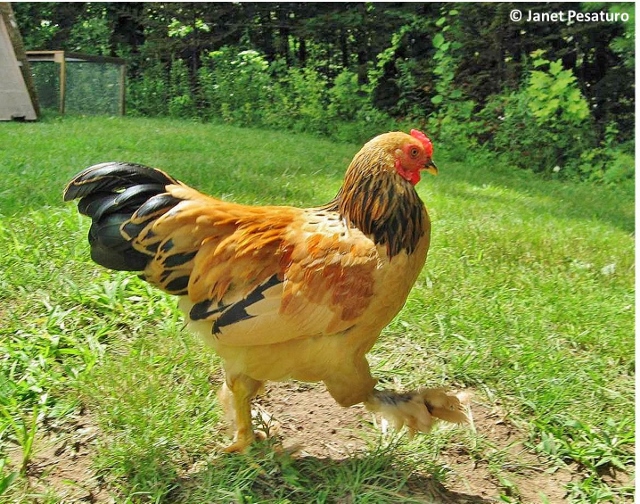
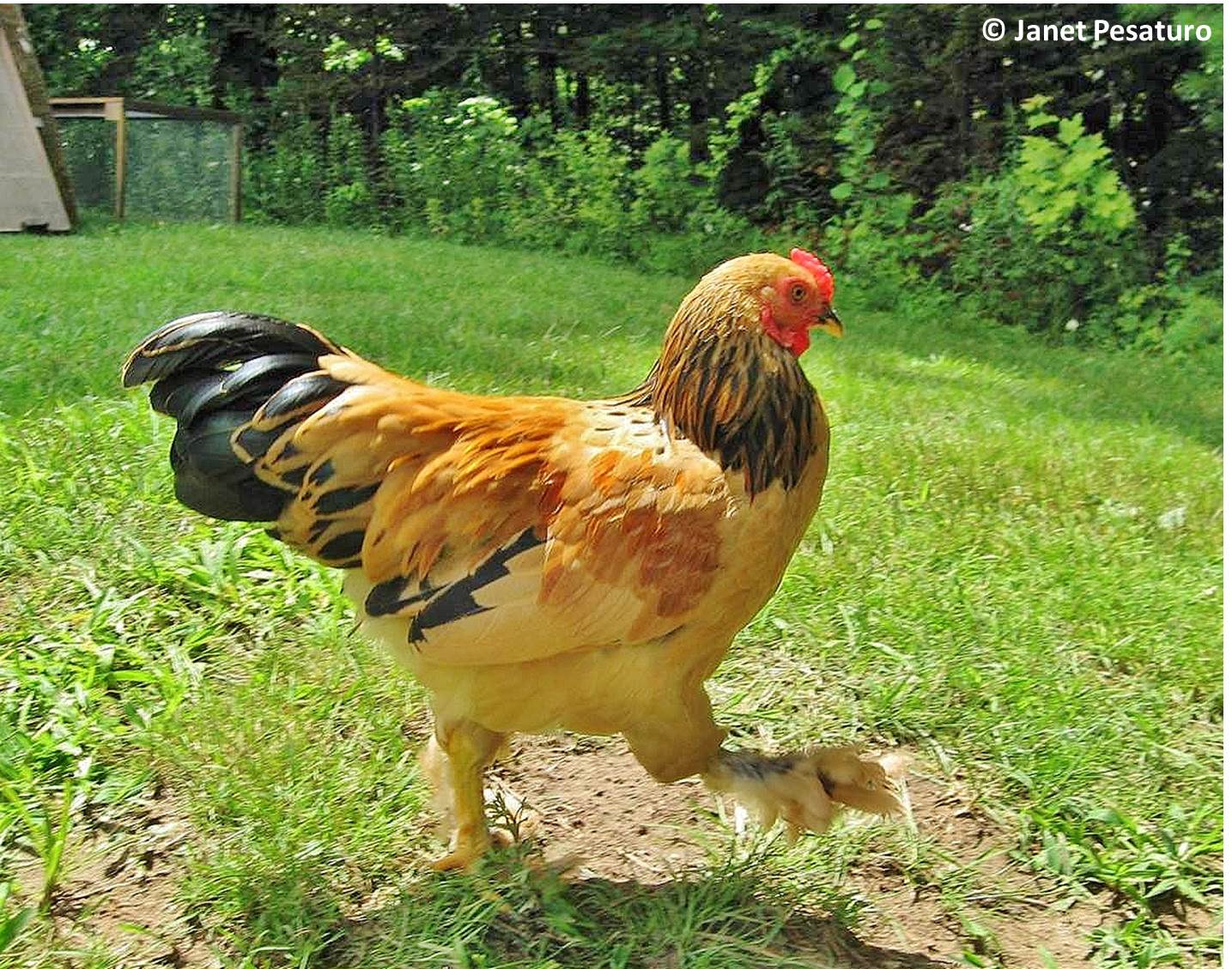
Prevent frostbite of chicken combs by selecting breeds, like this bantam Brahma, with low, thick combs.
There are many articles and internet discussions relating to frostbite of chicken combs, so maybe this is overkill. But I actually think that the single most important factor in preventing this painful condition is often ignored or mentioned only in passing. And that factor is comb type. For some reason it seems to get lost amidst the debates over the importance of proper ventilation and the risks and benefits of topical agents and heat lamps.
Yet, it’s probably intuitive that long and thin, or flat body parts are more vulnerable to frostbite. Most people realize that fingers, toes, noses and earlobes, are more likely to suffer frostbite than, say, the abdomen. The reason is both structural and physiologic. Long and narrow, or very flat, body parts have a higher surface area to volume ratio, making heat retention difficult. This means that big, flat single-blade combs lose heat more quickly, putting them at higher risk of frostbite.
And, if that structural disadvantage is not enough, blood vessels in those appendages constrict when the animal is exposed to extreme cold, in order to maintain core body temperature and avoid deadly hypothermia. With a reduction in the flow of warm blood, extremities and appendages cool even more.
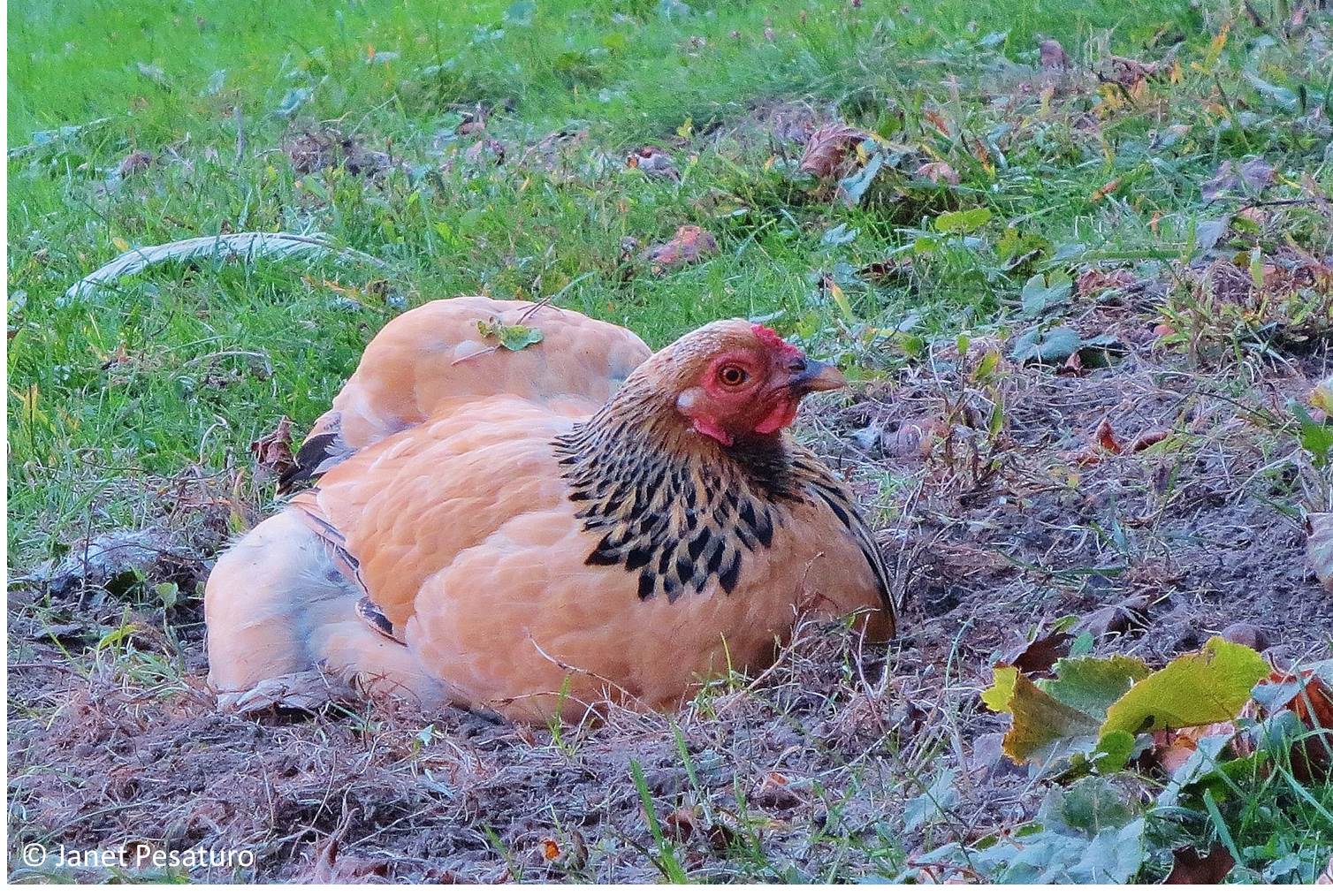
The round body type of this Brahma hen helps her retain heat well. To keep her cool in summer, I provide plenty of shade and clean, cold water.
Allen’s Rule applied to chickens
In fact, a biological principle known as Allen’s Rule, states that warm-blooded creatures which evolved in cold climates have shorter, stockier limbs and appendages than those which evolved in warm climates. That makes a lot of sense, because in a cold climate, an individual with short, stocky limbs has a better chance of living a long and healthy frostbite-free life, and therefore a better chance of passing on its genes. Nature selects for those individuals best adapted to their environment.
But chickens did not evolve in cold climates. Their wild relative, the Jungle fowl, evolved in the tropics, where a large, flat blade-like comb makes a lot of sense, because it facilitates heat loss and helps keep the bird cool in tropical heat. But here in a temperate climate, a blade-like comb is a liability in winter. Small, thick combs, on the other hand, don’t do much to cool the bird in summer, but do retain heat better in winter, and better resist frostbite.
Which breeds are really cold tolerant?
It’s a shame that so many sources of information on poultry neglect comb type when suggesting breeds for cold climates. How often do we read that the Orpington, Plymouth Rock, and Sussex are excellent breeds for cold climates? At this point in time, all are listed as “very cold hardy” on the beloved Henderson’s Chicken Chart, for example. To be sure, their roundish, chunky bodies, make them better able than slender breeds to conserve heat. However, they all have blade-like combs (usually called “single combs”) which are more vulnerable to frostbite than other types.

Easter Eggers like this rooster have small, low, thick combs and tiny wattles, making frostbite unlikely.
Breeds that are even better suited to cold climates are those with round bodies and low, thick combs. The Buckeye and the Chantecler may be the most cold tolerant of all. Brahmas and Wyandottes are also very good choices. Both tend to have somewhat large wattles and earlobes, which are possibly at risk. But these are somewhat protected because chickens tend to sleep with their heads hunkered down, with wattles and earlobes nestled into their feathers. I also find Easter Eggers quite cold tolerant. While their bodies are somewhat slender, their combs, wattles, and earlobes are tiny.
Do hens get frostbite?
It is often said that hens are not at risk of frostbite of the comb because they, unlike roosters, sleep with their heads tucked under the wing. For whatever it’s worth, I have never seen my hens sleep with the comb covered by the wing. They often do tuck their heads, but only the front of the head is covered by the wing, leaving most of the comb exposed. Hens definitely can get frostbite, though roosters are at higher risk. The main reason for that is not their sleeping position, but their larger combs.
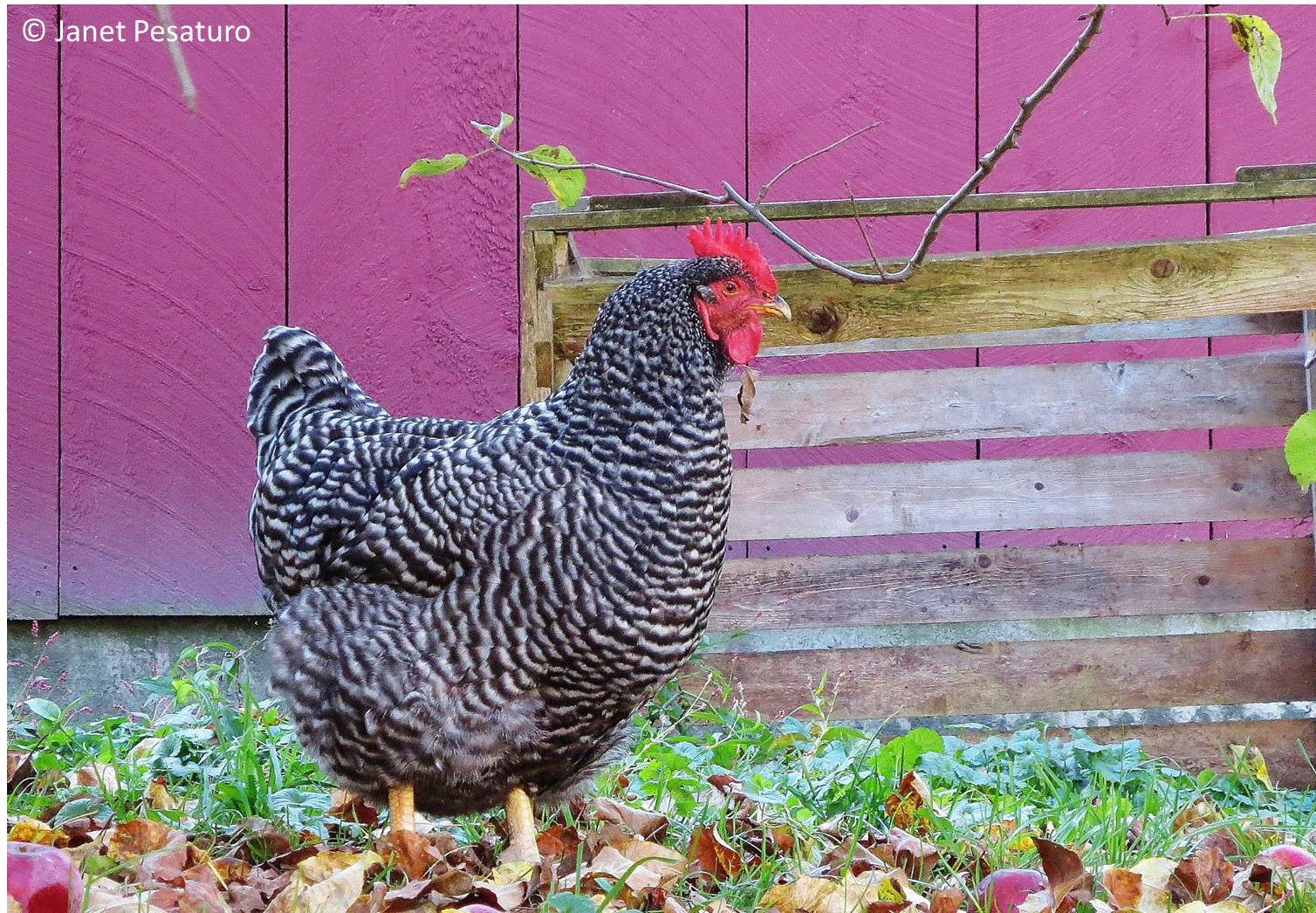
In winter, the points of this hens “single comb” become white and shriveled, and sometimes tiny, black spots appear. These are early signs of frostbite, and probably cause discomfort, if not pain.
Why prevention is important: Pain
I sometimes ponder the question as to why this tradition of minimal consideration for comb type exists. It may be that as food animals, chickens are usually slaughtered at a young age, and their comfort and long term well-being have not been of interest to their keepers for most of their domesticated history. Maybe it’s also hard for people to empathize with an animal that looks so different from humans, and to sympathize with pain in a body part that humans lack entirely.
Which brings us to the importance of frostbite prevention. Most people who experience frostbite say it is painful, or at least uncomfortable. Is frostbite painful for chickens? They can’t tell us one way or the other, but I see no reason to assume it isn’t. I don’t buy the argument that if an animal appears comfortable, it can’t be in pain. It’s not adaptive for many animal species to show when they’re in pain, because doing so attracts the attention of predators, if not the aggression of competitive flock mates. But if you’ve ever seen one hen have her comb pecked or bitten by another, you know the victim doesn’t lay there and wait for more. She withdraws from it, as if from a noxious stimulus, often with a squawk. Apparently, those combs do have sensitive nerve endings.
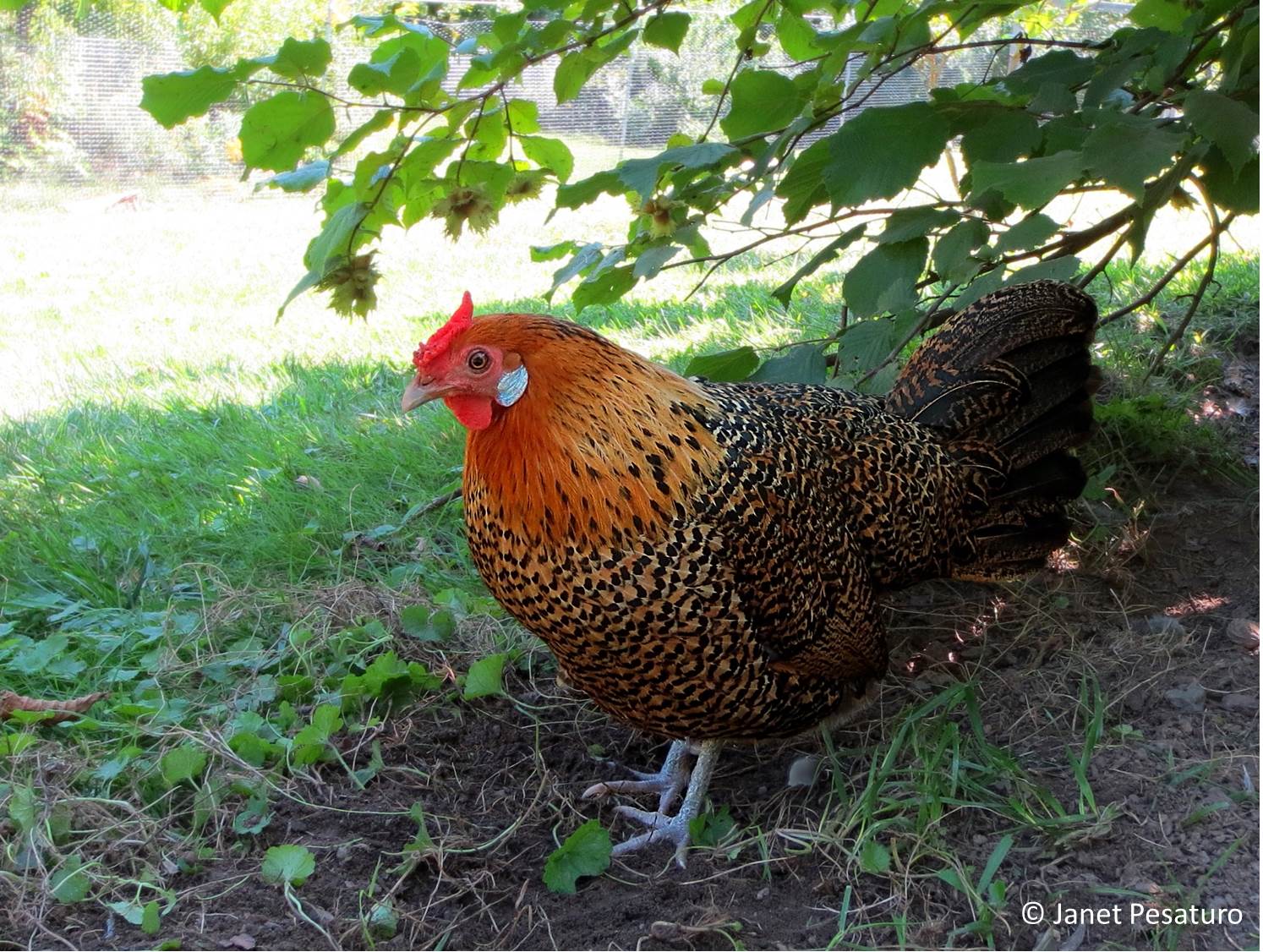
Hamburgs like this one have “rose” combs that taper to a point, which may be touched with frostbite in extreme cold. The breed is also quite slender, so it’s not the best choice for cold winter areas.
Why prevention is important: Infection and other complications
Beyond the pain caused by frostbite, there is the risk of secondary infection of the comb. Infection is probably painful, and possibly lethal. And there may be an additional risk peculiar to birds. In studies of wild birds with frostbite of the foot, it appears that the inflammatory response and blood clotting caused by frostbite affects the entire body, not just the affected foot. Various types of inflammatory and infectious lesions of the heart muscle, valves, and blood vessels, have been seen in wild birds with frostbite of the feet (JFX Wellehan, Frostbite in Birds: Pathophysiology and Treatment. Compendium, 2003).
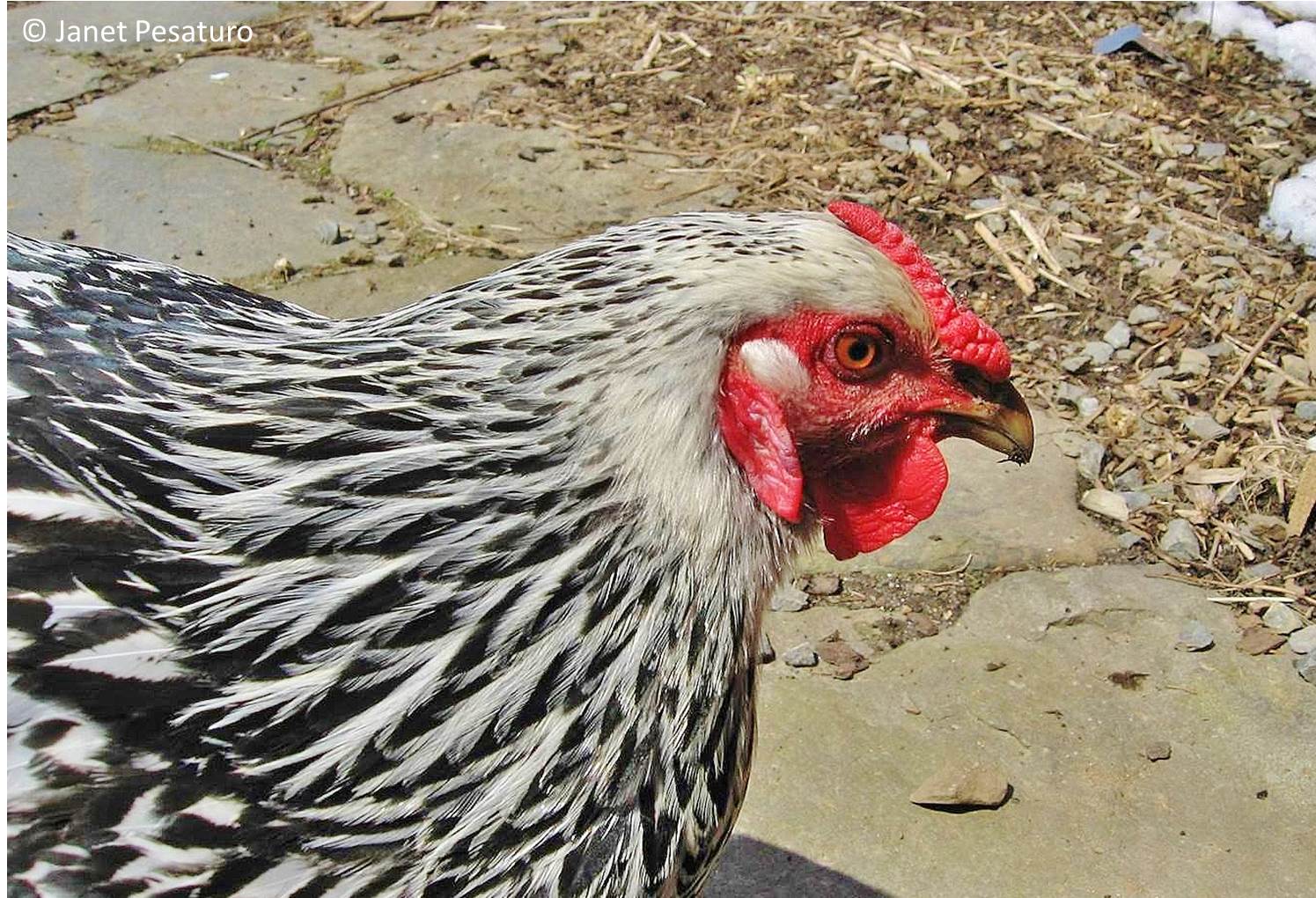
Like Hamburgs, Wyandottes have “rose” combs, but the entire comb sits tight on the head, making it less vulnerable to frostbite.
Choose wisely and sleep easily
While this information won’t help you deal with a chicken currently suffering from frostbite, I hope it inspires thoughtful breed selection in the future. And if you’re just planning your first flock, don’t make the mistake I made. You will sleep more easily if you know your birds can comfortably weather the bitter cold. I still have a few hens with blade type combs in my flock, but I won’t be getting any more of them. There are plenty of beautiful, productive, and interesting breeds with small, thick combs that better weather our New England winters. And it’s much easier to prevent frostbite of chicken combs than to treat it.
Shared on: HomeAcre Hop, From the Farm Blog Hop, Simple Saturdays #7, Simply Natural Saturdays, Simple Life Sunday #2, Old Fashioned Friday#52, Natural Living Monday, Homestead Barn Hop #144, Mostly Homemade Monday #65, Thank Goodness it’s Monday #55, Backyard Farming Connection #65, Tuesdays with a Twist #42, Waste Not, Want Not Wednesday #59, The 104 Homestead Blog Hop, Wildcrafting Wednesday #123, Wordless Wednesday #79