
10 Myths About Wild Predators
Perhaps it’s because my fascination with wildlife pre-dates my backyard farming adventures, that I’m committed to peaceful coexistence with predators. How we think about and deal with predators are charged topics – My message will delight some and enrage others. Please feel free to share your thoughts, but whatever your opinion, please be respectful of the “other side”.
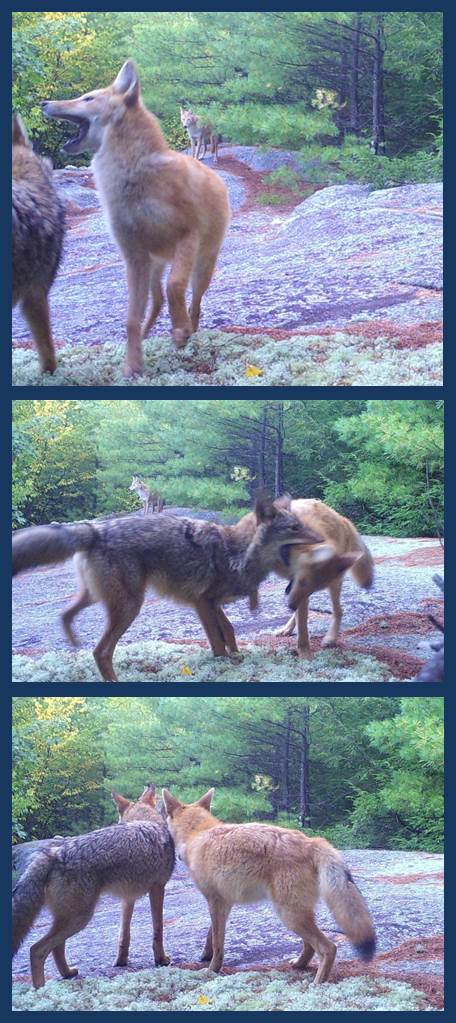
These playful coyote pups and their mom (background) were active both day and night, in a remote area where they were photographed by remote camera, repeatedly over several months.
10 Myths about wild predators (and how we deal with them)
The Nature of Predators
1. Predators are active only at night
The myth that most wild predators are strictly nocturnal is an important one to bust, because your pets and livestock are vulnerable to predation during daylight. Foxes, coyotes, fishers, bobcats, etc., have all been known to take domestic animals during daylight. They are smart and adaptable, and if a good meal is easier to grab during daylight, they’ll hunt during the day.
In my camera trapping endeavors, I have found that animals often considered nocturnal, are not necessarily so. What I have found so far is this:
- Where human density is high, I get few daytime predator photos.
- In wilderness areas with little human activity, many predators are captured on camera quite often during daylight (see photos of coyotes, above).
Perhaps those predators who live in our neighborhoods are more nocturnal just to avoid conflict with us.
2. Their activity patterns and the signs they leave are always the same
Again, wild predators are adaptable and their behaviors vary with the situation. That’s important to realize when you are trying to determine what just who snatched your chicken. Predators do tend have certain characteristic hunting, killing, feeding, caching, and marking behaviors. It will be of great benefit to learn about them, if you have livestock, but don’t take them as rigid rules. Many of these behaviors are not fixed. Some species are flexible enough to change their behaviors when doing so will be of benefit.
Here’s an example. Weasels have been known to decimate an entire flock of chickens, presumably with the intention of saving the excess for future meals. Sometimes people assume that if it didn’t kill multiple birds, it couldn’t have been a weasel. But suppose, after killing just one bird, the weasel picks up the scent of an approaching human or other large predator. That little weasel isn’t going to stick around for a face off.
3. Predators can “single-handedly” kill animals many times their own weight
Most solo predators do not typically kill animals much larger than themselves, unless the prey animal is ailing in some way. On the other hand, you might see “deer” listed in studies of stomach contents of small predators, such as fox and fisher. This unfortunately fuels people’s fear (and fear mongering), but those studies reveal only what the predator eats, not what it kills. Many predators are quite happy to scavenge remains of large animals killed by something else (such as a car, or a larger predator). I have numerous photos to prove this. Carrion is an excellent bait for a camera trap.
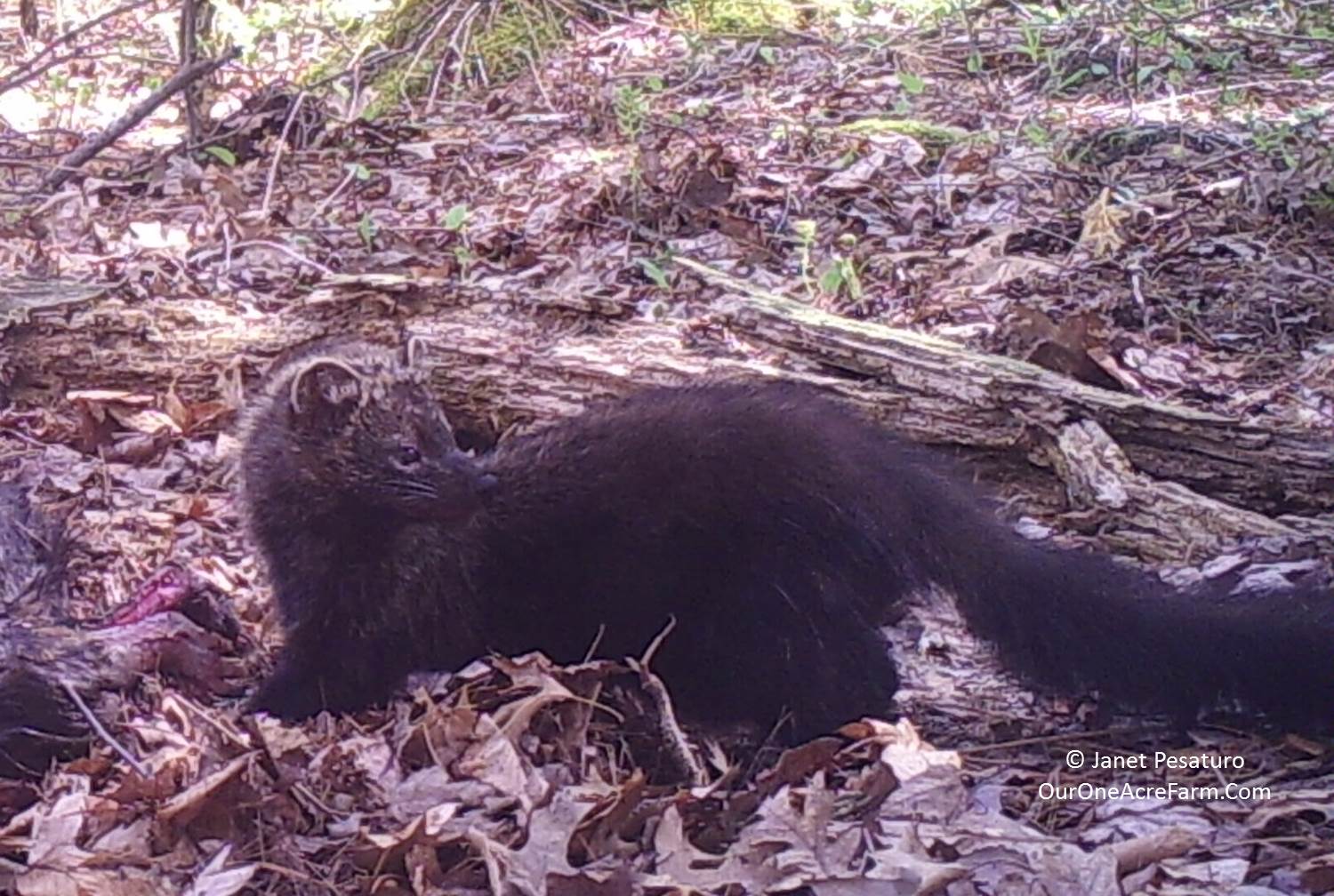
This fisher fed numerous times on the dead beaver used for bait at this camera trap You can see the beaver’s food at the far left.
4. Predators are “invasive” species
I hate the word “invasive” when applied to any form of wildlife. I use it myself because it has become common parlance, but it is so often used pejoratively that it has no place in science, in my opinion. Most narrowly, the word is used to describe non-native species which crowd out native species. But some people use it to label species which are abundant and dominant, whether native or not. And, unfortunately, many others use it to describe common species which they simply don’t like. It’s often used to describe the red fox, the eastern coyote, and predators in general.
- Red fox – This species has been called invasive under the assumption that it is an introduced species native to Europe. However, this 2012 genetic study shows that red foxes in eastern North America actually derive from native red foxes.
- Eastern coyote – The “invasive” label for this animal will probably remain a matter of debate for a very long time. In reality, it is evolving to adapt to the changing environment, which is what evolution is all about. Read more about this here.
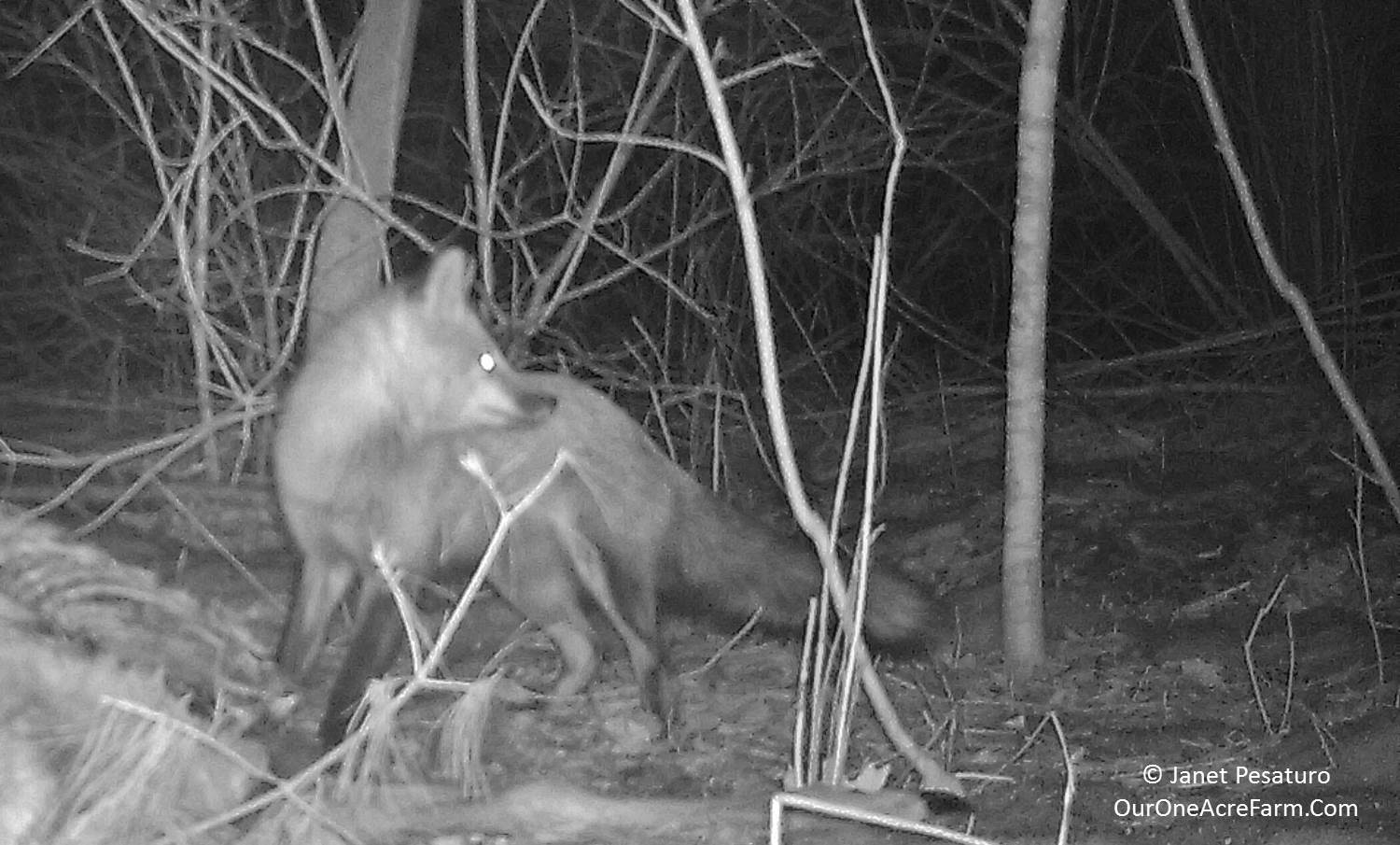
The red fox is often maligned as an invasive species introduced from Europe. However, genetic studies show that they are native.
People and predators
5. Predators should not be allowed to live in our neighborhoods
When we develop woodlands, fill wetlands, or plow river valleys, we are the invaders. The result of our invasion is a dramatically altered landscape, which will benefit some species and displace many others. Predators are merely trying to adapt to these massive alterations.
As much as we dislike the inconveniences associated with predators, they are necessary components of the food web, and often keystone species within their ecosystems. You can’t have food or water without nature, and you can’t have nature without predators. With more and more land lost to development, we must allow nature, predators and all, to thrive within our neighborhoods.
6. Most people accurately identify the species and estimate the weight of wild animals they see.
No way. We tend to over estimate, when we’ve seen something that is potentially dangerous. And for good reason: Exaggeration of danger favors self preservation, while under-estimation increases risk of harm. But on the other hand, exaggerated reports by casual observers lead to all sorts of fears and misconceptions about wildlife.
Occasionally I post wildlife quizzes on my facebook page for fun. One such quiz invited readers to identify the species in the photo you see below. This is a very clear photo showing the distinguishing characteristics, including the short tail, of a bobcat. However, about half the responders said they thought it was a cougar. They argued that the animal is too large, and the tail too long, for a bobcat. Well, it’s really hard to judge the overall size of the animal because there is nothing in the photo for scale. And, while the tail may in fact be a tad longer than that of the average bobcat, it is not all comparable to the very long tail of a cougar.
And that’s with a clear photo to stare at. How much less accurate we are, with a mere glimpse of an animal in the wild! So please don’t believe casual reports of roaming cougars in the New England suburbs and 40 lb fisher “cats” jumping from trees, screaming bloody murder. Respectable books and websites of wildlife organizations are more reliable sources than social media.
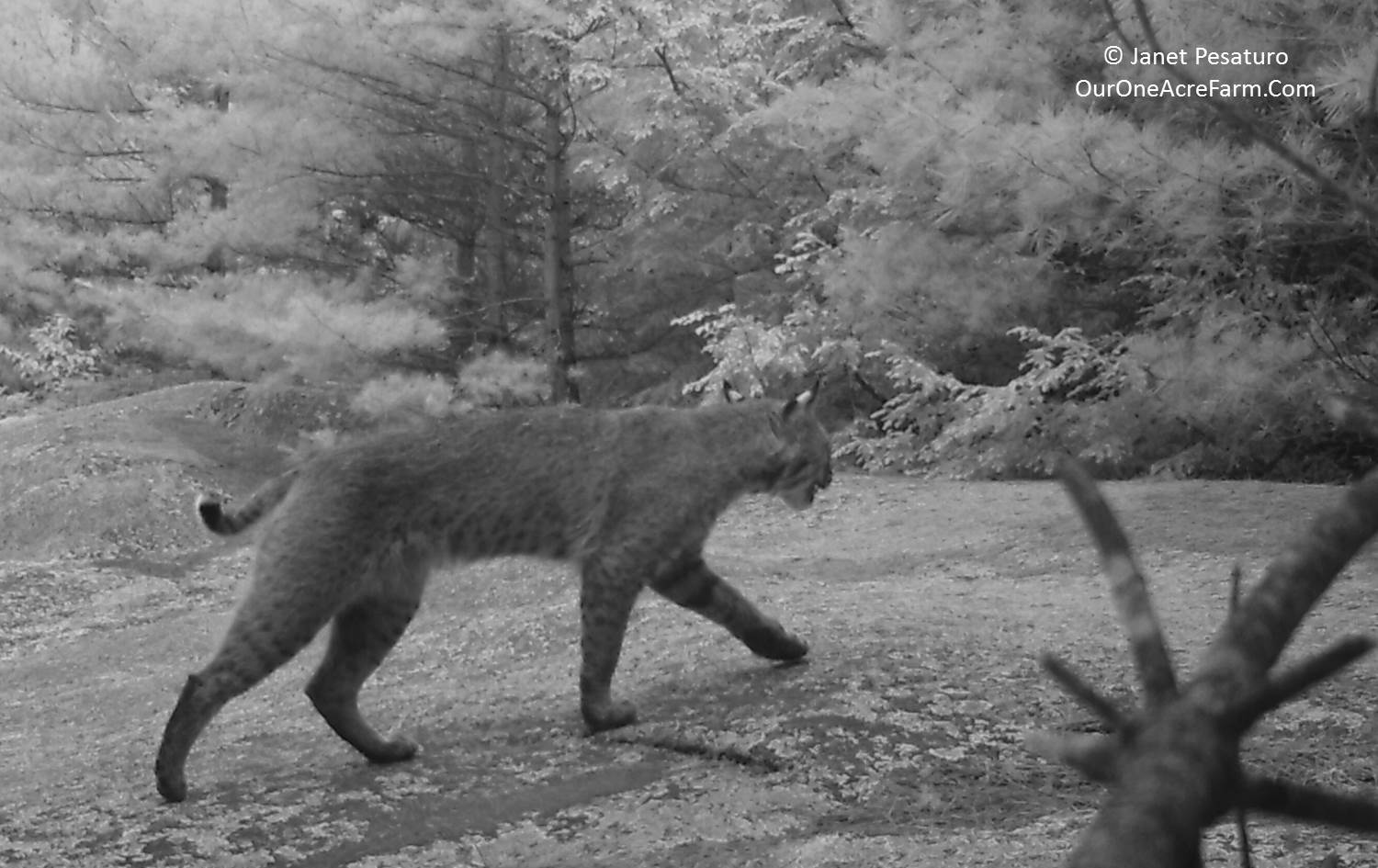
This is most definitely a bobcat, but a surprising number of people mis-identified it as a cougar.
7. Killing predators is the most effective way to protect pets and livestock
In some situations, lethal action might be necessary to protect your animals, but it’s neither efficient nor effective as a primary strategy. Deterrence is generally better because the local wildlife quickly learn that your animals are too hard to get to be worth the trouble. Reliance on lethal control often means that you’ve already suffered loss by the time you take action. Further, relief from attack tends to be temporary, because another member of the same species eventually moves in to occupy the vacancy you have created. Thus, you find yourself in a never ending war with predators.
8. Lethal control of predators is okay because it will not impact predator populations.
Yes and no. A predator by predator discussion of this topic is far beyond the scope of this article. But generally, large and sparsely distributed species can be, and have been, impacted by direct killing at the hands of humans. Populations of small, abundant predators are less likely to be affected. In some cases (such as the western coyote), even concerted efforts to reduce their population have failed.
Nonetheless, it is unwise to use lethal control as a primary strategy in resolving conflicts even with abundant predators. The reason is that our environment is changing so quickly (due climate change, habitat conversion, introduced species, etc.) that it’s hard to predict how they will cope with these pressures. Add to that, the increasing popularity of suburban backyard farms. That’s a great trend in many ways, but not for the local wildlife, if lethal control is the method of choice. Common species today might be rare species tomorrow.
One example of a rather sharp and completely unexpected decline, is that of the house sparrow in Europe. This bird was so abundant that it was labelled a “pest” throughout Europe (as it still is in the US). Scientists are still uncertain of the causes of the decline, but the bird has already been Red Listed in the UK and is Endangered in the Netherlands. I don’t think it’s prudent to foster a mentality that any species is disposable. Once again, tolerance is a virtue in our rapidly changing world.
9. Human hunters can replace wild predators
This is true to a point. But wild and human predators change their prey populations in different ways. Wild predators, with no tools other than their own teeth and claws, are more likely to kill the very old, very young, injured and diseased. Human hunters, on the other hand, might select large, healthy “trophies”. Thus, human and wild predators shape their prey populations in different ways. And don’t forget that many wild predators also eat small mammals that humans consider pests. Wipe out the predators, and you wipe out the pest control.
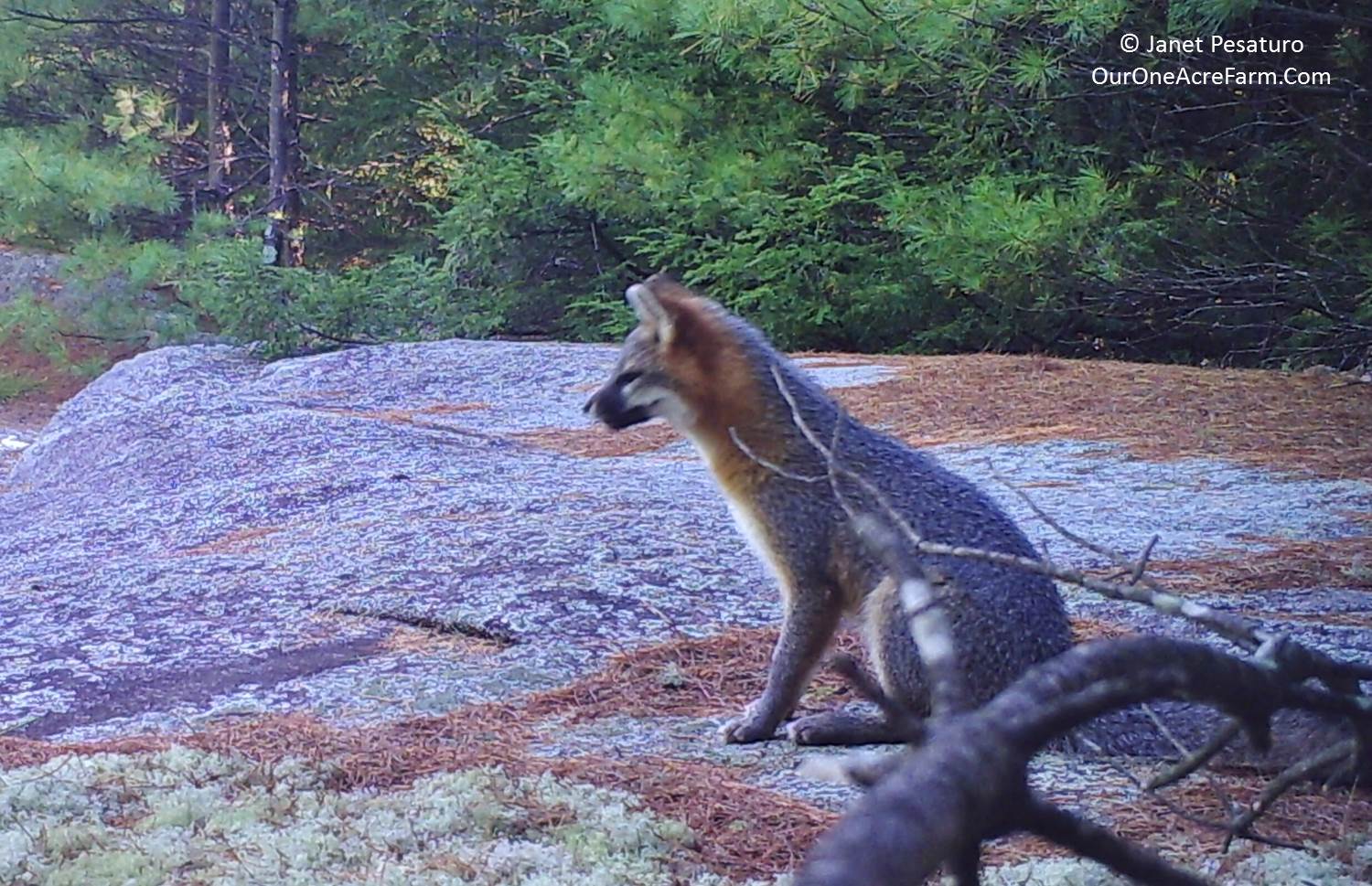
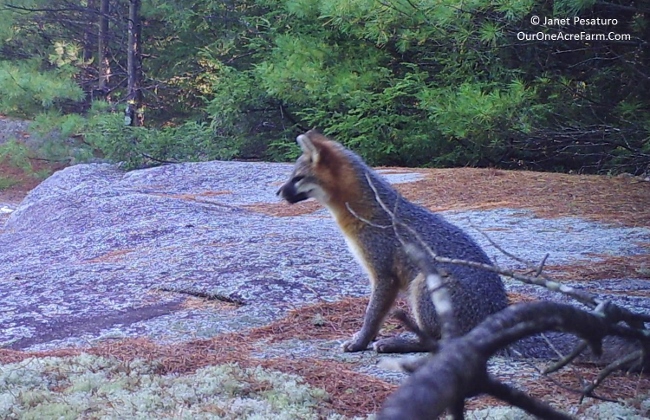
Predators like this gray fox consume plenty of small mammals that humans consider pests.
10. Predator biologists learn about their subjects only from books
I’m not sure why – maybe it relates to tension between different demographic groups – but so often people dismiss wildlife biologists as pointy-heads who get all their knowledge from books. Instead, they turn to the people who are actually “out there” for information about wildlife. But wildlife biologists are the people “out there”, and some of them wrote the books, based on their years of direct observation, as well as exhaustive reading of the research of their predecessors. To appreciate the extensive field work by scientists who wrote the books, peruse the work of Jonathan Way (coyotes), David Henry (red fox), Roger Powell (fisher), and Uldis Roze (porcupine). All of them wrote delightfully informative (and sometimes entertaining) books about their adventures in studying their subjects in the wild.
Shared on: Thank Goodness it’s Monday, Natural Living Monday, Mostly Homemade Mondays, Backyard Farming Connection, Tuesdays with a Twist, Wildcrafting Wednesday, Homestead Blog Hop, HomeAcre Hop, From the Farm, Simple Saturdays, Simply Natural Saturdays, Homestead Barn Hop