
How to Train Chickens to Come When Called

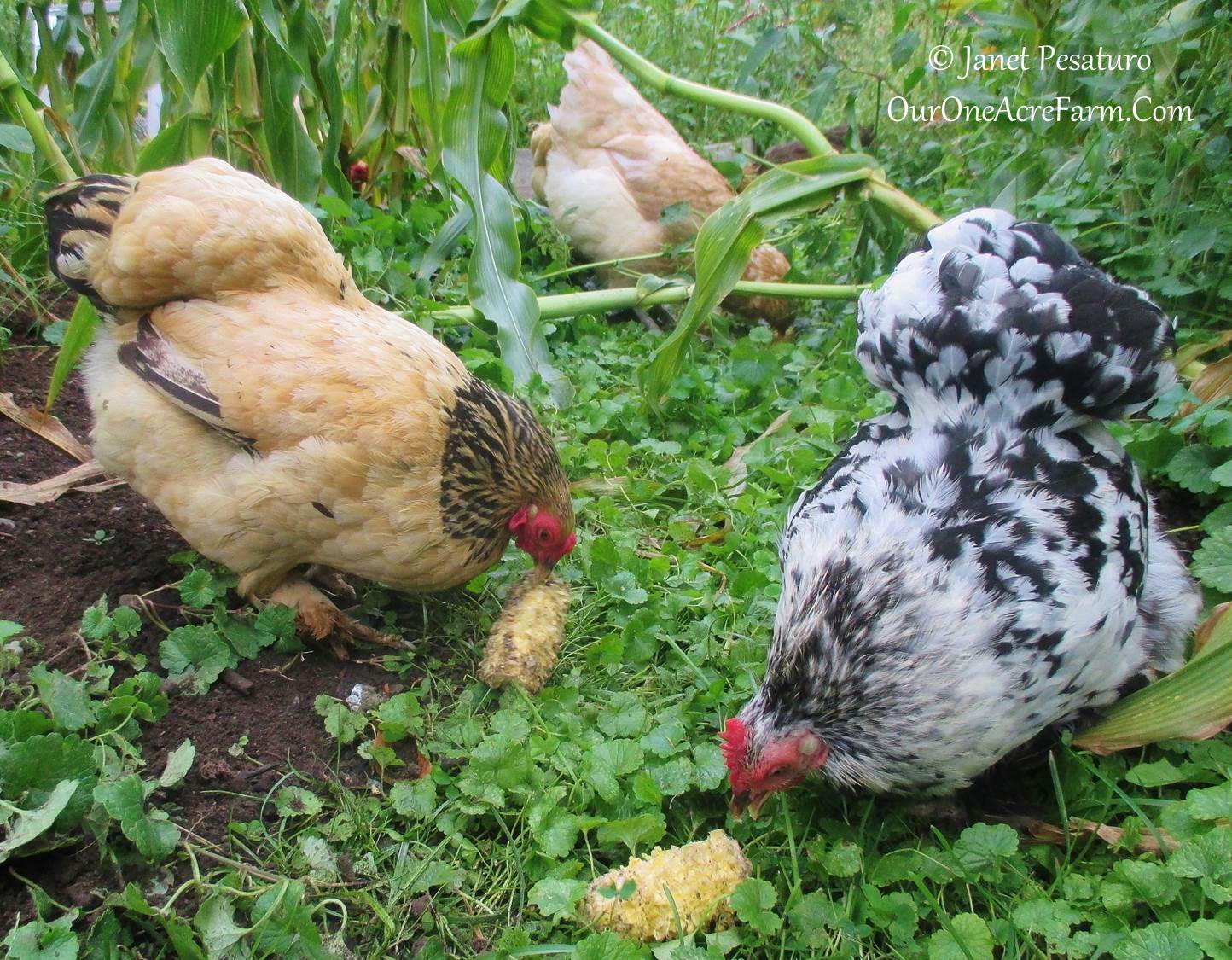
Don’t give your chickens a filling treat while free ranging, close to the time you plan to get them in. These hens enjoying corn on the cob in the great outdoors, are not likely to follow me into the coop for scratch, and probably won’t be hungry enough do so, for at least an hour.
I’m not writing this because training chickens is difficult. I’m writing it because it’s easy and most people don’t know it. The survival skills of domestic poultry may not be as finely honed as those of their wild ancestors, but modern chickens remain remarkably alert to anything that might result in a fine meal. And that means it’s easy to train them.
I’m also writing this because training chickens is tremendously useful. It’s easier to keep the flock safe if they are trained. It’s even possible to train multiple flocks with distinct calls, to return to separate coops.
How to train chickens to come when called
Here’s the gist: Basically you teach them to associate a sound you make with a special treat they can have if they return to the coop (or wherever you want them). Now the details:
What to use for the treat
-
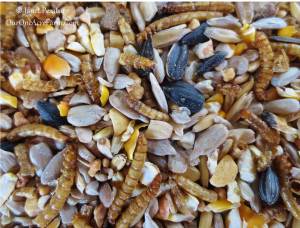
This mix of scratch grains, dried meal worms, and bird seed, is what I usually use to get my chickens back into the coop.
Something special that they really love, not their regular feed.
- Something you can sprinkle and spread around, so all birds are certain to get some. If you are just going to plunk something (such as a watermelon wedge) in one place, only the dominant birds will come, because only they will get to eat it. The timid flock members need to know that they, too, will be fed. Scratch grains, bird seed, dried meal worms, or a mix, are all good choices.

What to use for the call
- A whistle or a bell is often recommended.
- I prefer to use my voice, because I don’t have to remember to bring it with me. And with your voice, it’s easy to create different calls for multiple flocks (see below).
- If you use your voice, decide on a call that is clearly distinct from your normal talking.
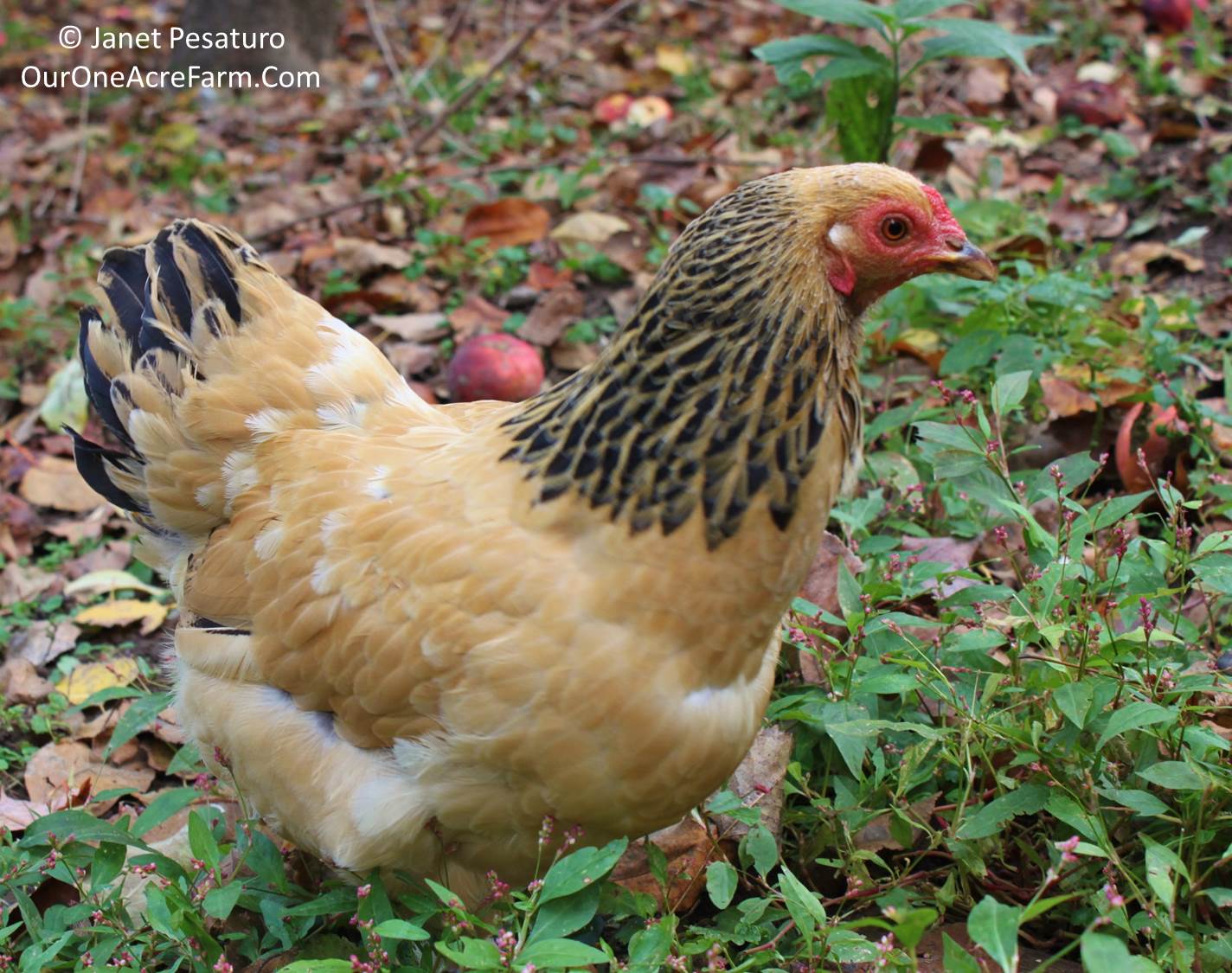
Bantam brahma comes to attention when I begin calling.
The process
- For maximum safety from predators, train them to associate the call with the treat before you let them free range.
- Give them the treat in the coop or run, while you are making the call, with the container of treats in full view. You don’t have to let them see the treats, but they will learn more quickly if they can associate both a sight and a sound with the treat.
- The more frequently you do this, the more quickly they will learn. I do it 2-3 times a day, when training a new flock of young chickens.
- After a few days, keep the treat hidden while you make the call, to see if they’ve learned to associate the call with the food. If they come to attention, looking at you expectantly, they’ve got it.
- Be patient. It could take weeks. As soon as one gets it, others will follow her, even before they themselves get it. However, I try to be sure that all birds have made the association between the call and the treat, before I let the flock free range. I want to be able to call them home even when they can’t see me and when they can’t see each other.
- They are less likely to come when called, if they are not hungry. So, don’t give them pizza or corn on the cob in the backyard an hour before you intend to call them in for scratch.
- They are less likely to follow you into the coop if they haven’t been out for very long. Don’t expect to get them back into the coop on a beautiful afternoon after they’ve been out for only 30 minutes.
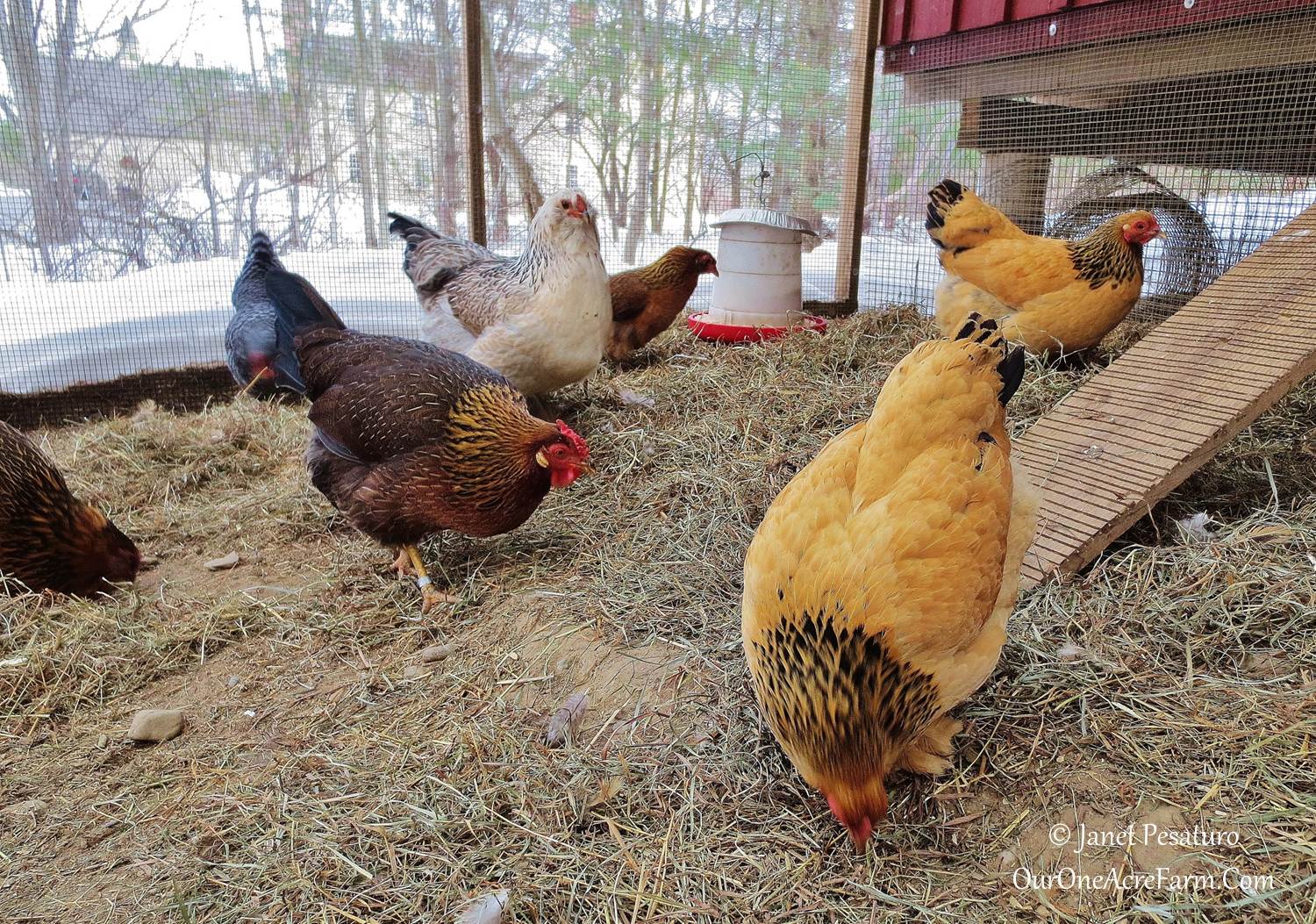
Hens enjoying their treat in the run, just after I called them in.
Advantages to training your chickens to come when called
- You can give them their outdoor time during any part of the day. Many people limit chicken “recess” to late afternoon, because they know that chickens normally return to the coop on their own, as the sun goes down. But if they are trained to come to your call, you can let them out and get them in whenever you want.
- You can get them in when you notice predators. This can really help you coexist peacefully with wildlife. I’m particularly watchful during the fall hawk migration season, when aerial attacks are common. Cooper’s hawks are especially sneaky, so when I notice one lurking, I waste no time in calling the hens to safety.
- You may be able to call a hen who has disappeared. On rare occasion, one of mine flies the fence and vanishes into the shrubby woods beyond. I find it really helpful to be able to call her back.
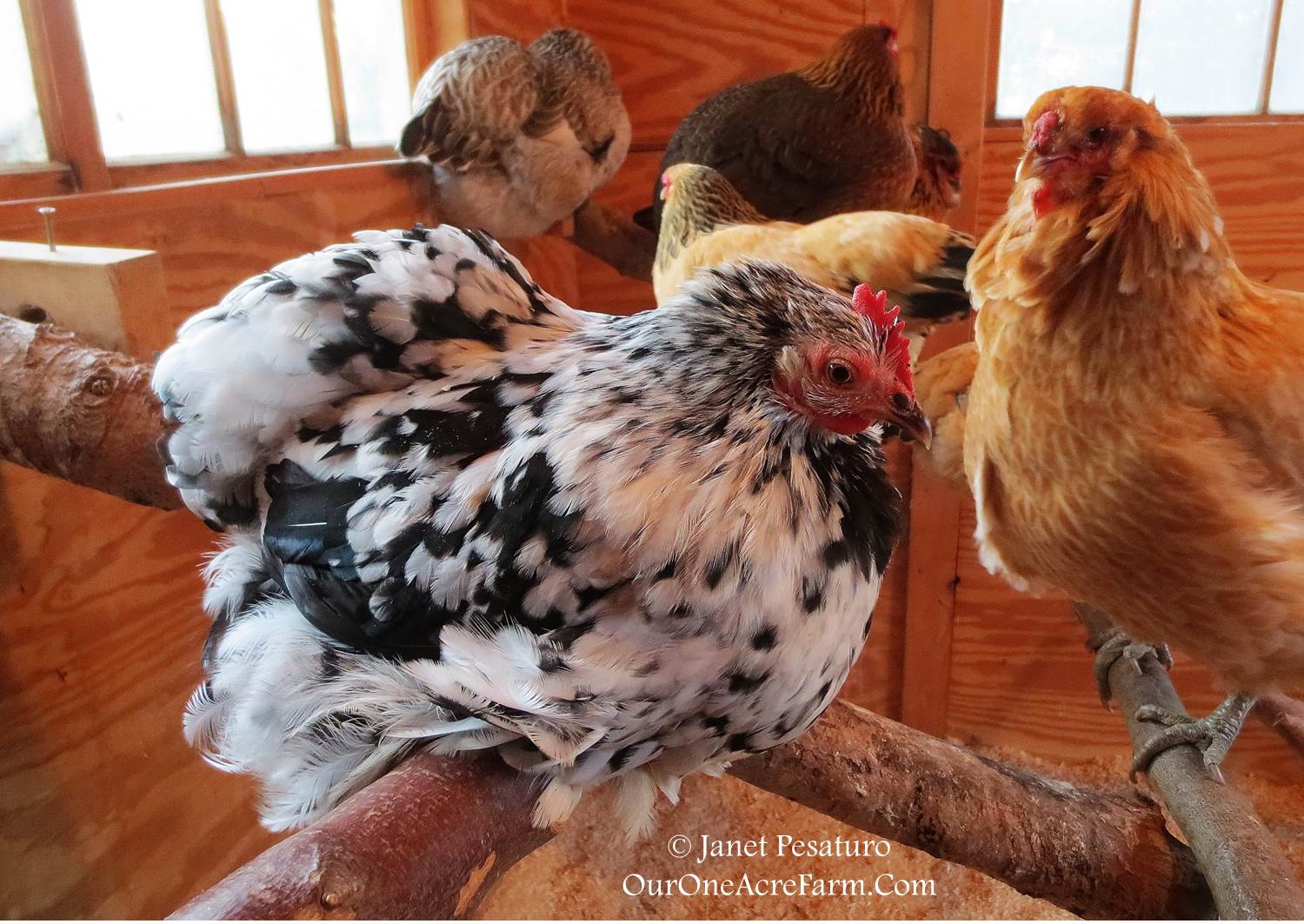
On the roost after treat time, and ready for bed.
Training multiple flocks within earshot of one another
There may be times when you want to train multiple flocks, each to a different call. When I add new birds to my flock, I let the old and the new free range together, but temporarily house them in separate areas (to prevent bullying). I train the new ones to return to their coop with a different call. If I used just one call for all of them, the older chickens would go to both coops and hog all of the treats, and the timid youths would linger outside. Here’s what to keep in mind when training multiple flocks:
- Each flock must be trained to come to its own call, even when the treat container is out of sight. If you show the container, all birds of all flocks will come. And, once a flock learns the other flock’s call, you can no longer use that call to separate them.
- Make sure the calls you use for different flocks are clearly distinct. Each call should be a unique phrase, rhythm, and pitch.
- Keep in mind that this only works for as long as the flocks consider themselves separate. If they intermingle for part of the day, as mine do, they eventually become one flock and any bird will follow any other, to either call. This works for me, since the ultimate goal is always to completely integrate the flocks eventually, anyway. So, when they begin to function as a single flock, I move the pullets in with the older birds and need only one call.

How to Train Chickens to Come When Called (and Why You Should)
Have you tried training chickens? How did you do it? How well did it work?
Shared on: HomeAcre Hop