
12 Native Plants for Food and Medicine
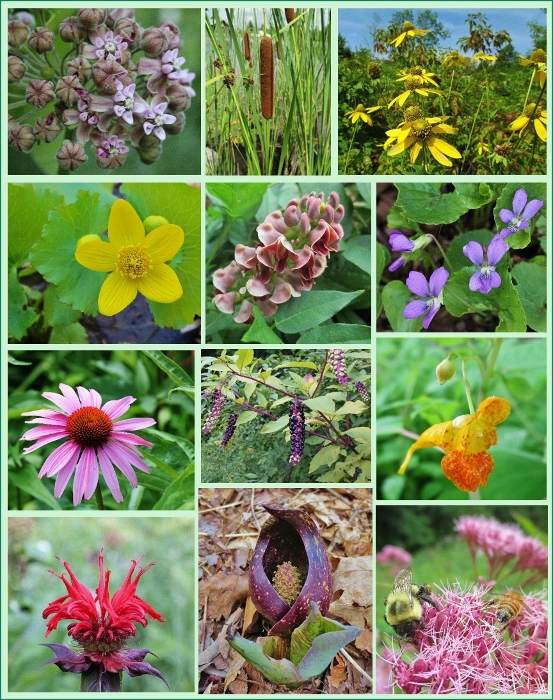
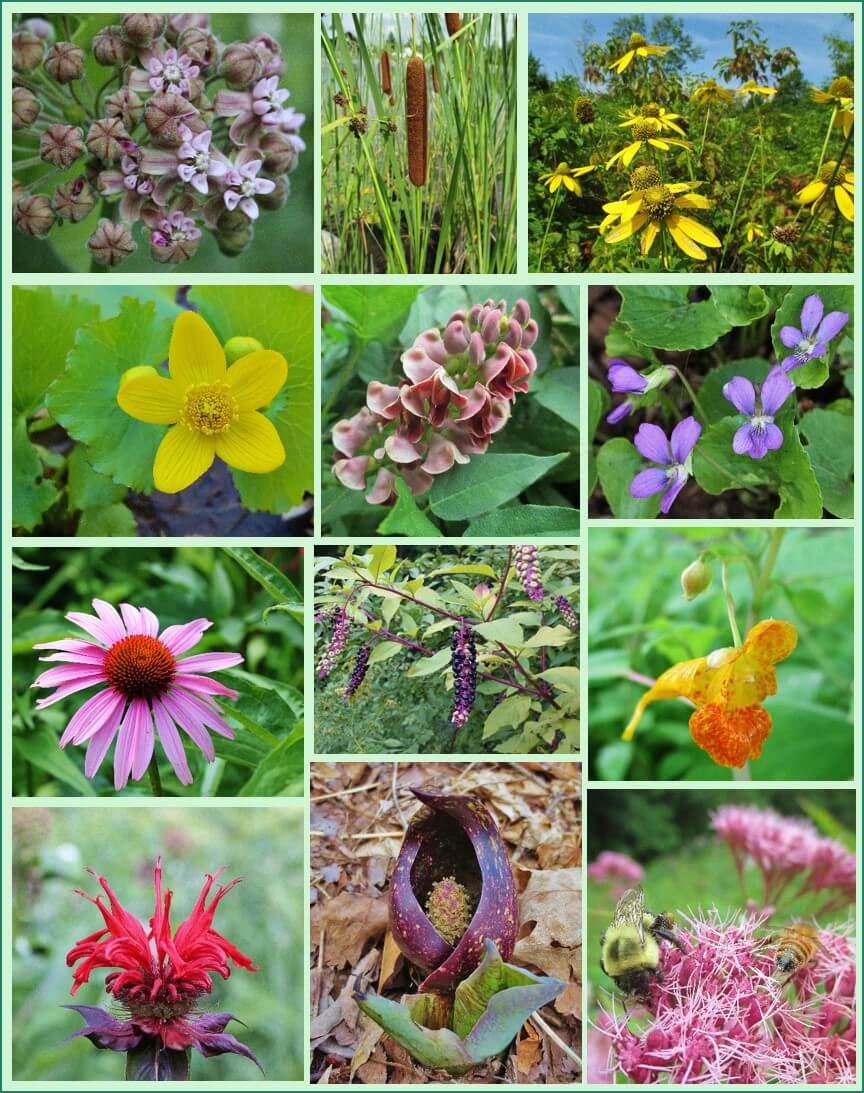
These 12 native perennial herbs are great choices for an edible and medicinal garden. They provide for both humans and wildlife, one of the most important permaculture principles.
Growing native plants for food and medicine is an excellent way to apply one of the major permaculture principles right in your own backyard. It provides for both humans and wildlife at once. These 12 native perennials are all attractive, and all are either useful as food or have possible medicinal properties. They are also of excellent value to native wildlife. Some are great for attracting pollinators, and all would be fine additions to an eco-friendly garden.
Plants featured here are herbaceous, but if you’re looking for trees and shrubs, check out 15 Trees for a Wildlife Friendly, Edible Landscape, and 10 Shrubs for a Wildlife Friendly, Edible Landscape. Those posts, along with the current one, can help you plan a permaculture type garden in your own backyard.
12 Native Plants for Food and Medicine
A note to foragers: All of these plants can be harvested from the wild, but if you want to use them, it’s better to grow them in your own yard. That way, you can leave wild plants for wildlife, and turn lawn into productive habitat. A good foraging ethic is to grow native plants, but don’t harvest them from the wild, and forage for invasive plants, but don’t grow them.
1. Common milkweed
I have to laugh at how popular common milkweed, Asclepias syriaca, has become in just the past couple of years. Prior to that, it had been considered an aggressive weed to be removed from the garden. But I’ve always found the flowers beautiful and the pods fascinating, and left it alone in my perennial garden. It didn’t take over the world, and before it got out of hand in my garden, I learned it is edible and began eating it to keep it in check. Young shoots, young pods and flower buds are edible, and many Indian tribes at them. Learn more about common milkweed.
As far as I’ve been able to determine, the possible medicinal properties of this plant have not been carefully studied, though traditional uses are many. The Chippewa used a concoction of the root to enhance postpartum milk flow. The Menominee ate the buds for chest discomfort. The Ojibwa used the roots to relieve an unspecified “female ailment”. The Cherokee and several other tribes applied the milky substance to warts to remove them. And the list goes on.
The wildlife value, on the other hand, is well recognized. A. syriaca is host plant for Monarch butterfly larvae, and it is a highly attractive nectar source for various types of bees and butterflies.
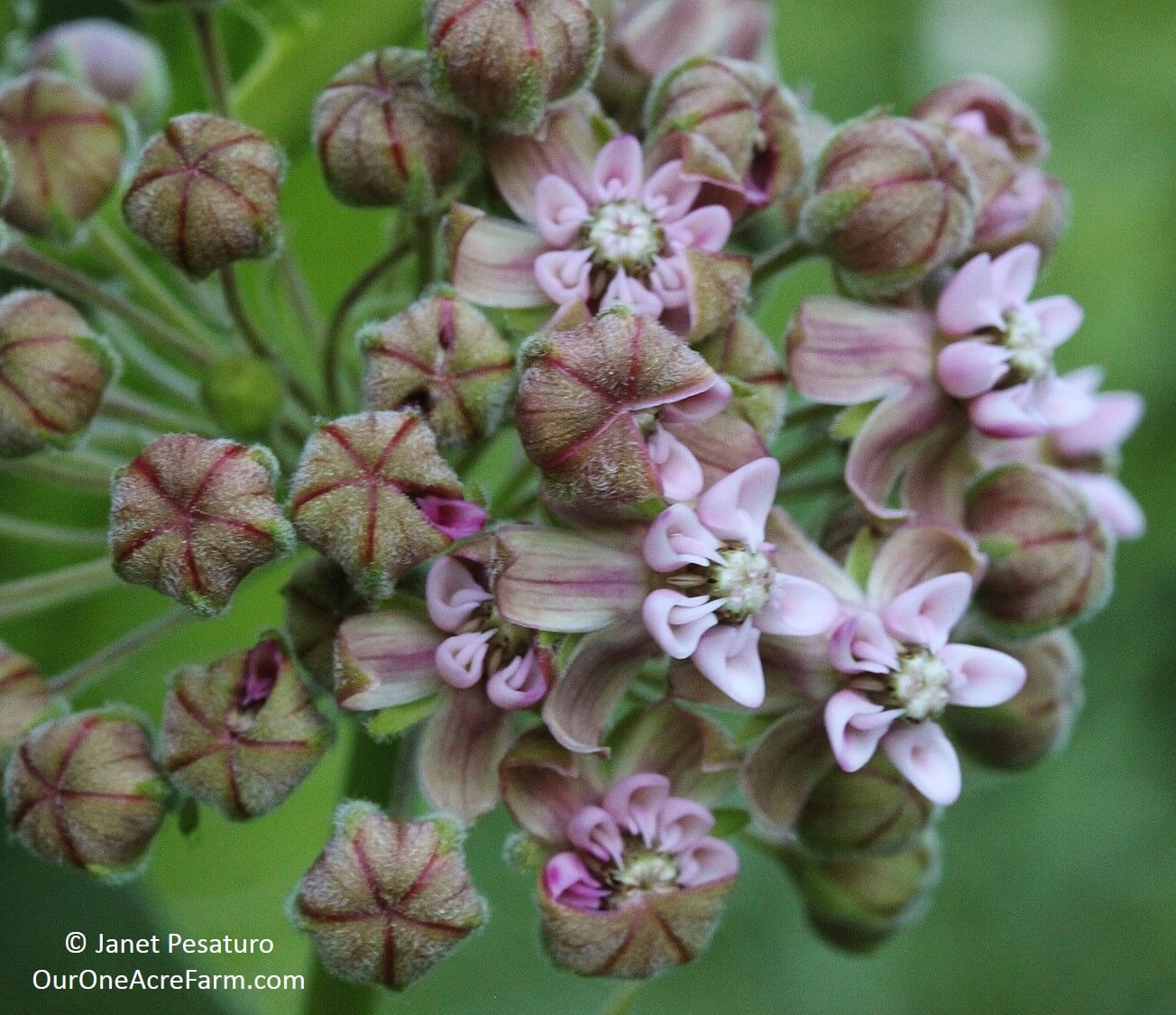
Common milkweed is an excellent food plant, has a rich history of medicinal use by native peoples, and is highly attractive to wildlife.
2. Bee balm
Both red bee balm (Monarda didyma) and wild bergamot (Monarda fistulosa) are useful as food, medicine, and wildlife attractants. Like common milkweed, bee balms can be aggressive in the garden, so you may as well use them to keep them in check. You can do that by eating it. Interestingly, Moerman’s exhaustive text, Native American Ethnobotany, does not mention any culinary use of the flowers, but currently, the flowers are used as an edible garnish and the leaves are used for their minty flavor and make a tasty tea.
Both species were used medicinally. Scarlet bee balm was used for poultices and infusions for various ailments. Wild bergamot was used in various ways by many tribes for a wide variety of health problems.
Both plants are of excellent wildlife value. Hummingbirds and butterflies love scarlet bee balm, while bumblebees are highly attracted to wild bergamot.
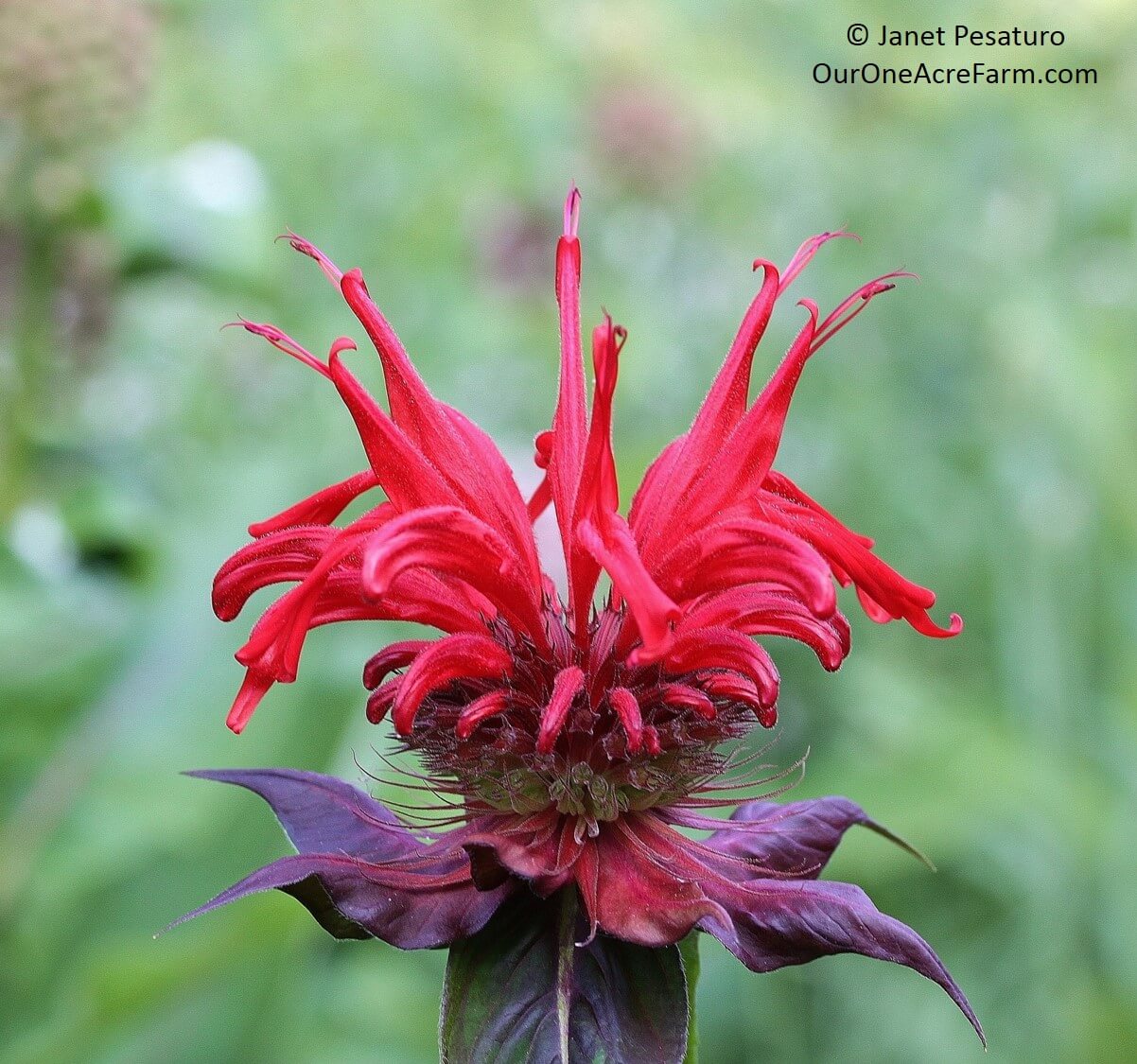
Bee balm is an excellent choice for the eco-friendly medicinal herb garden.
3. Cutleaf coneflower
A relative of the black-eyed Susan, the green-eyed Rudbeckia lacinata is a tall, showy herb which deserves a spot at the back of the perennial border. And perhaps in the edible garden. While cutleaf coneflower is not discussed in foraging books, to my knowledge, Moerman reports in his exhaustive text that the Cherokee cooked and ate young shoots and leaves. Sometimes they were dried for future use, sometimes they were boiled and then fried, and sometimes they were cooked with poke, eggs, dock, or other greens. But the Chippewa apparently used this plant only medicinally. A compound poultice of flowers was used to soothe burns, and a root infusion was taken for indigestion.
The flowers attract a variety of pollinating insects. I’ve also noticed that in late summer, the stem becomes infested with small, reddish aphids. It is said that these aphids can harm the plant, but mine never seem to be bothered. I do notice, however, that those aphids are consumed in great quantities by goldfinches in my garden. Aim for biodiversity in your yard, and often nature will take care of nature.
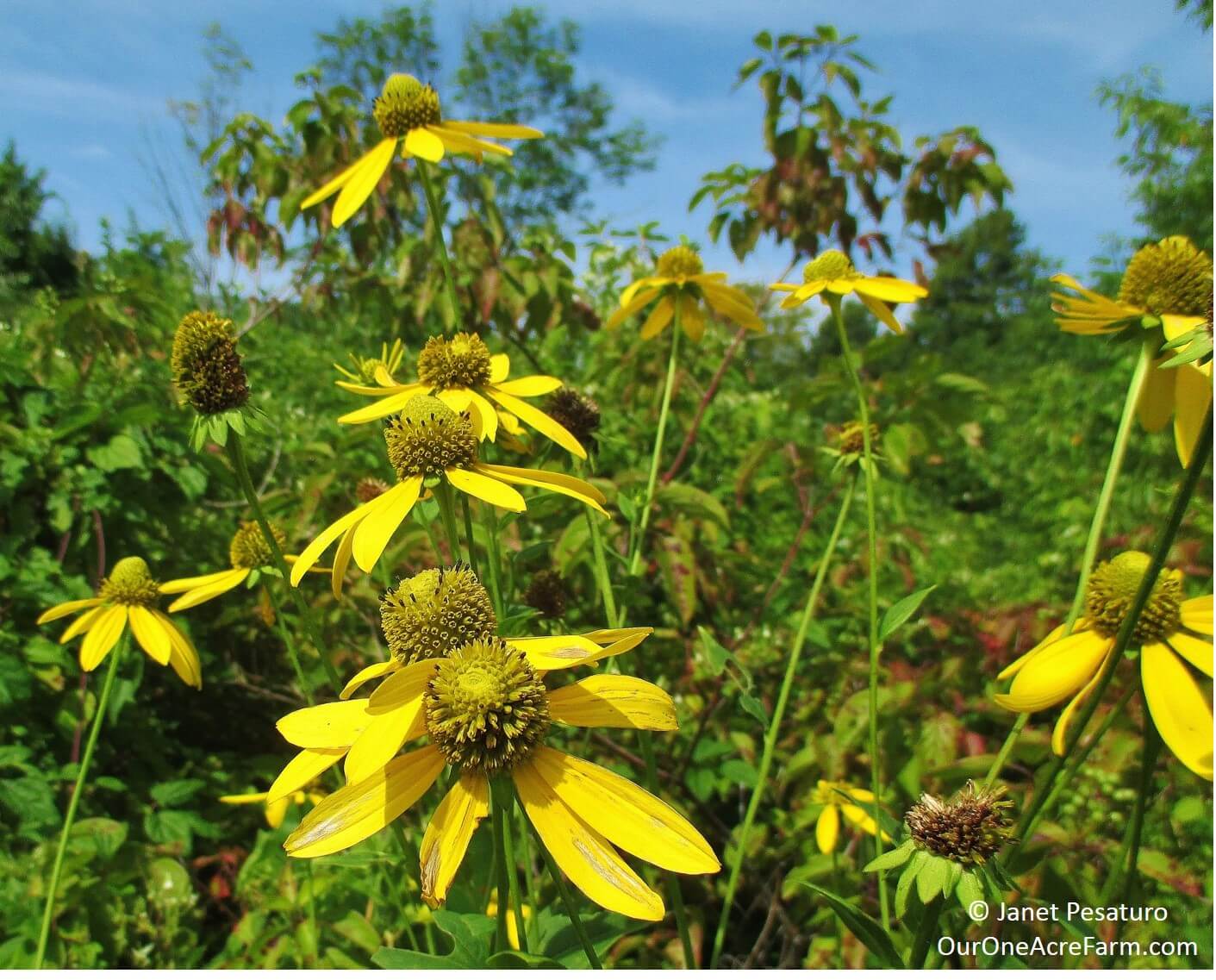
Rudbeckis lacinata was traditionally used for food and medicine, but for some reason it hasn’t joined the likes of other traditional herbs in the modern wildcrafing movement.
4. Groundnuts
This nitrogen fixing perennial vine goes by several common names, including groundnut, potato bean, hopniss, and Indian potato. Apios americana produces both edible beans and edible tubers, and has a rich history of food use by several Native American tribes and early Europeans. Groundnuts are quite nutritious, with higher protein and calcium content than potatoes. They are grown commercially in Japan and South Korea, but underutilized in North America.
The tubers may be dried, boiled, or roasted. Dried roots may be used as thickeners in soups and stews. Seeds may be prepared and eaten like common peas. I could not find mention of traditional medicinal use, but studies suggest groudnuts may have antihypertensive and anticarcinogenic properties.
Leaf cutter bees, honey bees, bumblebees, and the long tailed skipper all visit the flowers. This plant fixes nitrogen, enhancing soil fertility.
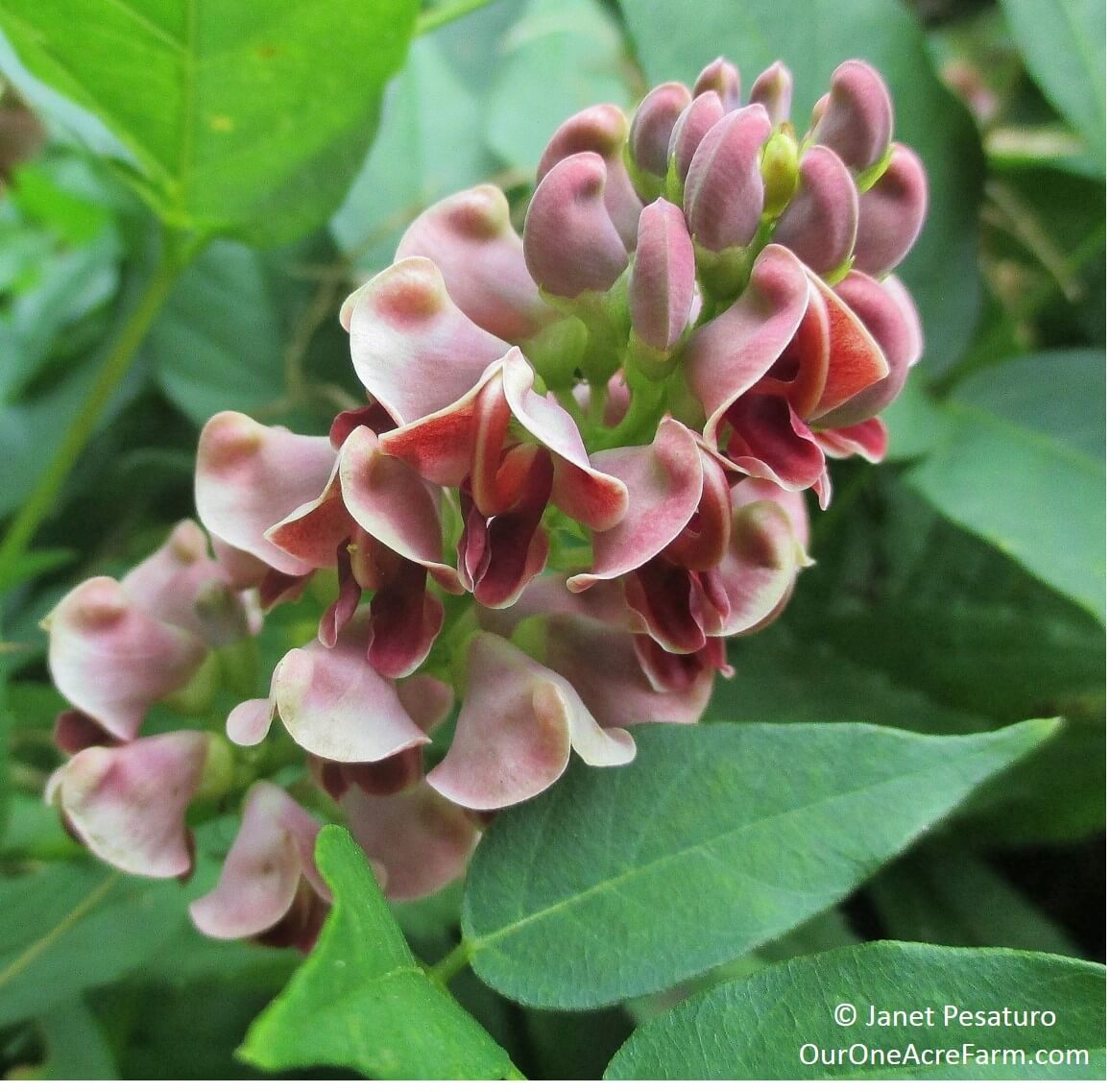
Underutilized in North America, groundnuts were a Native American staple, and are now grown commercially in Japan and South Korea. A great edible, native herb.
5. Joe Pye weed
Eutrochium purpureum (formerly Eupatorium purpureum) has long been used in the perennial border for its beautiful pink blooms and attractiveness to butterflies. We grow this plant, and when blooming, it is always a-buzz with butterflies and other insects. It also attracts are large number of other insect pollinators. Small birds like the seeds and may even use the fluff to line their nests.
While the food use of Joe Pye Weed is limited (the Cherokee used the root ash as “salt”), various plant parts were used medicinally by Native Americans. Root preparations were used for rheumatism, kidney disease, constipation, etc. A 2001 (Habtemariam) study suggests that roots may indeed have anti-inflammatory activity.
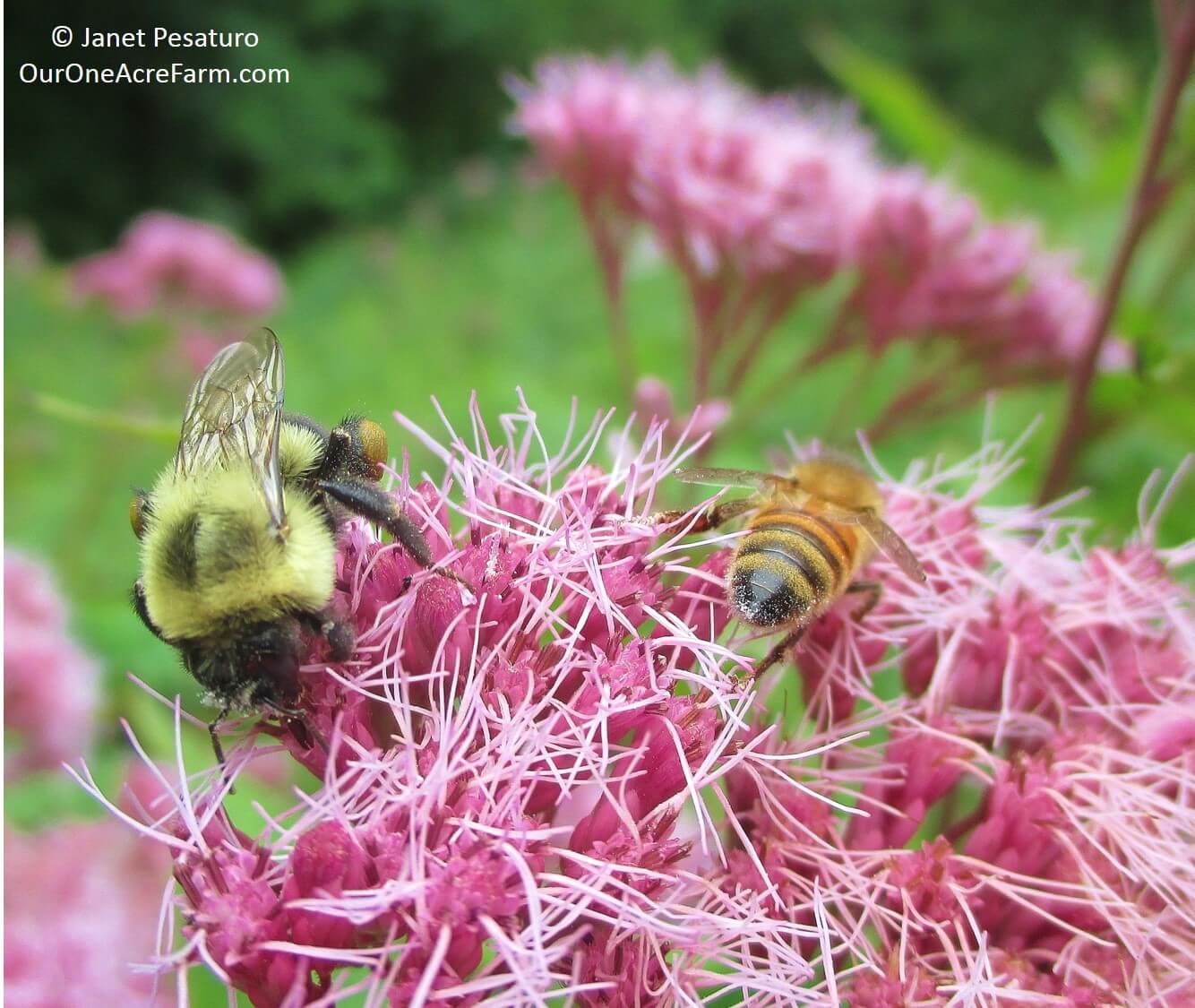
Not useful as an edible, Joe Pye Weed is a traditional medicinal herb which may indeed have anti-inflammatory properties. It’s highly attractive to pollinators, and a top choice for a bee friendly garden.
6. Marsh marigold
This cheerful wetland perennial, also called cowslip, is an excellent choice for a moist portion of a garden of native plants for food and medicine. The young leaves, stems, and roots can be harvested when little else is available to the forager. They are poisonous raw, but the poisonous compound (protanemonin) is dispelled after boiling in several changes of water. These are not the tastiest of wild greens; their main attraction to the forager is their availability in early spring.
Marsh marigold has also been used medicinally. The Chippewa applied mashed, boiled roots to scrofula sores, and used a preparation of leaves and stalks as a diuretic. Western Eskimos used an infusion of the leaves as a diuretic. I’ve been unable to find studies on effectiveness of this plant.
The early spring blooming marsh marigold, Caltha palustris, is available to insects when nectar and pollen sources are scarce. Ants crawl into the base of the flower to harvest nectar. Cuckoo bees visit the flowers for nectar. Sweat bees and green sweat bees harvest nectar and pollen. But the most abundant visit is the syrphid fly, which feeds on pollen. It is good cover for small wetland animals (such as frogs and salamanders).
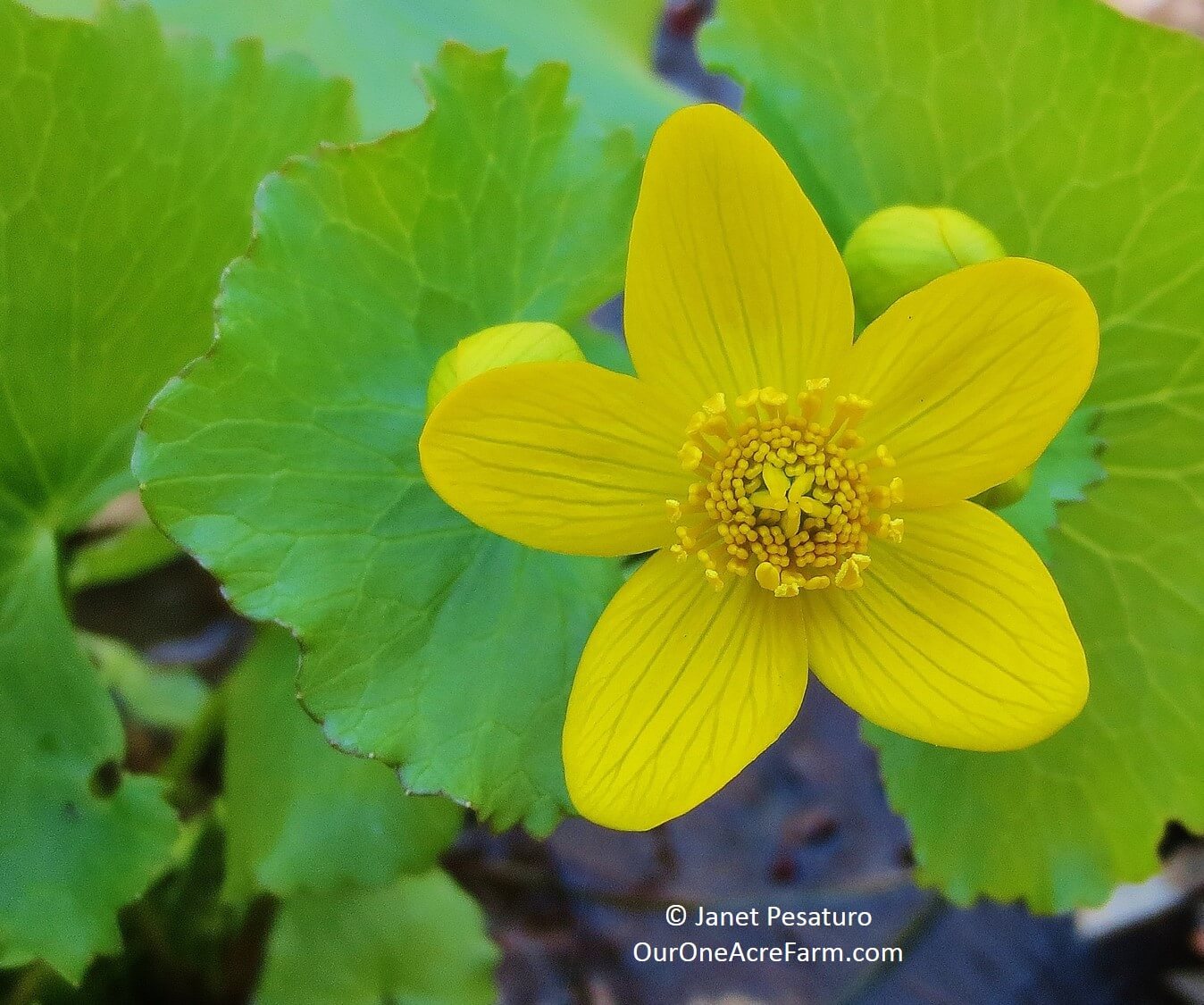
Caltha palustris (marsh marigold, cowslip) is available when few other wild greens are. The flowers are available to pollinators when little else is in bloom.
7. Pokeweed
Phytolacca americana grows in fields, edges, and disturbed areas. Its common names include poke, pokeweed, Virginia poke, pocan, and pigeon berry. When berry laden, pokeweed is sometimes confused with elderberry, but the two are not very similar. Poke is herbaceous (dies back in winter), while elderberry is woody. Poke berries are borne on a long stalk, while elderberries are borne in clusters. Compare the photo of pokeweed here to those of elderberry.
Young leaves and shoots are edible if boiled in several changes of water. Poke greens are more popular as an edible in the South, and you will find recipes online. Poke berries are widely believed to be toxic to humans, and they may well be, but Moerman (see Sources, below) reports that the Cherokees mixed crushed poke berries with sour grapes, sugar, and cornmeal to make a beverage. Nothing further is described about the method of preparation.
Pokeweed has a rich medicinal history. Cherokees used a root infusion “to build the blood”. The Deleware prepared a concoction of roasted, crushed roots, sarsaparilla bark, and mountain grape bark for rheumatism. The Iroquois applied a poultice of crushed roots to bruises. The list goes on, but effectiveness of pokeweed for any of these uses has not been well studied.
Bluebirds, several other songbirds, and some mammals are quite fond of the berries.
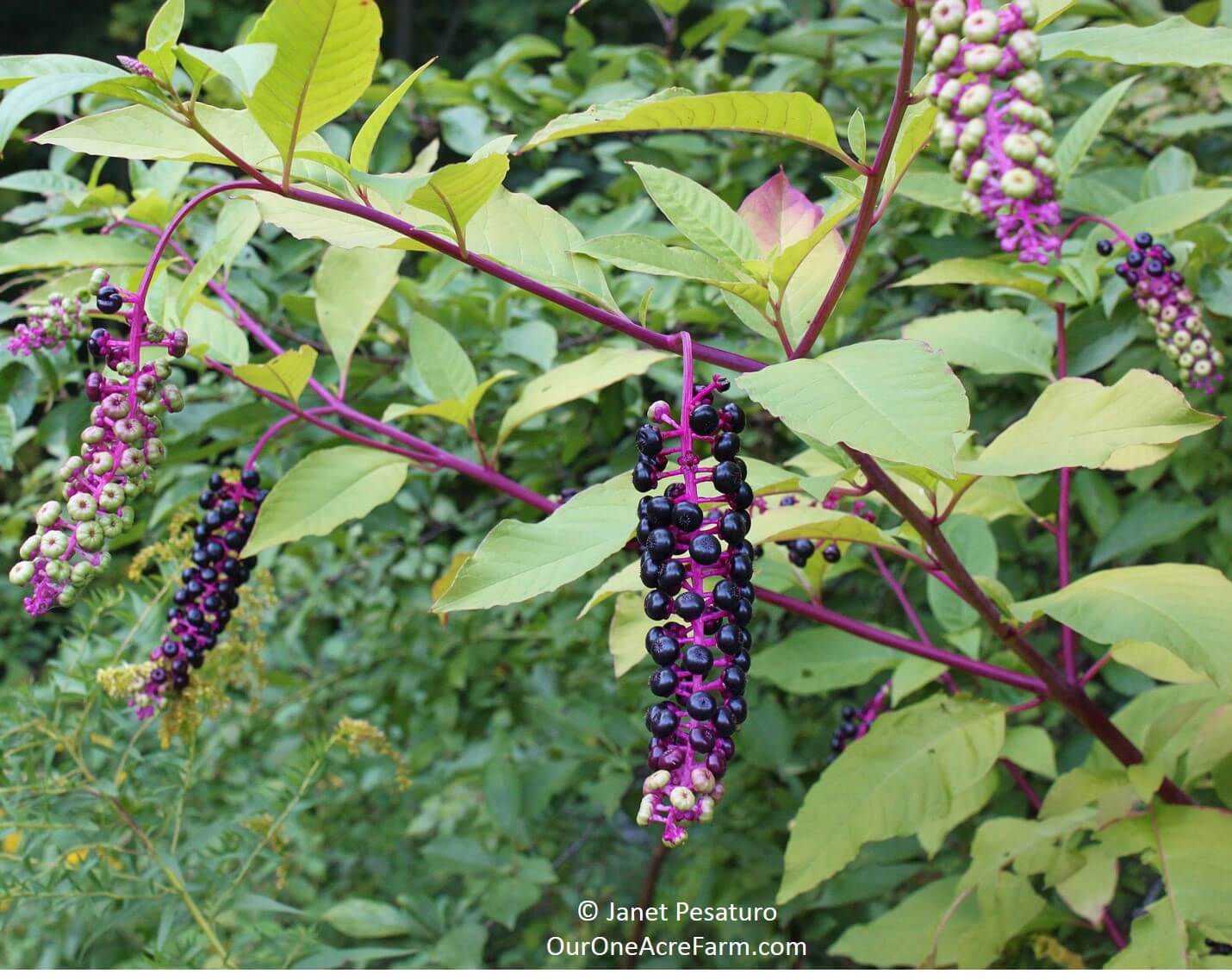
Pokeweed laden with berries.
8. Purple coneflower
Several members of the genus Echinacea have been used medicinally, but probably the most popular one in the home garden is Echinacea purpurea, the purple coneflower. That’s the one I grow, and its flowers are a magnet for bees and butterflies in my garden. It’s not used for food, but tea can be made from dried leaves, flowers, and roots. Some people enjoy its flavor, and its also promoted as an immune system stimulant with effectiveness against the common cold. It continues to be a favorite of herbalists, but studies in 2005, 2006, and 2010 showed that it did not prevent nor substantially shorten the duration of colds. Nor is there good evidence to support claims that it increases resistance to cancer.
So current medicinal use of Echinacea is in something other than science. Perhaps it is tradition. The Cheyenne chewed the roots of E. pallida as a cold remedy. The Kiowa chewed ground roots of E. angustifolia for sore throats. And the Choctaw chewed the roots as a cough medicine.
Unlike its medicinal value, its wildlife value is clearly robust. Eastern tiger swallowtails, bumblebees, leafcutter bees, and banded long-horn beetles all visit for pollen and/or nectar. In my garden, it’s second only to milkweed for insect activity. Even the hummingbirds take a sip from it every now and again.
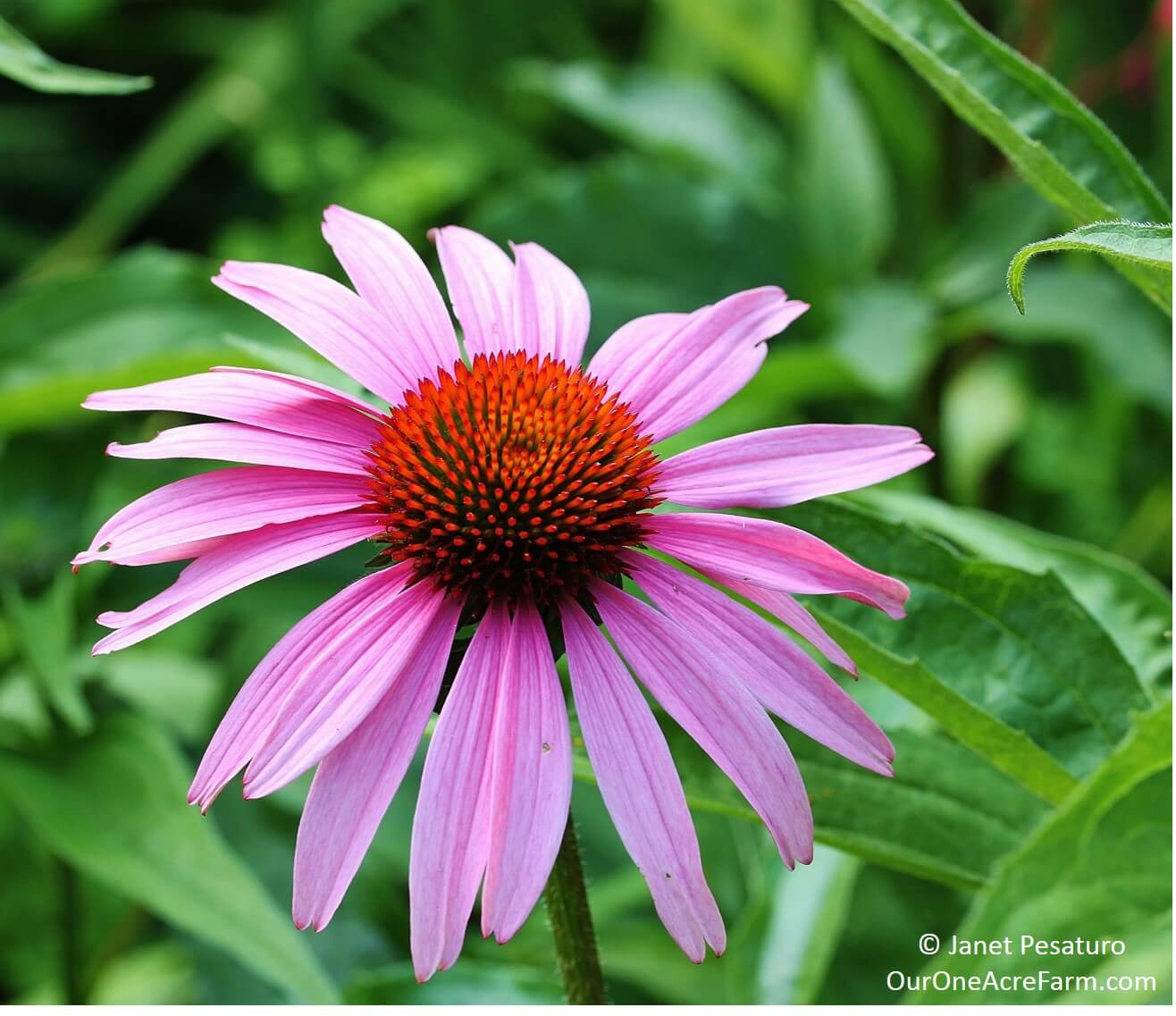
Echinacea has a long tradition as an herbal remedy. It can be used for a tasty tea, and, as a native herb, it is highly attractive to native pollinators.
9. Jewelweed
Sometimes spelled jewel weed, and also called touch-me-not, orange balsam, common jewelweed, and orange jewelweed, Impatiens capensis is a very common native wildflower of moist, shaded areas. It sometimes grows side by side with its close relative Impatiens pallida, or pale touch-me-not. They are perennial in warm climates and self-seeding annuals in colder regions. Both are excellent for the native plant garden and the medicinal herb garden.
While some sources say the seeds are edible, with a pleasant walnut-like flavor, I’ve found no reference to the use of Impatiens species as food by Native Americans. It has a rich medicinal history and current use, however. It’s most common use is dermatological. Many tribles used it for poison ivy, burns, cuts, nettle stings, and/or other rashes. And recipes for poison ivy remedies using jewelweed abound on the internet. And, a 2012 study in the Journal of Ethnopharmacology showed that wildcrafters are correct: a fresh jewelweed extract is indeed effective in preventing post poison ivy contact dermatitis…BUT…not as effective as soap!
In an eco-friendly garden, the allow jewelweed to grow, for it hummingbirds, bumblebees, and butterflies all enjoy it as a nectar source. Northern bobwhites and white-footed mice eat the seeds.
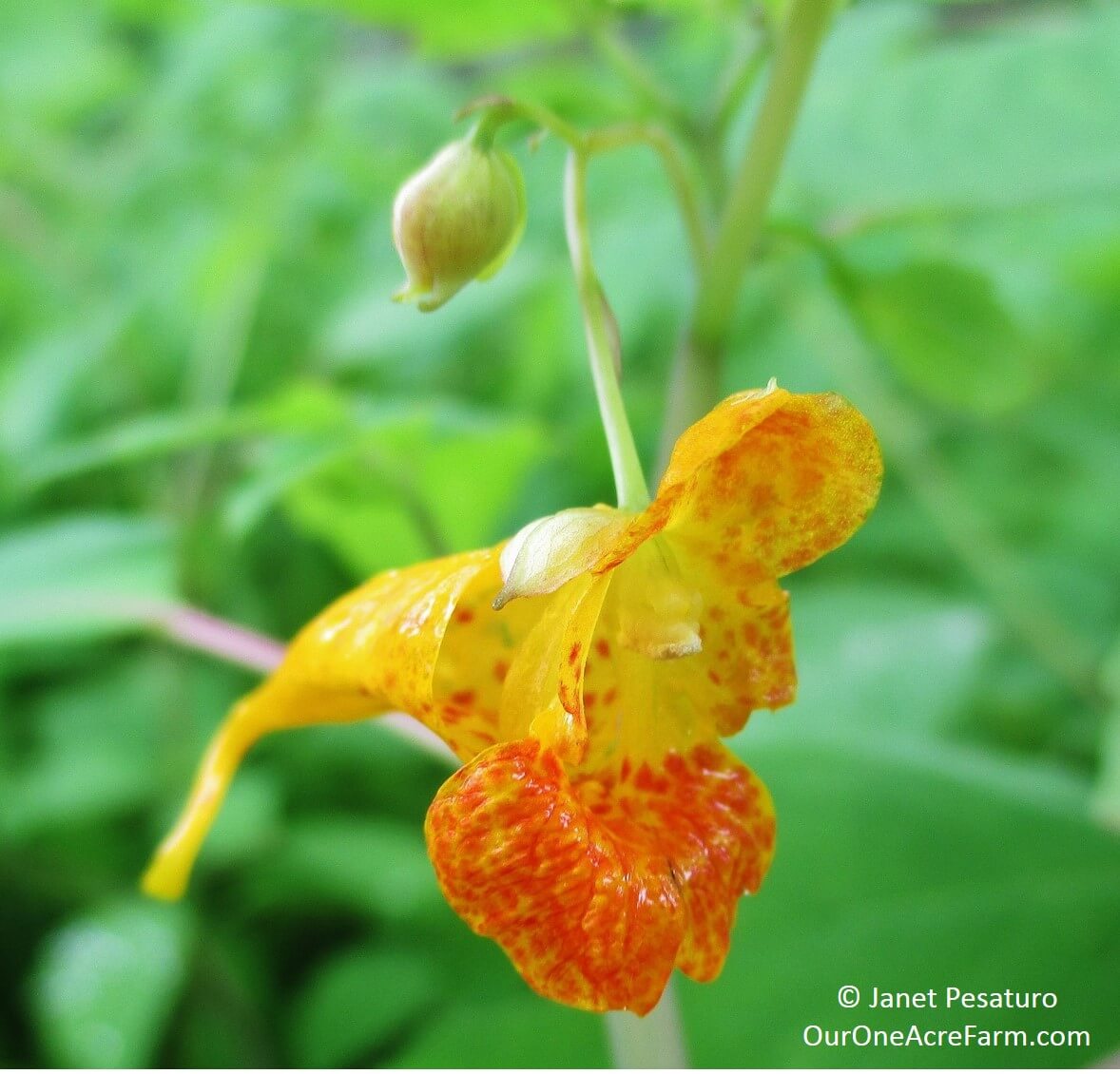
Jewelweed has a long history of use as a poison ivy remedy, and it’s a favorite of certain native pollinators, including hummingbirds.
10. Skunk cabbage
Now I admit that skunk cabbage (Symplocarpus foetidus), is not a plant that comes to mind for the edible garden, nor the herbal medicine garden. But perhaps it should be. It’s unusual, attractive, and useful, so consider this wetland plant it if you’ve got a moist area. The Iriquois ate the young leaves and shoots after cooking to reduce calcium oxalate, which can cause a burning sensation in the mouth. I’ve not consumed itmyself, but Steve Brill describes burning in the mouth, even after drying or boiling young leaves (see Sources, below). I find this curious and worth exploring, since taro root, for example, is also high in calcium oxalate, but becomes edible after steeping or boiling. Properly prepared, taro is enjoyed in many countries around the world. Perhaps the same could be true of skunk cabbage.
With its rich ethnobotany, skunk cabbage may deserve a place in the medicinal herb garden. The Iroquois used it as a treatment for worms, dog bites, gynecological problems, and tuberculosis. The Menominee applied it to wounds, and used it to treat seizures and heart problems. The Mohegans chewed skunk cabbage leaves to treat seizures. As far as I know, none of these claims have been carefully studied, so experiment at your own risk.
Unlike its edibility and medicinal properties, the wildlife value of skunk cabbage is well understood. It blooms in very early spring, attracting many fly species, as well as some butterflies, bees, and beetles. Bears eat it in early spring.
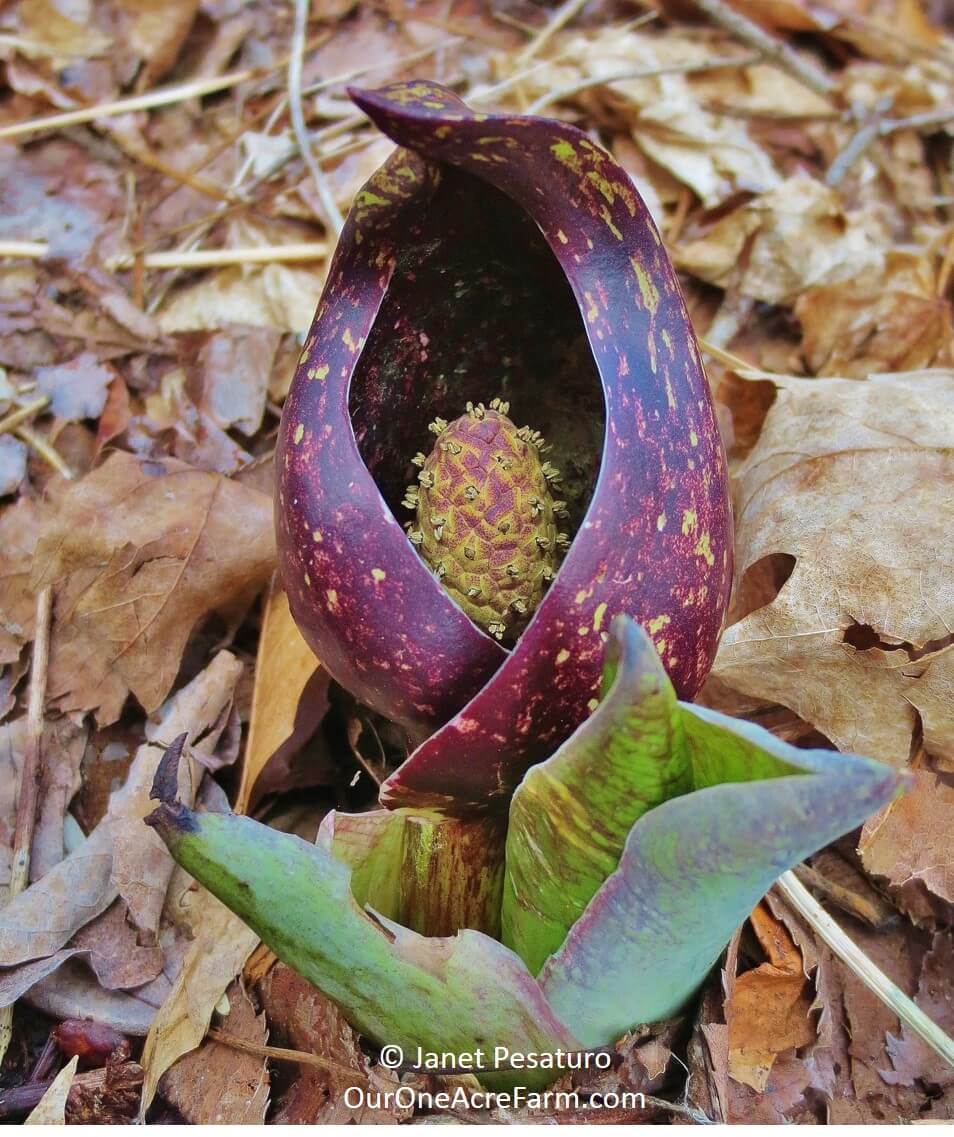
The is the unusual bloom of skunk cabbage, a native wetland plant with an interesting history of medicinal use. Later in the season, large leaves emerge from the base of the plant.
11. Violet
One of the better known wild native plants you can eat, all members of the genus Viola (violets, pansies, and violas) are tasty and easy to grow, and some have been used medicinally. They make an excellent ground cover in a garden of native plants for food and medicine. Raw flowers and leaves of all species are said to be edible. I’ve used the common blue violet (Viola Sororia) and the blue-white hybrid in salads.
Some species of Viola are known to contain salicylic acid (aspirin), so it’s not surprising that the Cherokee used the common blue violet to soothe headaches, colds, coughs, and boils.
The common blue violet is a host plant for many species of Frittilary butterfly. Blooms attract bees, skippers, and Syrphid flies. Turkeys, mourning doves, bobwhites, and mice eat the seeds. Deer and cottontail rabbits eat the leaves, and turkeys eat the roots.

Use the common blue violet as a ground cover in an edible and medicinal garden of native plants. Wildlife will appreciate it.
12. Cattail
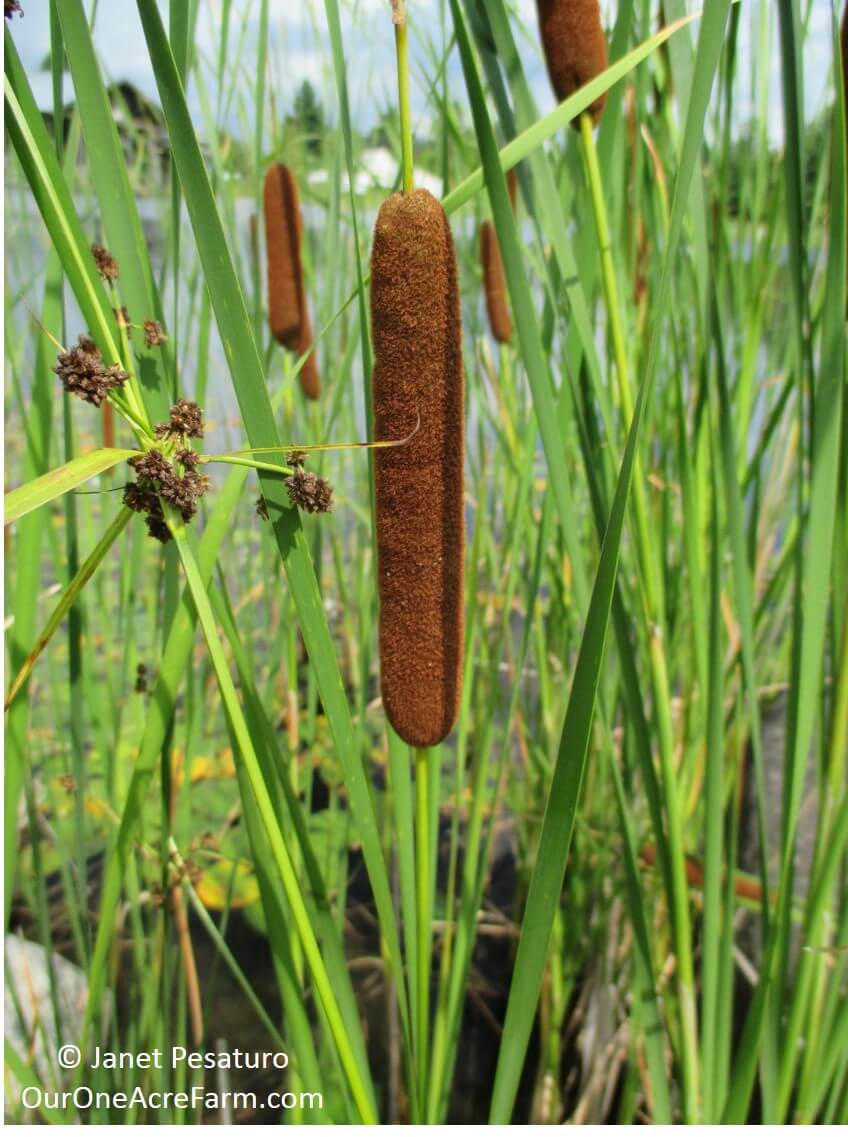
Cattails are extremely useful plants for humans and wildlife alike.
If you’re looking for native plants for food and medicine within a rain garden, the common cattail, Typha latifolia, is a top choice. A forager’s favorite, cattail shoots can be peeled and eaten raw or cooked. The pollen can also be eaten raw or cooked. In fall and winter, the rhizomes can be dug and eaten, if you’re into laborious foraging.
The cattail also has a rich medicinal history. Various plant parts were used in various and sundry ways, but the most consistent seemed to be preparations (often of the roots) to soothe dermatological problems, such as wounds, sores, burns, and smallpox pustules.
This plant is of outstanding wildlife value. Muskrats eat the roots and construct their lodges with stalks. Geese eat the roots. Marsh wrens, blackbirds, moorhens, coots, rails, and bitterns nest among cattails and use the leaves as building material. Even upland songbirds sometimes use cattail fluff to line their nests. Cattails are a larval host plant for several moth species. This is a tremendous choice for an ecological garden.
Sources
- A Revision of North American Species of Apios
- Abrams, M. V. et al. 2012. The Effectiveness of jewelweed, Impatiens capensis, the related cultivar of I. balsamia and the component lawsone in preventing post poison ivy exposure contact dermatitis. J. Ethnopharmacol. 143(1): 314-8.
- Antiinflammatory Activity of the Antirheumatic Herbal Drug, Gravel Root (Eupatorium purpureum): Further Biological Activities and Constituents
- Common Blue Violet
- Echinacea (from Cancer.org)
- Erichsen-Brown, C. 1979. Medicinal and Other Uses of North American Plants. Dover Publications, Inc. New York.
- Groundnuts
- Holm, H. 2014. Pollinators of Native Plants. Pollination Press, LLC. Minnesota.
- Lady Bird Johnson Native Plant Database
- Moerman, D.E. 1998. Native American Ethnobotany. Timber Press. Portland, OR. New York Botanical Garden.
- Native American Ethnobotany Database
- Pollination of Skunk Cabbage
- Spotted Jewelweed
- Thayer, S. 2006. The Forager’s Harvest. Ogema, WI.
- Wildman Steve Brill