
Squash and pumpkins in the home garden
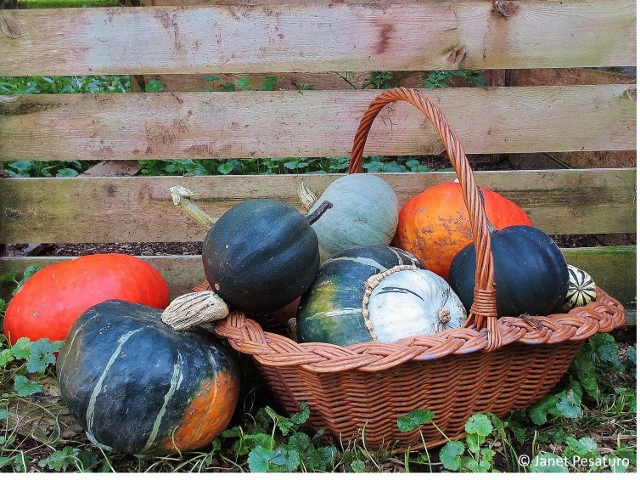
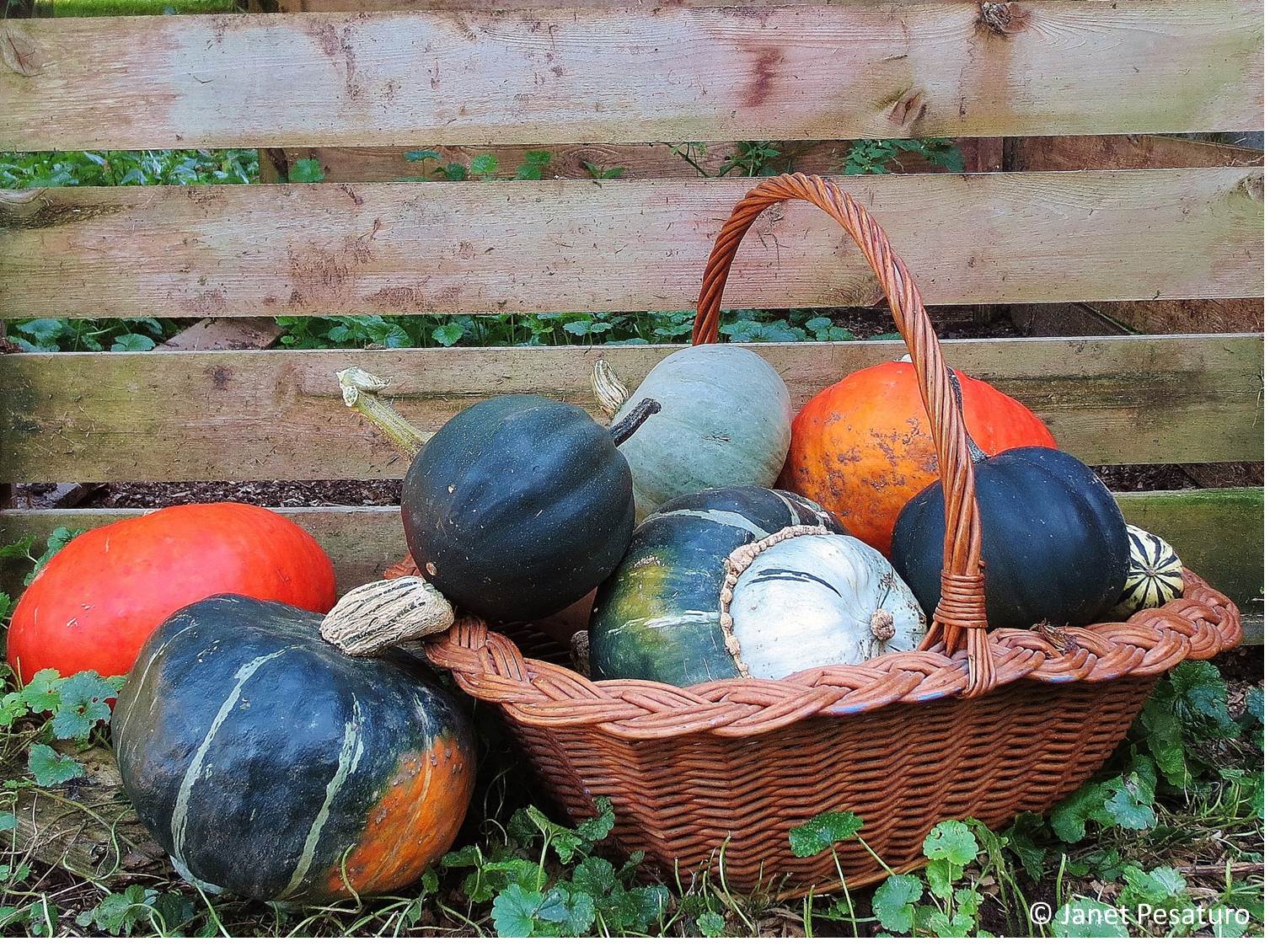
Part of our winter squash harvest
Few vegetables combine flavor, nutrition, versatility and beauty like winter squash and pumpkins. I love them for all of those reasons, and would grow them every year, but for squash bugs.
Basic strategy for evading pests
I’ve found that crop rotation within my 30 x 50 foot garden is not enough to evade squash bugs. They over winter in the garden and quickly find next spring’s plants even if they are located in the opposite end of the garden. I don’t like hand picking or chemical control, so I’ve found another solution: growing these plants in alternate years.
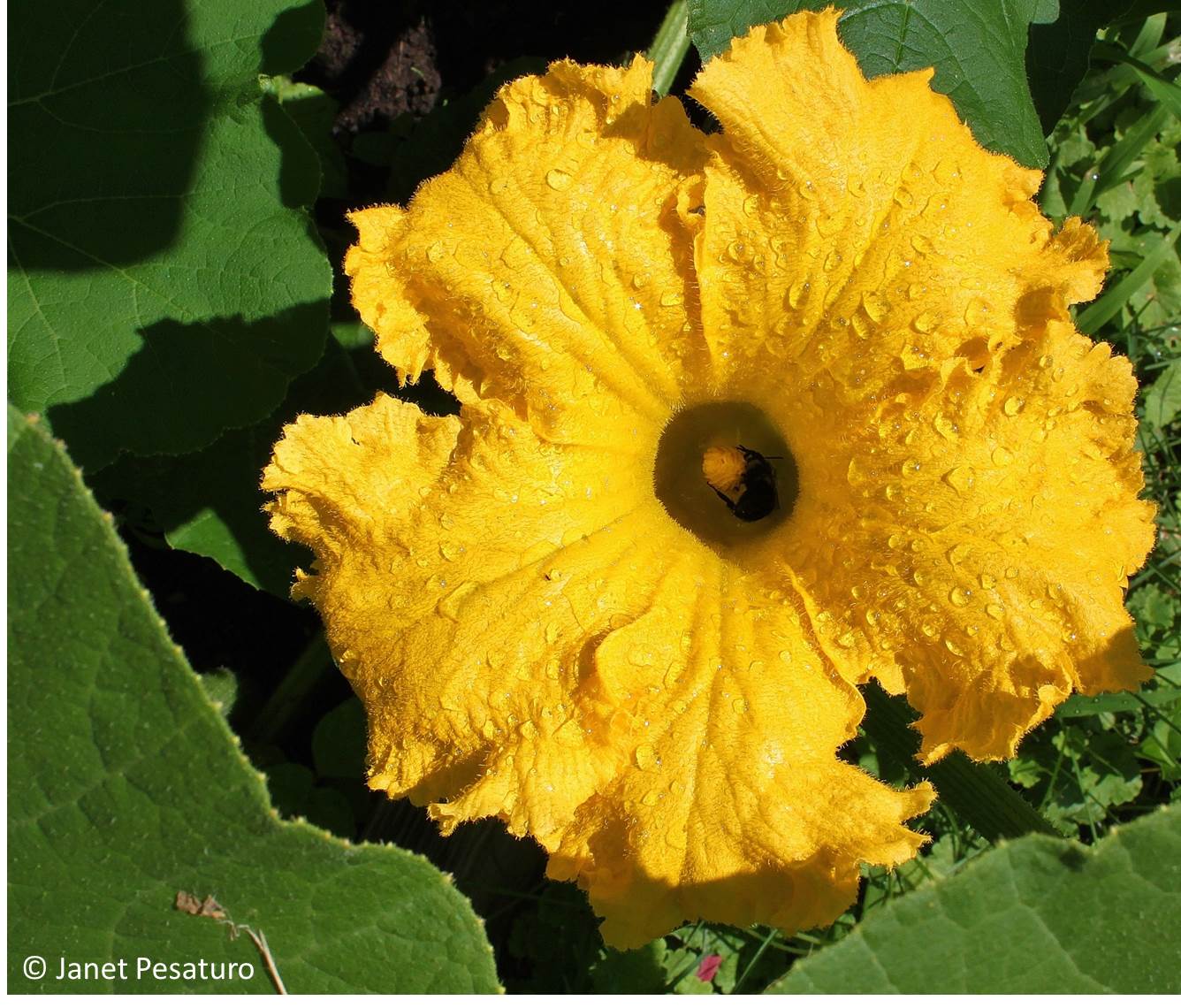
Winter squash blossom
Now that I grow winter squash and pumpkins every other year, squash bugs are a non issue. During a squash/pumpkin year in my garden, squash bugs begin to proliferate, but not enough to do significant damage. Those that overwinter in the garden find no suitable host plants the following summer, because I never plant them in consecutive years. So during a non-squash year in my garden, the bugs that have spent the winter either die out or leave. None of them survive (or stick around) to spend the following winter in my garden. The next spring, I set out my squash and pumpkin plants, and there is no in situ squash bug population ready to attack. Instead, they have to migrate in from other gardens, and that takes a while. By the time they find my plants, it’s too late for them to have a substantial impact.
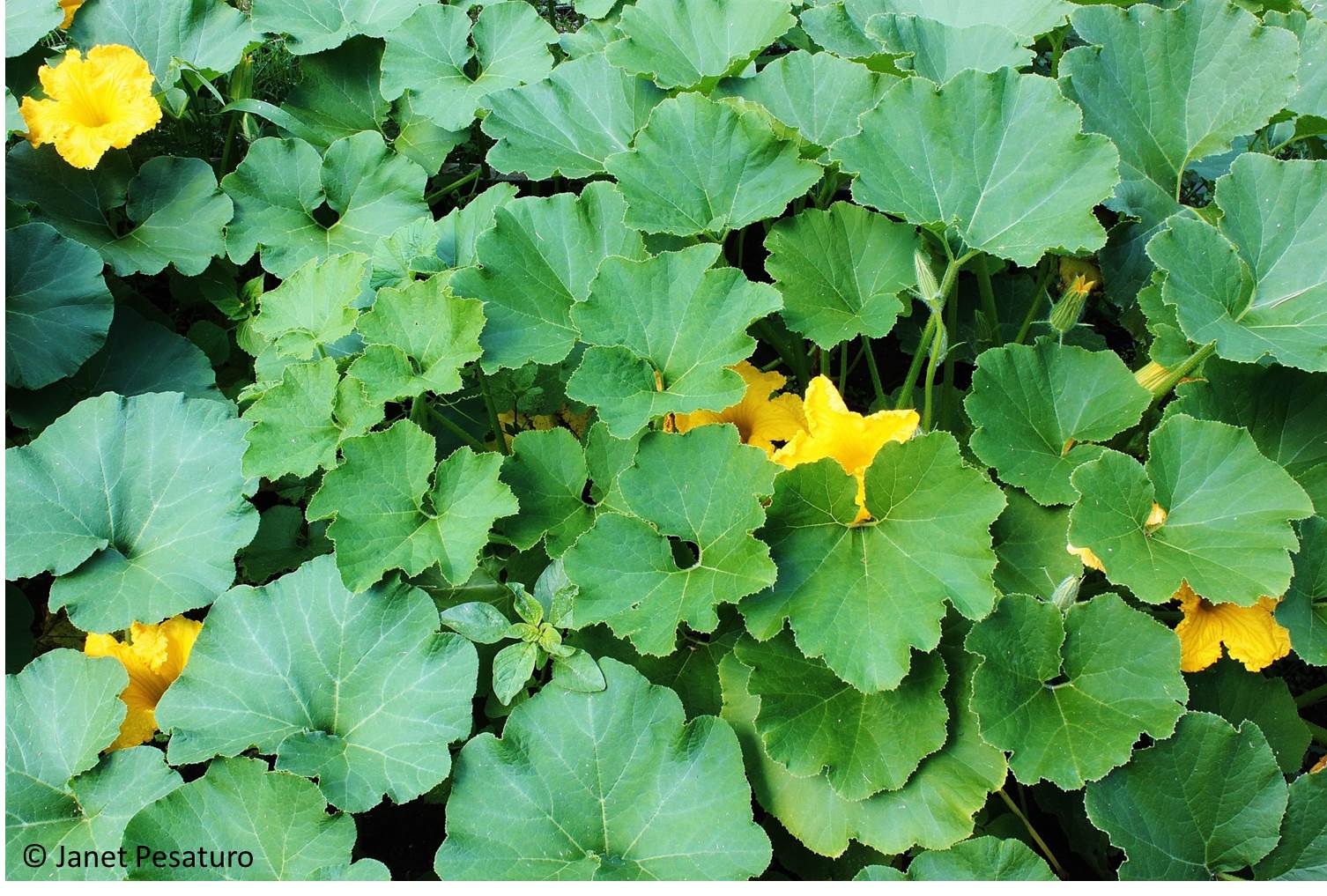
Lush, healthy winter squash plants in mid-summer
So that’s how we do it here. I realize that if I hand picked or treated the bugs, I could have an annual squash and pumpkin harvest, but I don’t want to spend the time on that, nor pollute the environment.
And it works out well that we have the exact same scenario with potatoes. Potato beetles become an overwhelming problem if I grow potatoes annually. So to evade both squash bugs and potato beetles, and I alternate years with potatoes and squash/pumpkins. It’s kind of nice that they are both starchy vegetables. This year is a squash year, so our starchy side dish is often squash. Next year will be a potato year, and we’ll eat a lot more potatoes than squash.
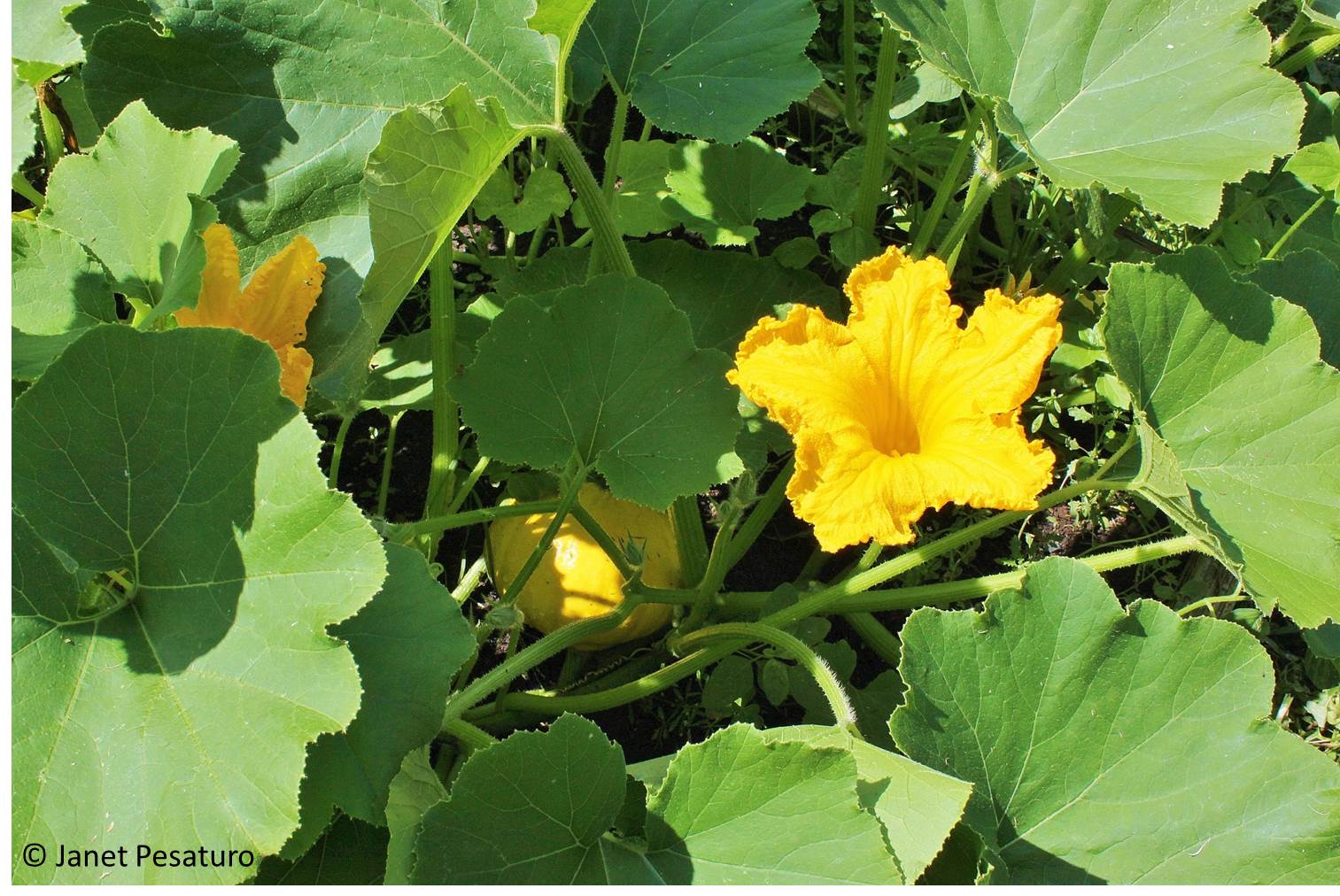
Healthy winter squash vine with developing red kuri squash
Of course it would be nice to grow both squash and potatoes every year, but I kind of like adapting to the environment once in awhile, rather than engaging in constant battle. That sometimes means forgoing resources that must be obtained at higher environmental cost, in favor of those that I can produce with low impact, or that exist in abundance at my fingertips. It’s a good lesson to teach my kids, too, and the squash/potato alternation and bug evasion is a nice concrete example for them to understand.
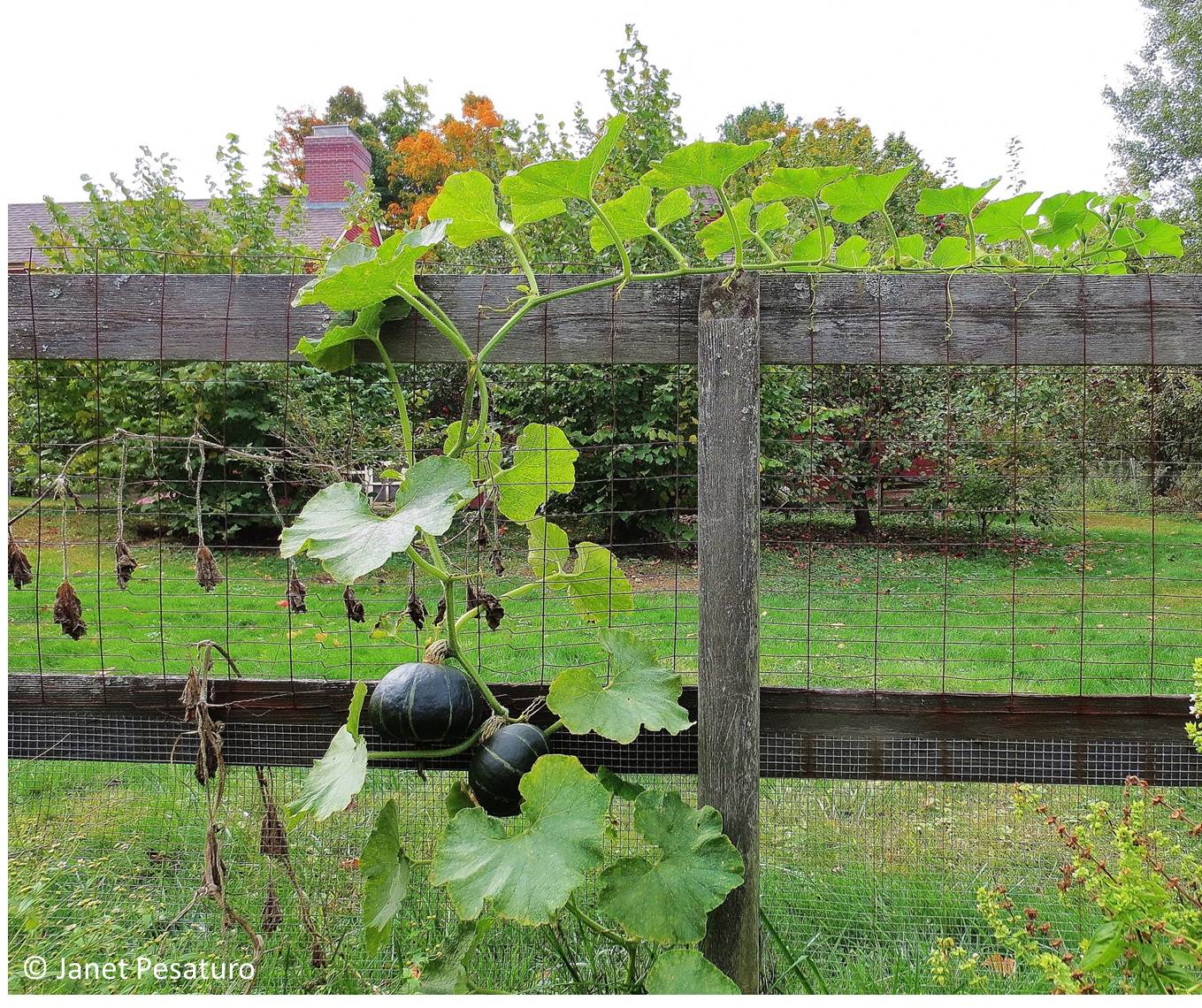
Kabocha squash climbing the garden fence
Choosing varieties
The fun thing about growing squash and pumpkins is that there are many beautiful and delicious varieties. I rarely grow field pumpkins because they take up a lot of space and don’t make good eating. They are beautiful, but I am fortunate enough to live down the road from a larger farm, where brilliantly colored maples and rolling hills frame a gorgeous pumpkin patch and cornfield.
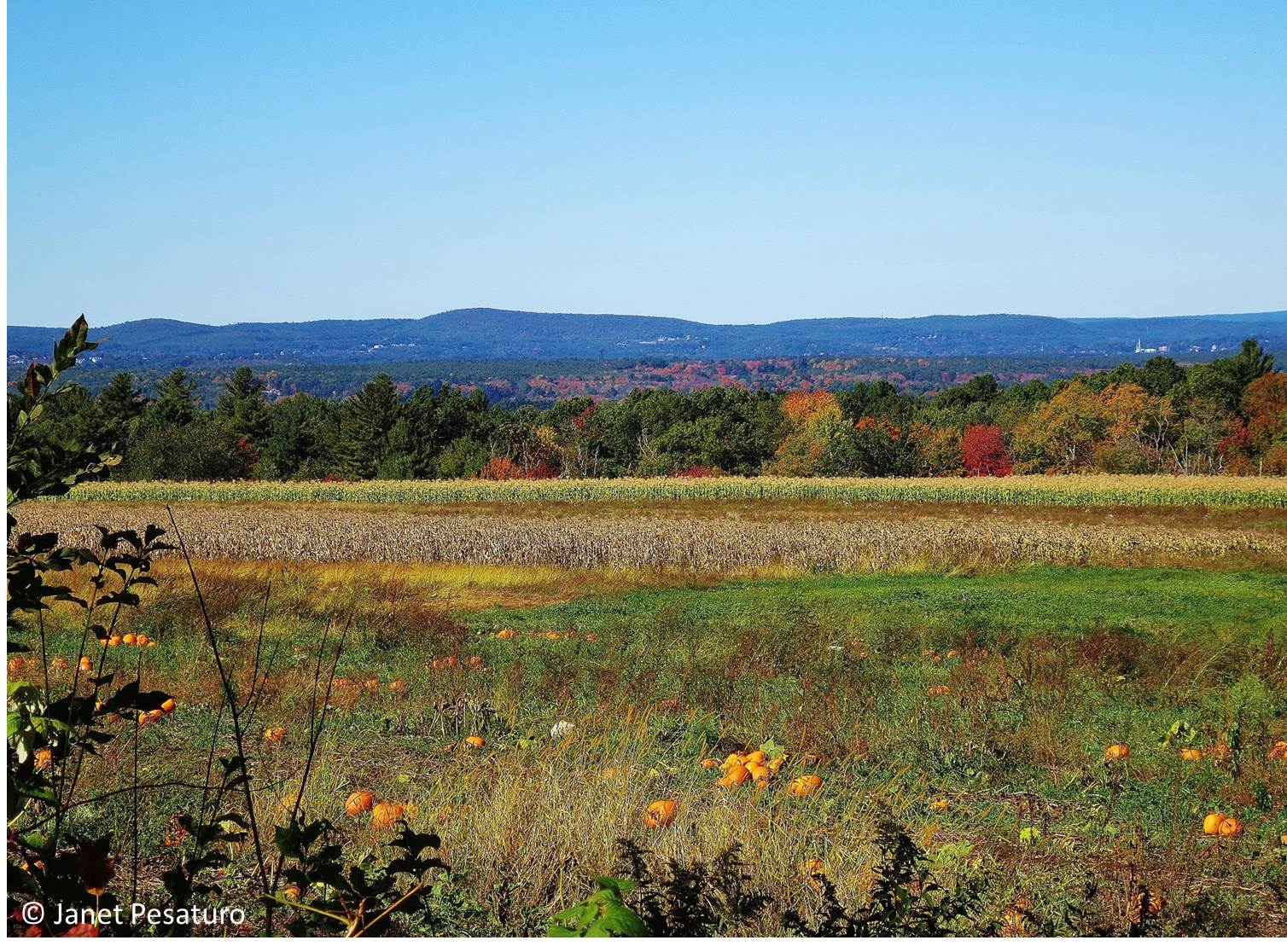
Ripe pumpkins and corn stalks grace the field at this New England family farm
I get to enjoy this stunning harvest symbol and lovely autumn landscape without any toil on my part.
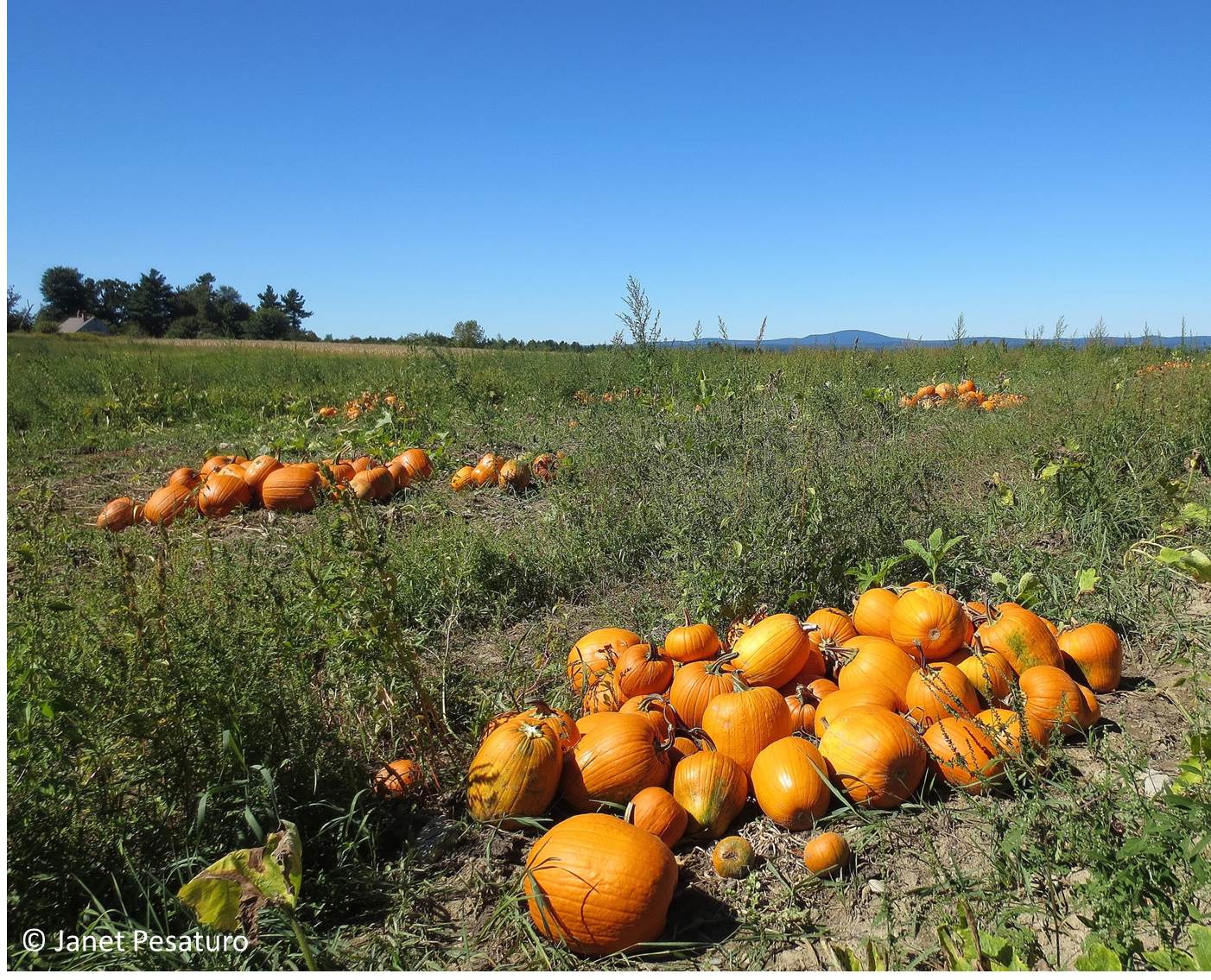
Pumpkins have been placed in piles, waiting to be sold and carved into Jack o’ lanterns
I often grow small sugar pumpkins and several varieties of winter squash, partly because some are better suited to certain uses than others, but also because they are all so beautiful that I cannot decide on one variety. Some need to be cured, and some don’t. Some endure months of storage in the basement, and others must be used soon after harvest.
Acorn and delicata do not need to be cured, but do not last more than a couple of months after harvest. Buttercup, butternut, hubbard, and kabocha need to be cured but last (with proper storage) for at least several months. Red kuri is a nice one, because it does not need to be cured, and lasts at least several months. Butternut lasts longest in storage. All of this is summarized on this very helpful chart from Johnny’s Seeds.
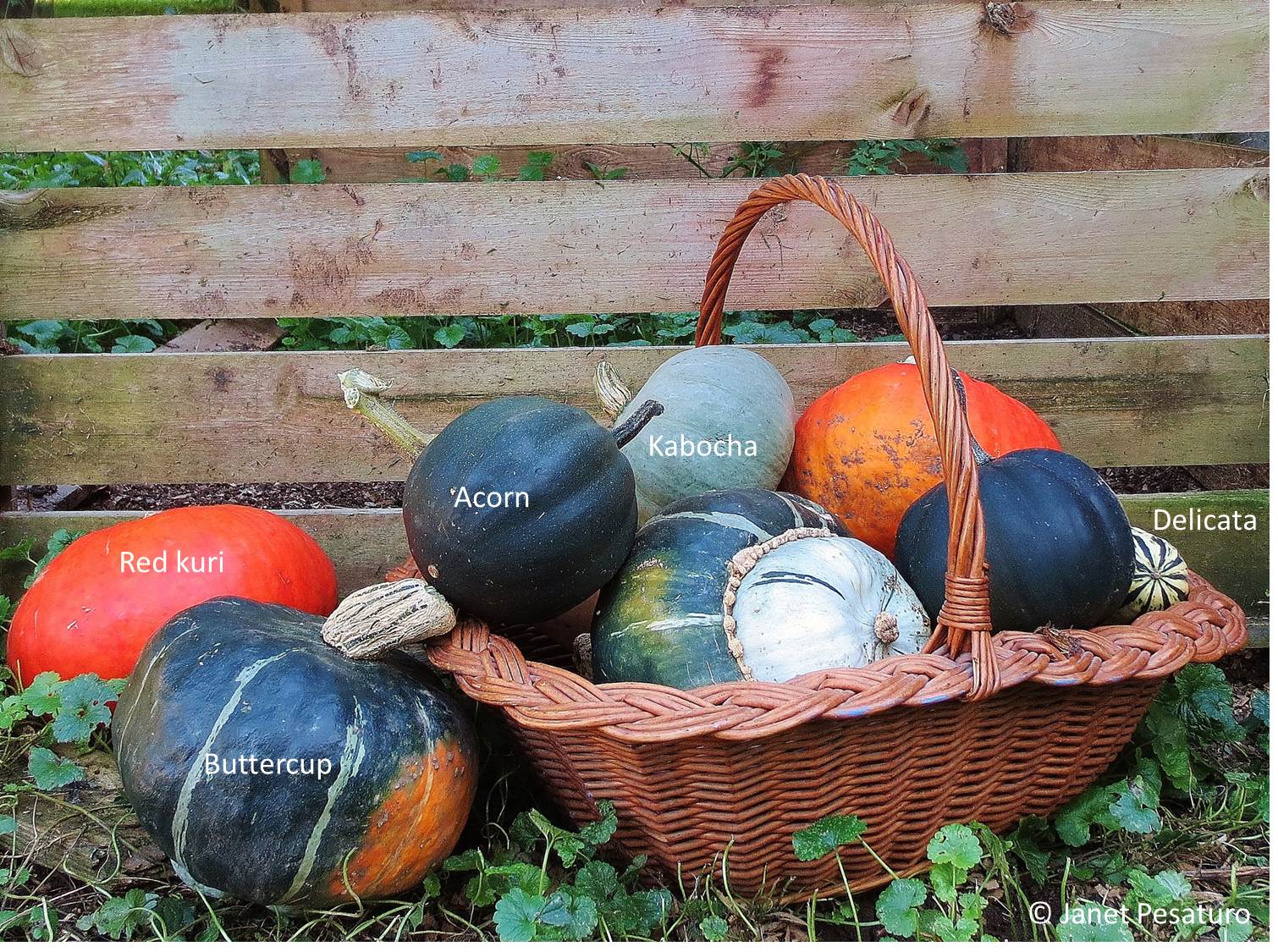
Acorn, red kuri, kabocha, buttercup, and delicata squash
This year I grew 1 or 2 vines each of acorn, delicata, kabocha, butternut, and buttercup. We just finished eating our acorn and delicata squashes, and will move on to the others, leaving the long storing butternut for last. Check out Johnny’s Seeds, my favorite seed company, for their tremendous variety of squashes and pumpkins.
Cooking with pumpkin and winter squash
The possibilities are endless. Mashed, glazed and roasted; pureed for soups, breads, muffins, pies, and, of course, for ice cream
Shared on: