
Cranberries from the wild
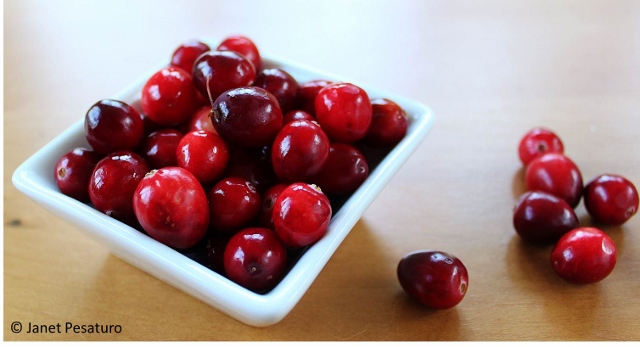
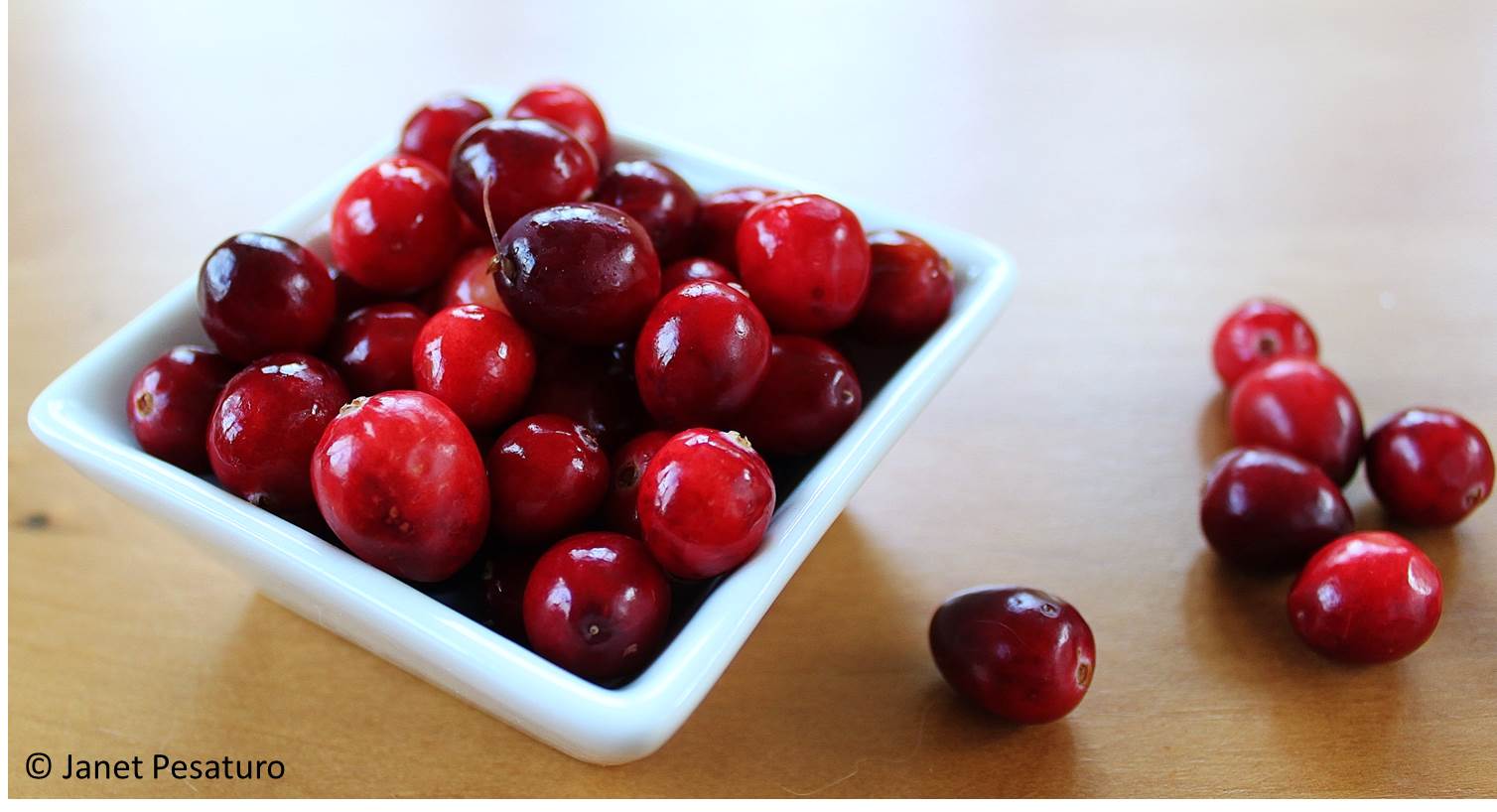
Large cranberry, Vaccinium macrocarpon
Wild cranberries begin to ripen in September, but I like to wait until late October, or even November, to harvest them. They sweeten as the season progresses, especially if they are hit with a frost after they have already turned red. Waiting that long is risky, though, if the crop is small, because frost will ruin unripe berries, and because other people and animals might get the good ones before you do.
Last year was perfect, in my area, for gathering these vitamin C and antioxidant rich berries. Several frosts sweetened them before we picked them in late October and early November. And, there had been a bumper crop, so plenty remained for us after wild animals had been feeding on them for over a month. The cranberries were unusually sweet and juicy, remarkably suitable for raw eating, like none I’d ever had. Those that survived the trip home made the best cranberry sauce ever, with little added sugar.
This year hasn’t been quite so wonderful for cranberry foragers around here. Pickin’s were rather slim earlier this week, the nights had not yet dipped below freezing, and the berries were comparable in flavor and texture to their store bought relatives. It was a fun outing with a great group of people, nonetheless, and we were rewarded with plenty of interesting animal sign (which might appear in future posts).
Identifying wild cranberry plants
If you find cranberry plants in July, you’ll be treated to beautiful flowers, each with 4 recurved petals of white with a pinkish cast. But only if you look carefully, for they are tiny and inconspicuous.
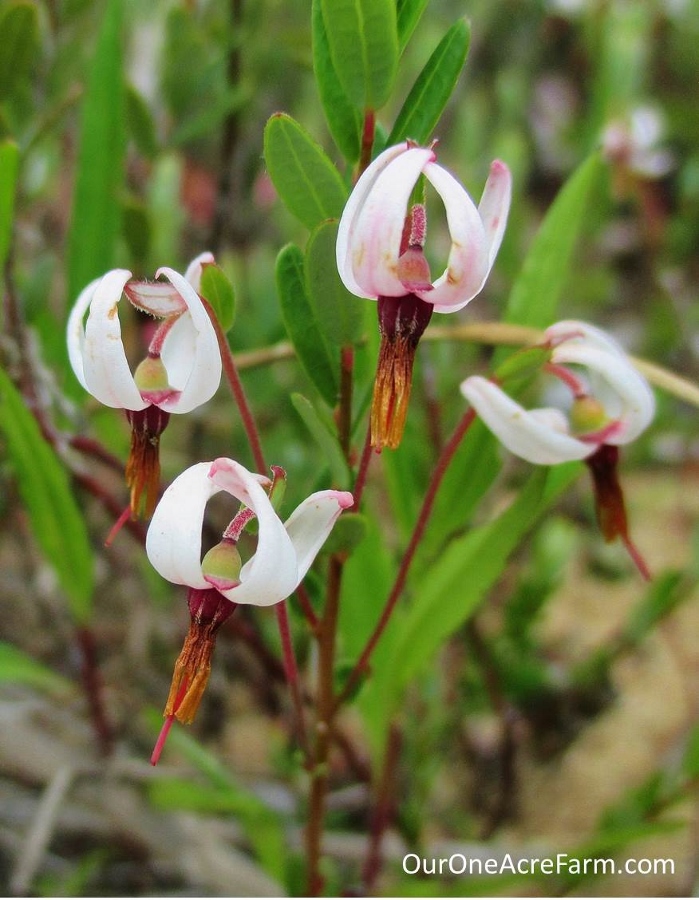
Flowers of wild cranberry
By late July, there will be many green berries, with some beginning to turn pink.
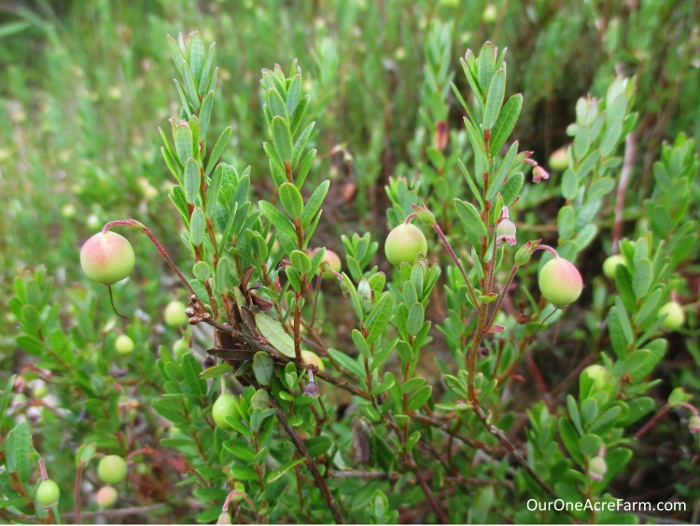
Unripe cranberries in late July in central Massachusetts
But don’t be tempted to pick them until they are fully ripe.
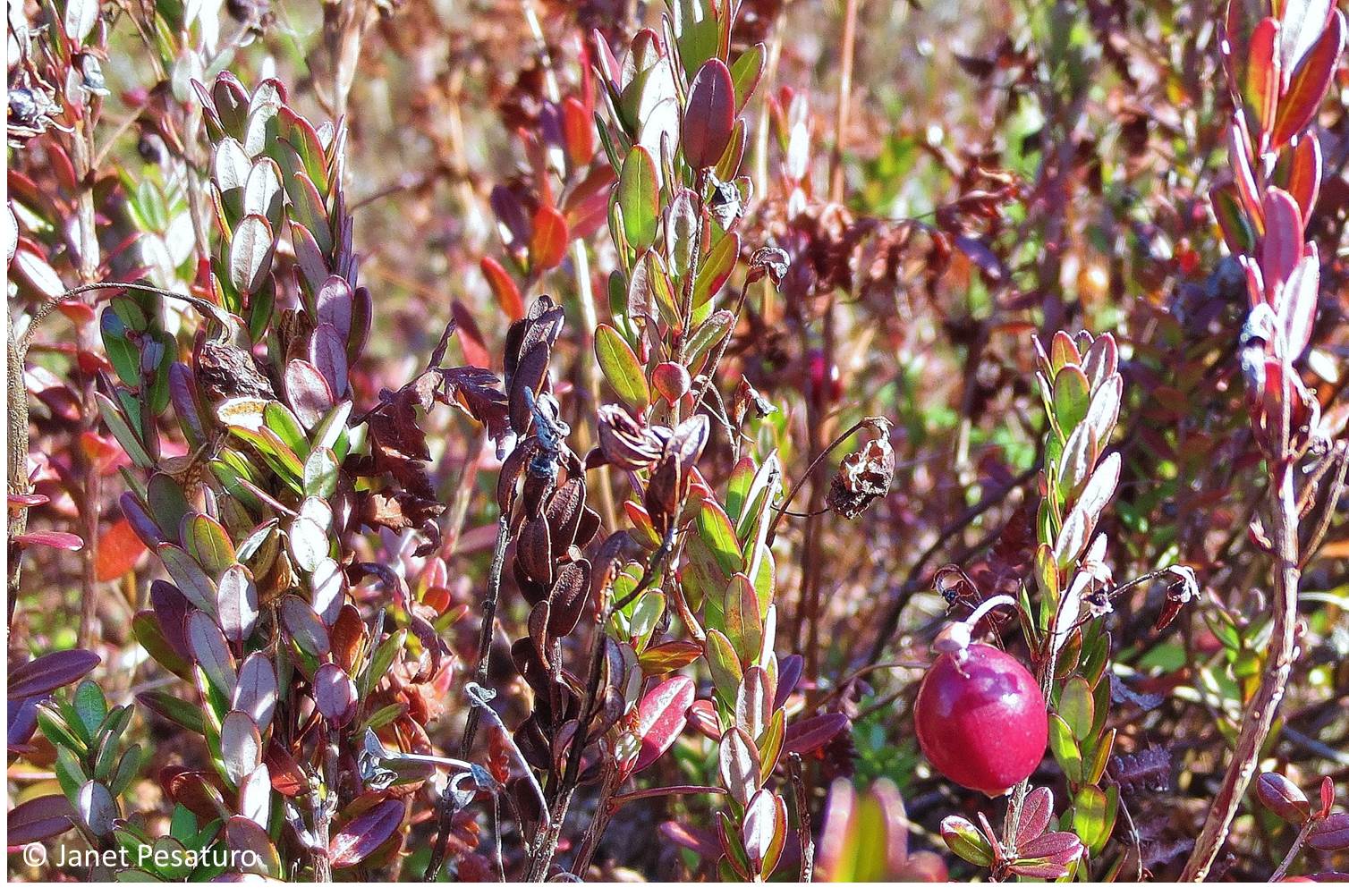
Wild large cranberry, Vaccinium macrocarpon, growing near a lake
Closely related to blueberries, wild cranberries grow on small, creeping shrubs with slender, wiry stems, that don’t get more than about a foot tall. Two species are common around here, the large cranberry, Vaccinium macrocarpon, and the small cranberry Vaccinium oxycoccus. Though the berries obviously differ in size, there is some overlap.
You don’t really need to be able to distinguish between them because both are edible. But for the fun of it, I’ll tell you how. The tiny, elongated leaves of large cranberry, which you can see in my photos, are flat with rounded tips. The leaves of small cranberry, on the other hand, have pointed tips and recurved edges. Leaves of both species are green during the growing season, and turn reddish in fall (as can be seen in the photos).
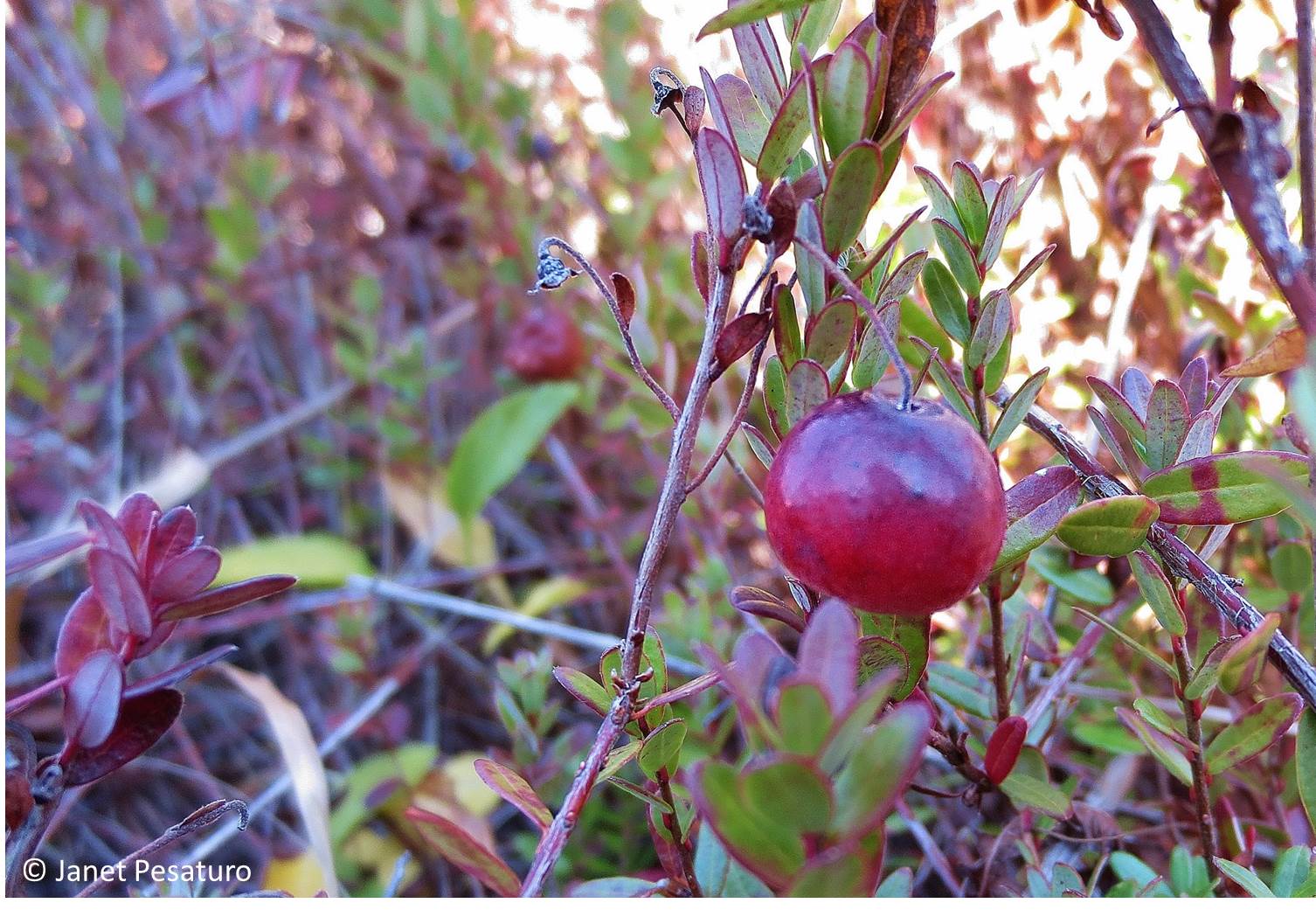
Large cranberry, Vaccinium macrocarpon
Where to forage for wild cranberries
First, be sure you are looking within their geographic range. According to the USDA Plants Database map, the large cranberry grows within most of eastern North America (except for the southern-most states), the west coast, and the Northwest Territories. The small cranberry is found over most of northern North America.
Once you know you are within the range of either species, search for them in sunny, open areas with wet, acidic soil. These conditions are met in bogs, the classic cranberry habitat. But they also grow in moist soil near ponds and lakes. It’s convenient for you if the soil isn’t too wet, so you can get down on your hands and knees to pick them. Otherwise, foraging for wild cranberries can be a bit of a back breaker.
What to do with wild cranberries
Anything you can do with cultivated cranberries can be done with wild cranberries. Freeze them just as they are, make and can juice or sauce, roast them with diced winter squash and add them to a savory rice or quinoa dish, or toss a few into an apple pie. You can also try my Wild Cranberry Swirl Cheese Ice Cream.
Have you gathered wild cranberries? How do you use them?
I shared this on: