
Black Huckleberries, Gaylussacia Baccata
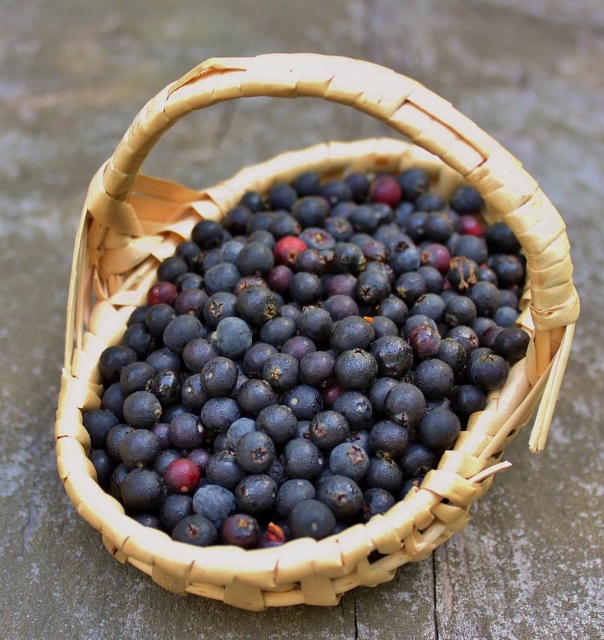
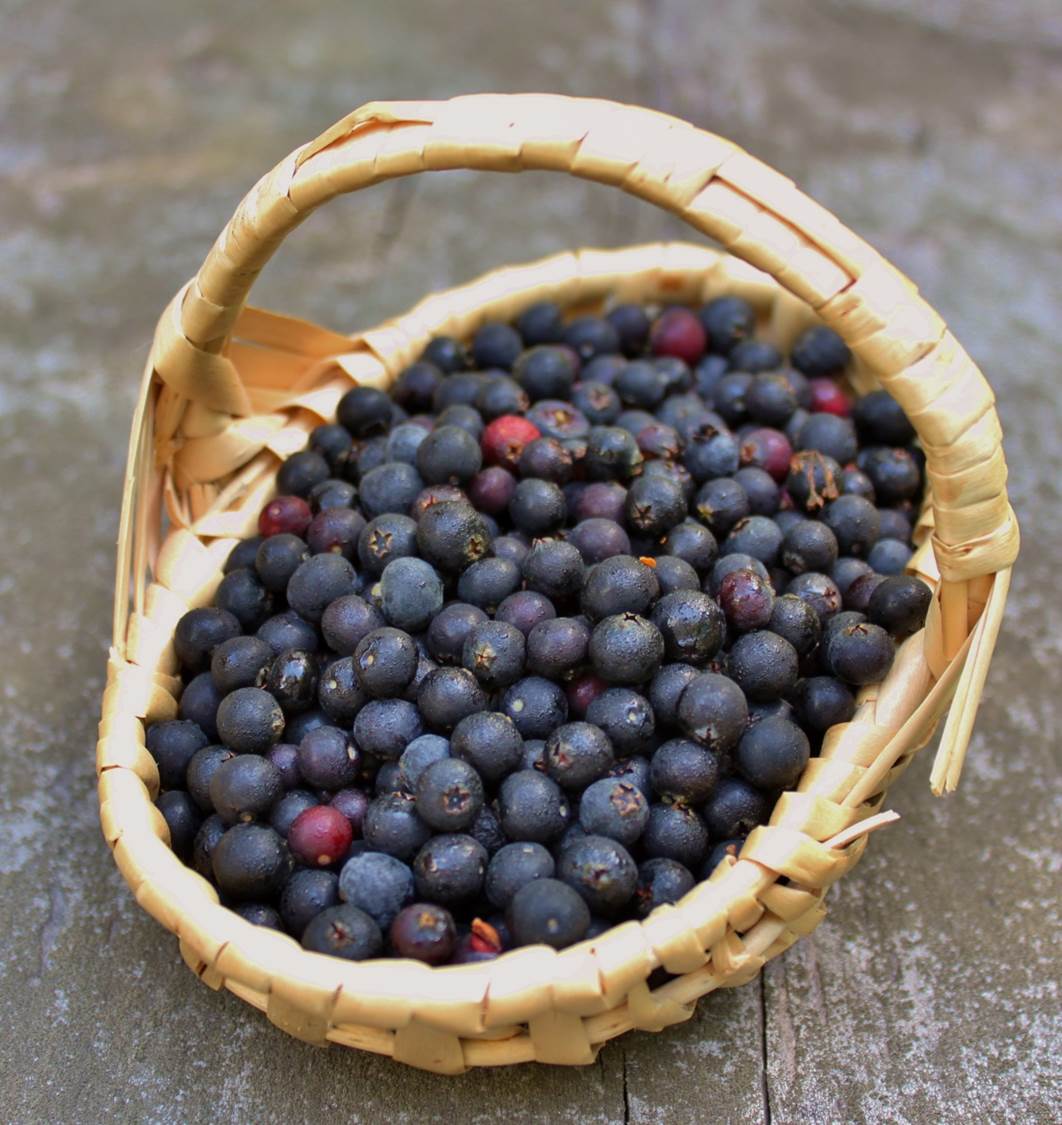
Black Huckleberries (Gaylussacia baccata)
Black huckleberries (Gaylussacia baccata) are a favorite wild edible because they are easy to find and identify, and tasty enough to eat by the handful. They taste similar to their wild blueberry cousins (Vaccinium spp.), but the larger seeds of huckleberry add a bit of a crunch. The seeds are not so large that you’ll want to spit them out – the crunch is similar to what you get when you eat raspberries or blackberries.
Most people who think the huckleberry’s flavor is inferior to that of the blueberry are probably making an unfair comparison. Huckleberries and blueberries are often found side by side, but black huckleberries ripen a week or two later. So if you taste the two types of berry when blueberry season is peaking, you might be comparing ripe blueberries to not quite ripe huckleberries.
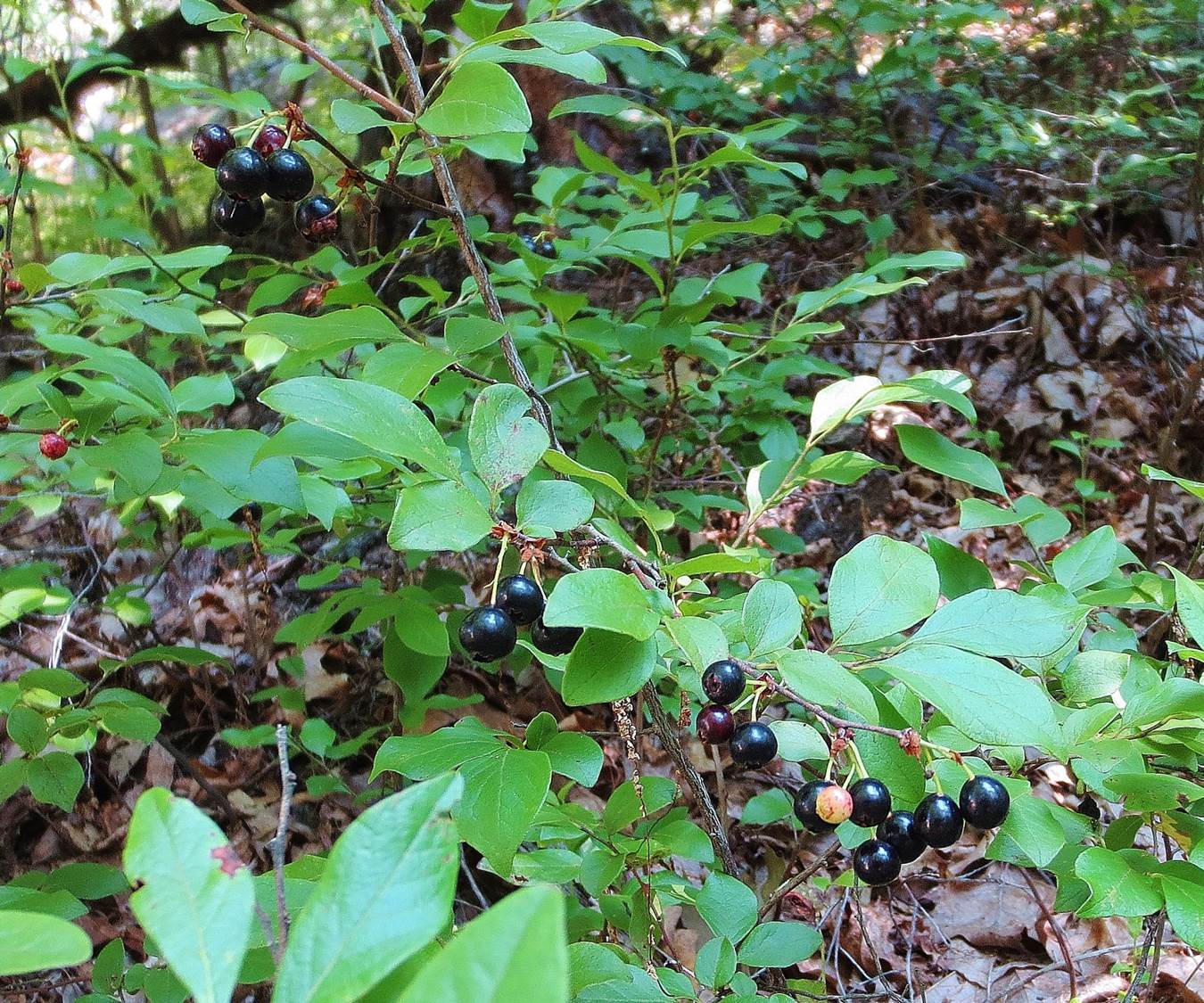
Black huckleberry shrub with berries
As far as I know, black huckleberries are not grown commercially. Why? I’m not sure, but I find that the yield of berries varies considerably from year to year, and perhaps this makes them too unreliable for commercial cultivation. You have to pick them yourself if you want them, and for that reason, I find huckleberry picking more fun and worthwhile than blueberry picking.
Now let’s move on to how to identify black huckleberry.
General description
This shrub usually reaches 2 to 4 feet in height. Its small, oval leaves with smooth edges are alternately arranged on the twigs. Leaves are green with a faint yellowish cast. The hint of yellow is due to yellow resin dots which are hard to see without a magnifying glass. The leaves turn red in fall.
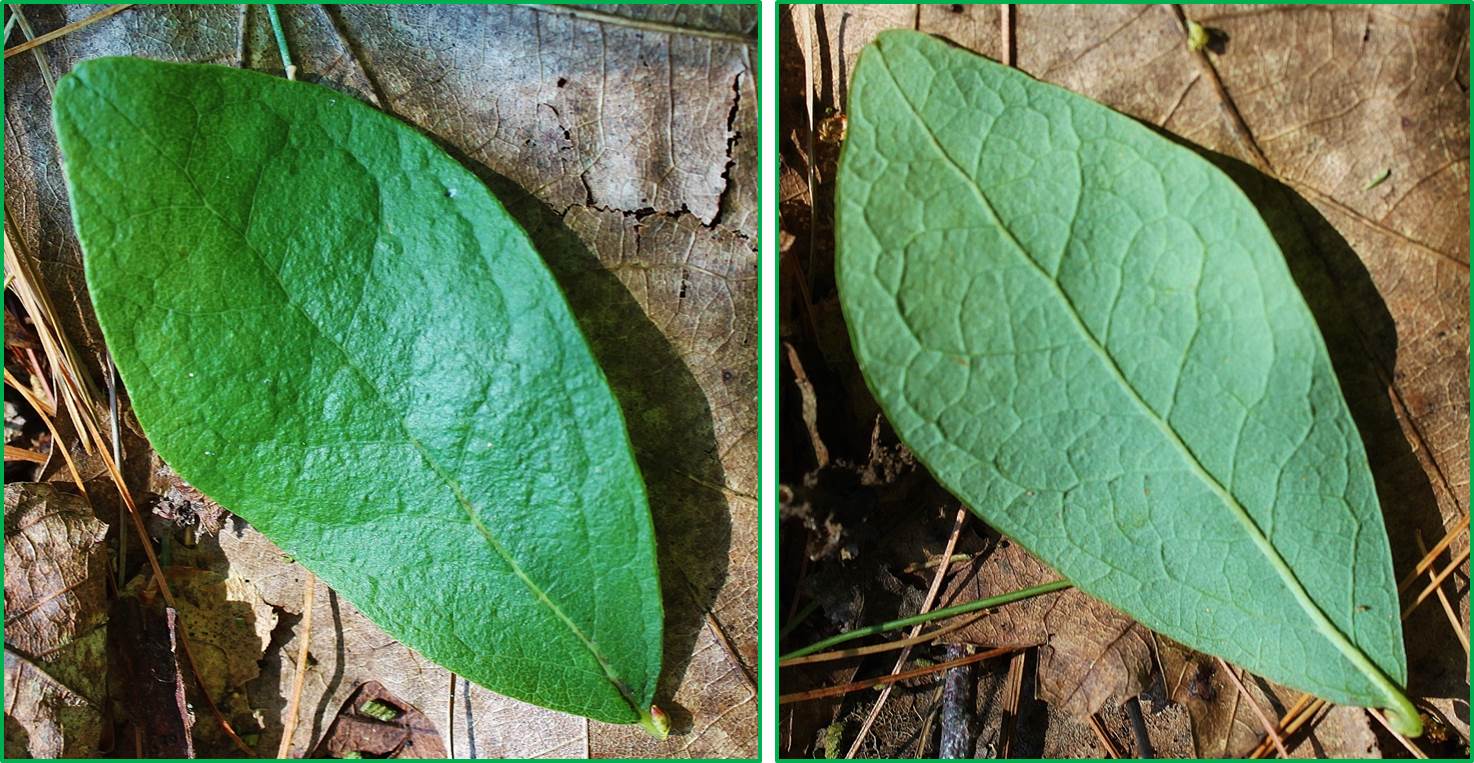
Leaf of black huckleberry, Gaylussacia baccata
Black huckleberry flowers
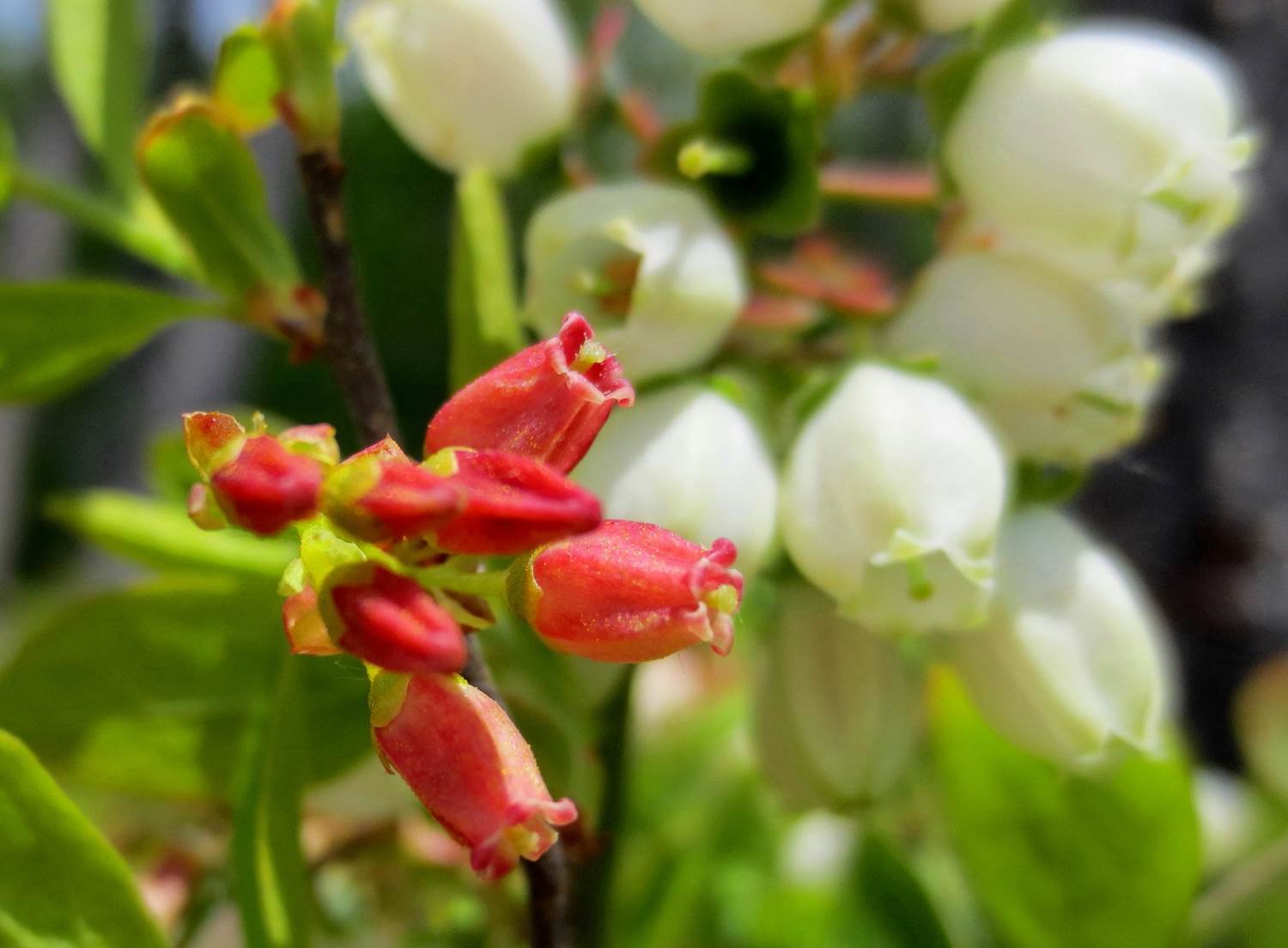
Flowers of black huckleberry (front) are smaller than the white flowers of high bush blueberry (behind)
In spring (mid-May, here in Massachusetts), Gaylussacia baccata produces small, pinkish red flowers with a lantern-like shape, similar to the flowers of blueberry. They are about the same size as the flowers of lowbush blueberry (Vaccinium angustifolium), but smaller than those of high bush blueberry (Vaccinium corymbosum).
These tiny flowers emerge months before the berries ripen, long before you are thinking about foraging for black huckleberries. But that’s why knowing how to identify them is so useful.
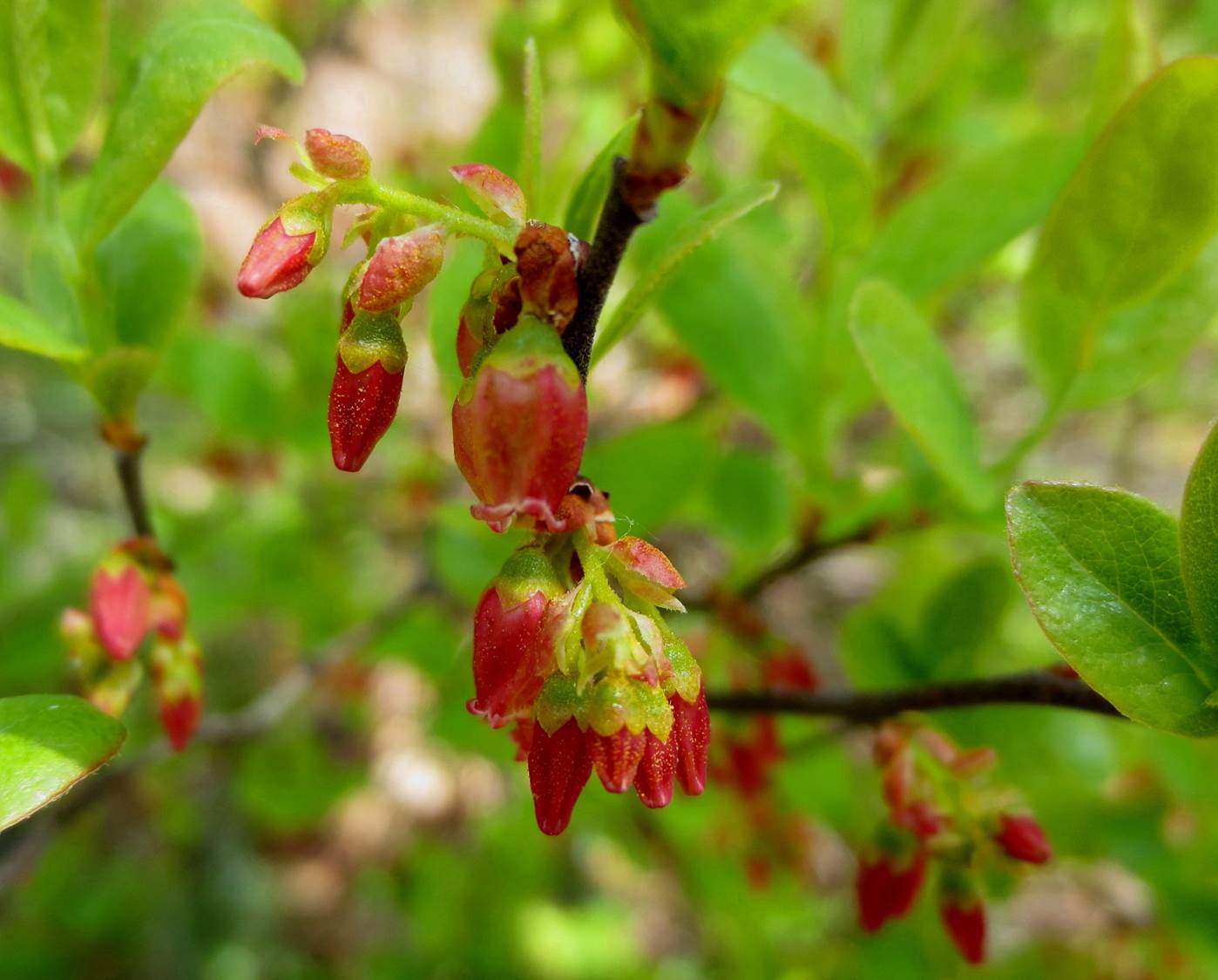
Flowers of black huckleberry, Gaylussacia baccata
Once you know what they look like, you develop a search image for them. Then it’s easy to scope out an area for the flowers in spring, and make note of where you found a large patch black huckleberry. That’s where you should return for summer huckleberry picking. Not to mention the fact these little flowers are beautiful. I look forward to seeing them as much as I look forward to collecting the berries.
Berries of Gaylussacia baccata
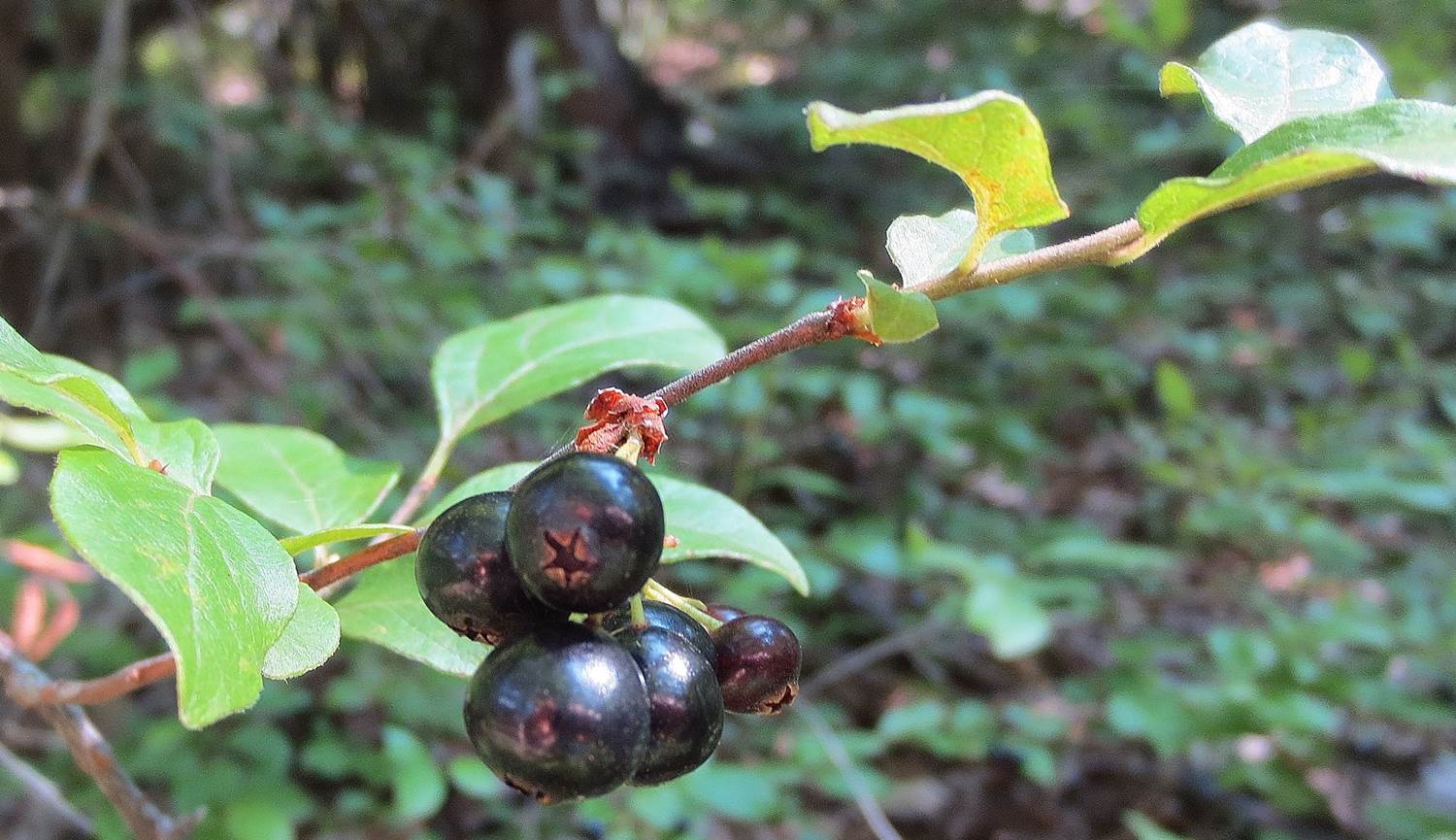
Ripe black hucklberries
The shiny, 1/4 to 3/8 inch diameter blue-black berries ripen in mid-summer. This is mid July to early August in Massachusetts. They look like blueberries and the easiest way to distinguish the two is by tasting and experiencing the noticeable crunch of huckleberry seeds.
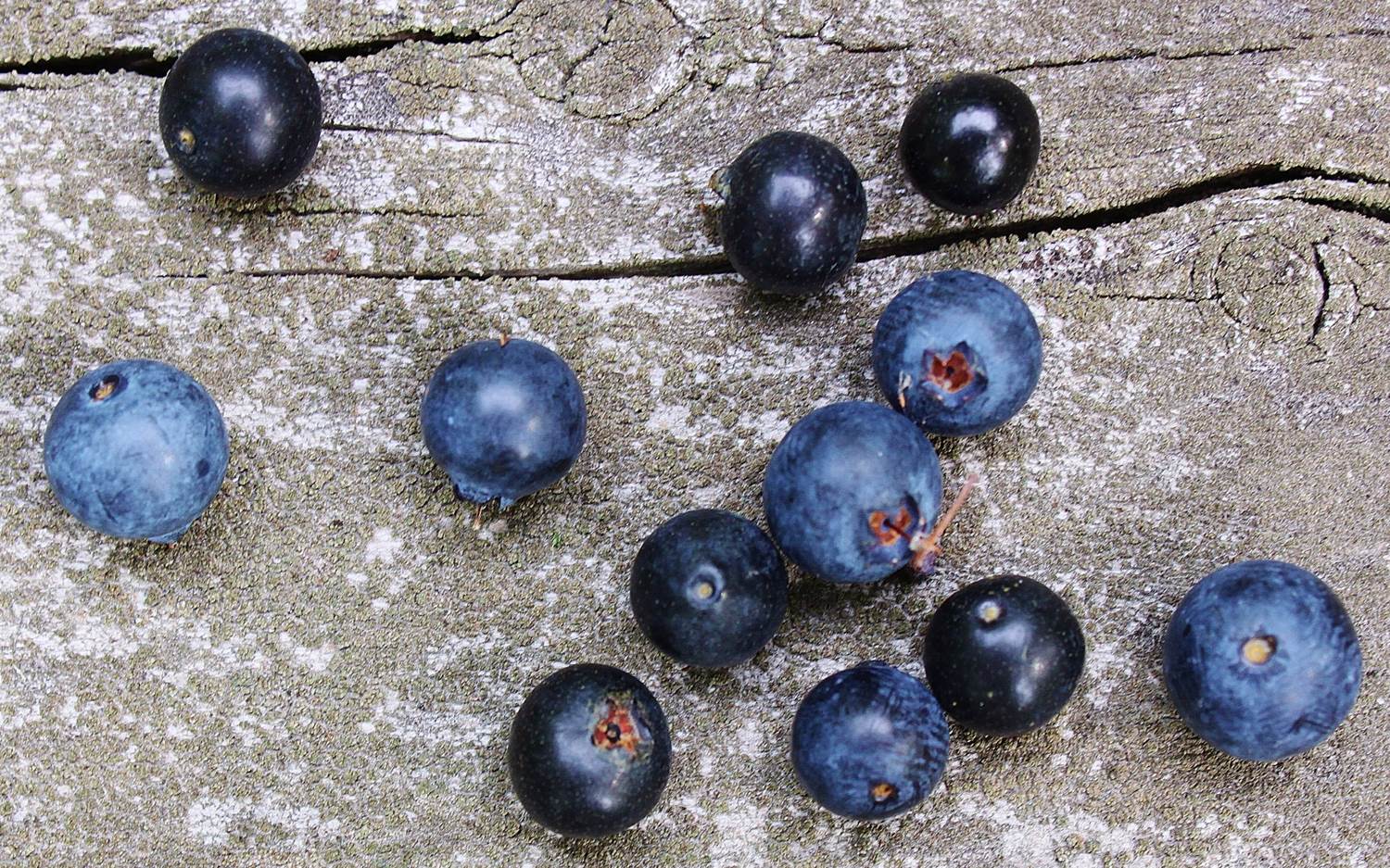
Black huckleberries and blue huckleberries
You might notice that the berries of some huckleberry shrubs are dusky blue rather than shiny blue-black. Some foragers say that some black huckleberry shrubs produce dusky blue berries, but I think those are probably blue huckleberries, Gaylussacia frondosa, another common species. Blue huckleberries are also tasty.
Where to find black huckleberries
Gaylussacia baccata is a common shrub over most of eastern North America, and can be found in acidic, well-drained sandy soil. As long as those conditions are met, it seems to do well in a wide variety of habitats, from rocky ridge tops to low, moist areas. My favorite place to pick huckleberries is at a ridge top in Berlin., MA, where it dominates the understory for acres and acres, beneath a relatively open, mixed oak forest. My second favorite place to gather them is around a beaver pond in Bolton, MA. It will grow in shade but fruits better in sun or dappled, light shade.
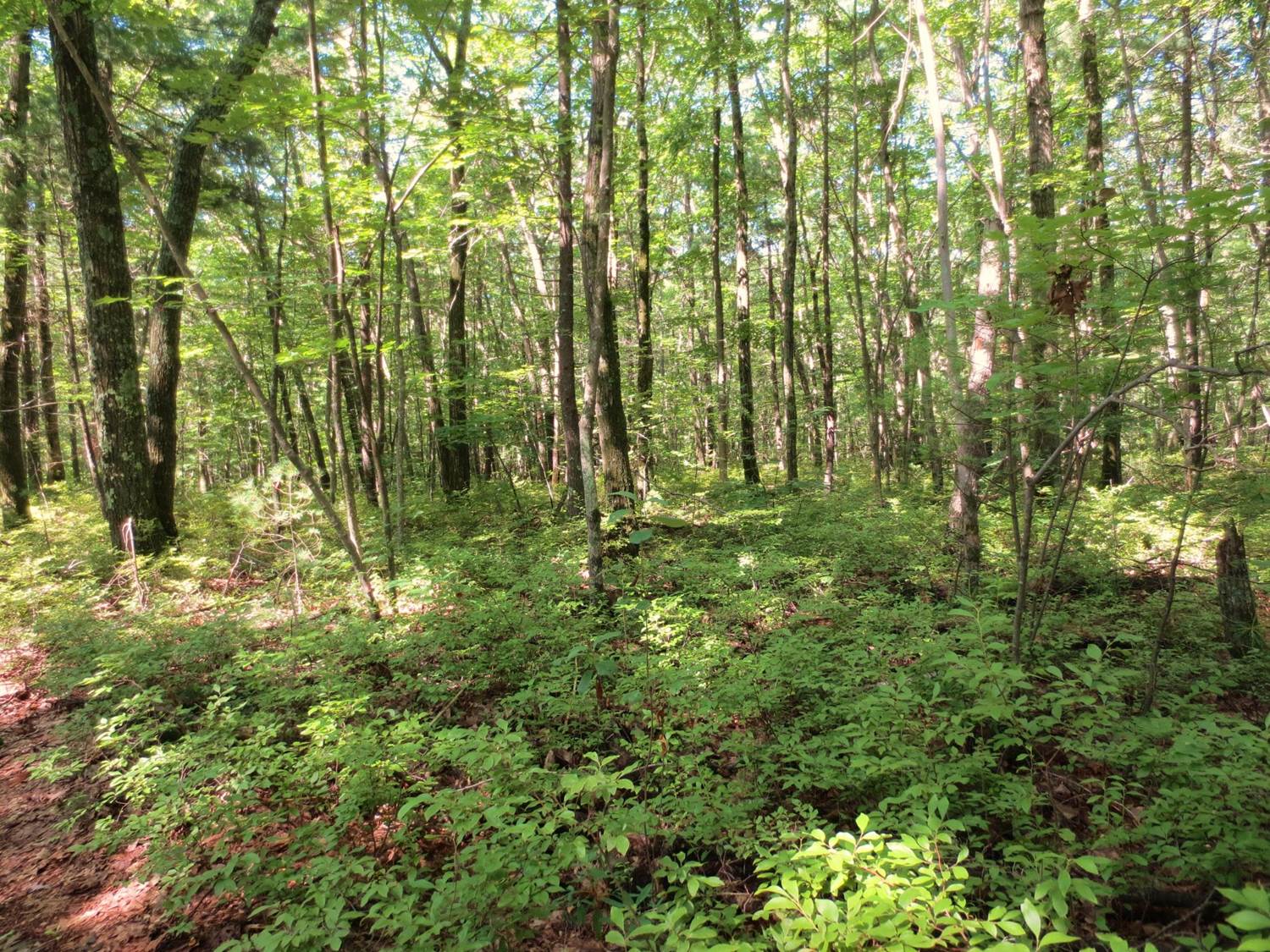
Black huckleberry dominates the floor of this ridge top mixed oak forest.
Eating and cooking with black huckleberries
Black huckleberries are sweet and delicious enough to be popped into your mouth by the handful, with no cooking or preparation. They can also be used in place of blueberries in recipes for pies, muffins, breads, etc. For a cool and creamy treat, try my huckleberry swirl lemon ice cream recipe.
Doubts?
In doubt about a plant you’re trying to identify? Then don’t eat it. For further information, I highly recommend Sam Thayer’s books, Nature’s Garden: A Guide to Identifying, Harvesting, and Preparing Edible Wild Plants

Shared on: Wildcrafting Wednesday #119, Heritage Homesteaders Hop #11, Homestead Barn Hop #159, Thank Goodness it’s Monday #70, Homemade Mondays #80, Backyard Farming Connection #80, Natural Living Monday, HomeAcre Hop #70, From the Farm Blog Hop, Simply Natural Saturdays, Tuesdays with a Twist #59, Simple Life Sunday #19
