
Woolly oak galls, Callirhytis lanata
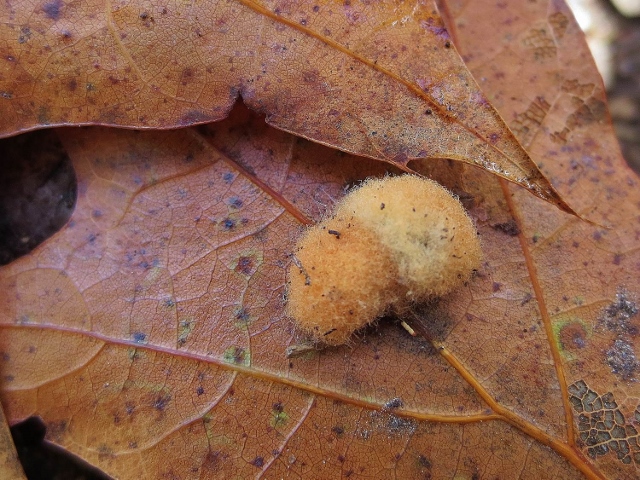
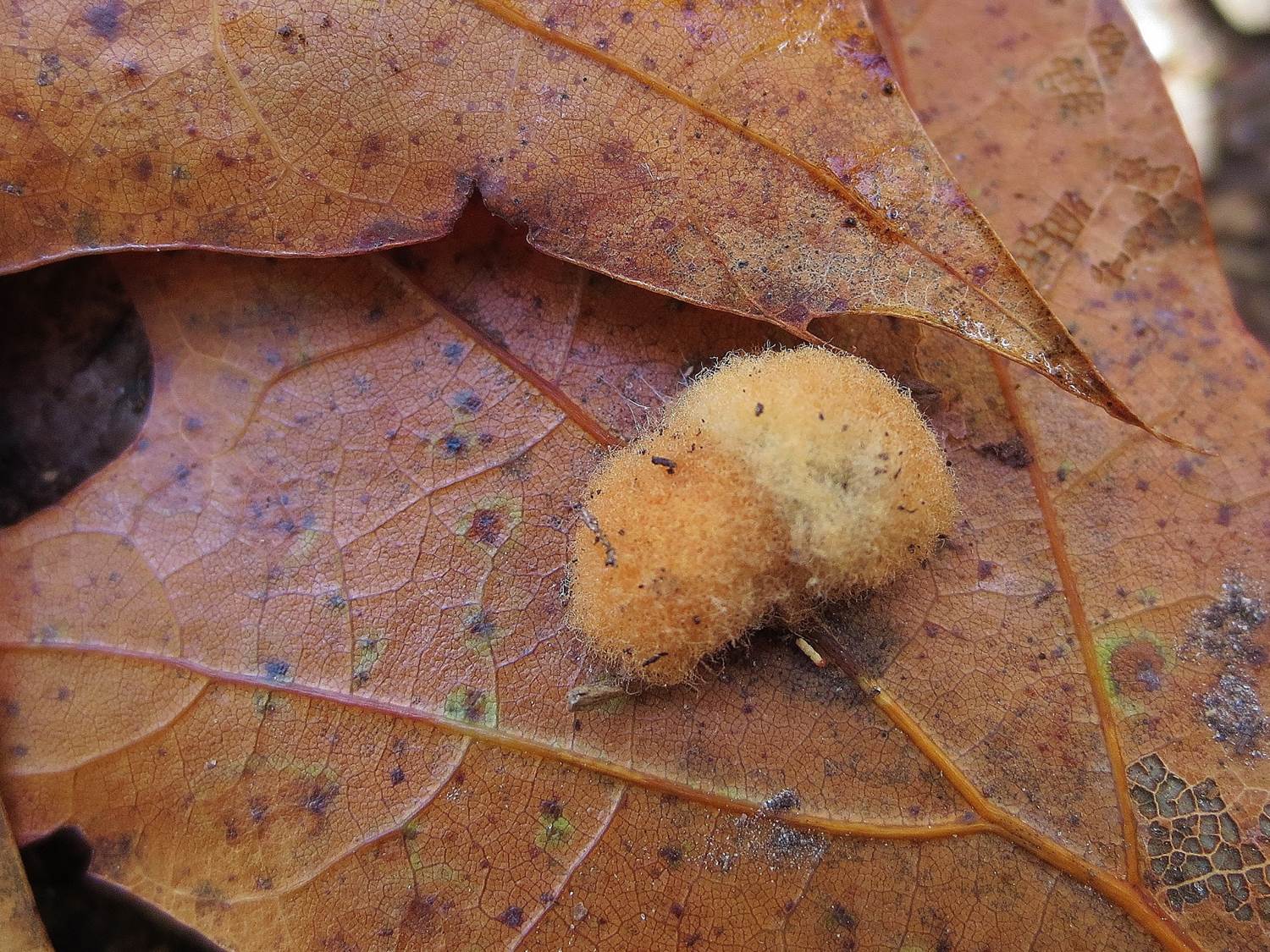
Woolly oak gall, Callirhytis lanata, on red oak leaf
This must be a banner year in Massachusetts for woolly oak galls produced by the wasp Callirhytis lanata, because we naturalists-but-not-bug-experts who’ve never noticed them in past years, have been finding these quarter-inch, buff colored pompoms scattered all over the forest floor for the past week or so.
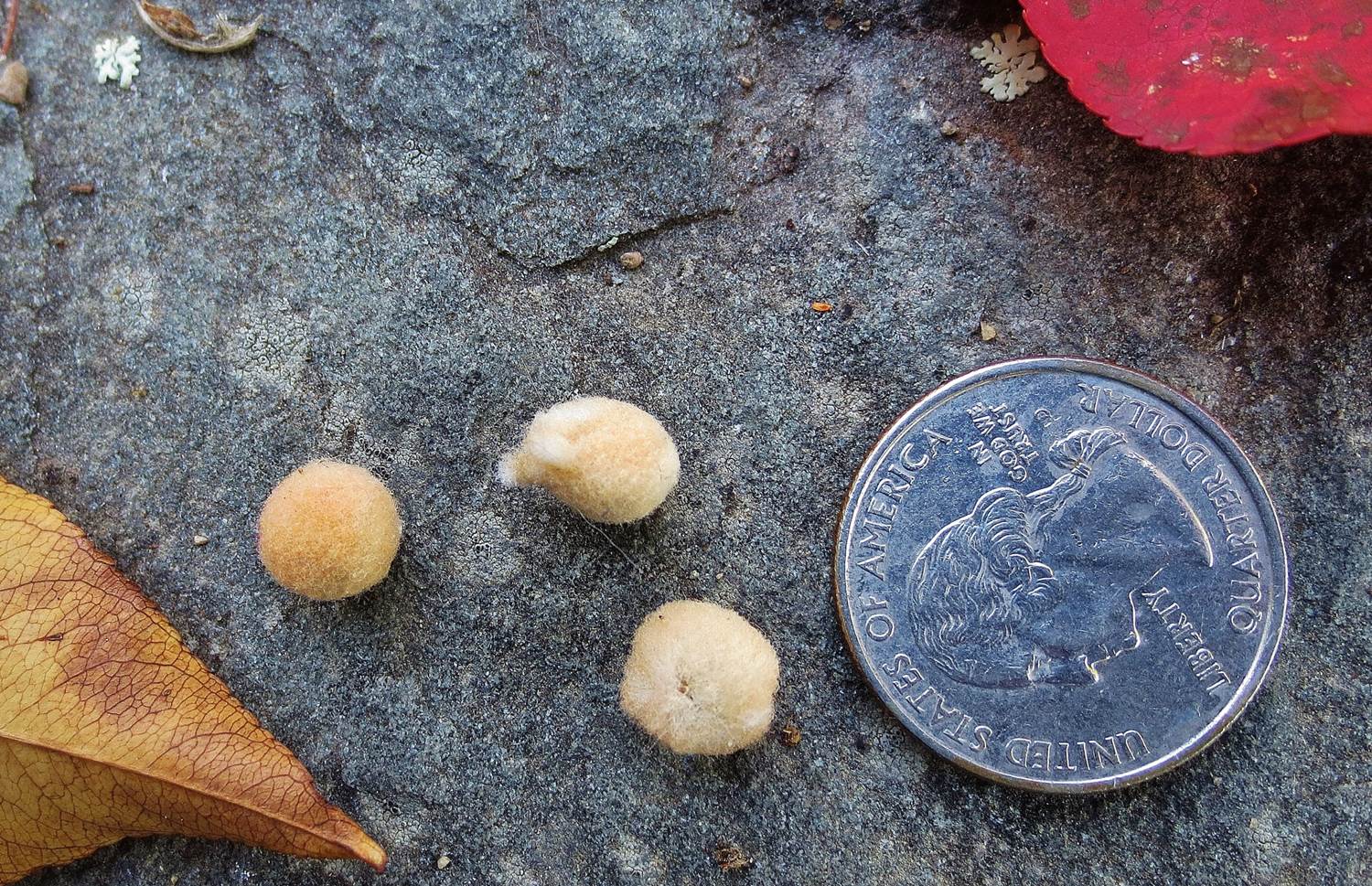
Woolly oak galls with quarter for scale
The first day I noticed them, I found them loose on the ground. My first thought was mast of some sort, but I know most of the plants in the woods where I walk, and none, to my knowledge, produces seeds that look quite like these little balls.
The forest was predominately oak, so on a hunch I googled “oak fuzz balls” or some such phrase, and quickly arrived at a diagnosis. I learned that the life cycle of C. lanata fits perfectly with the appearance of these galls on the forest floor at this time of year. The wasp lays its eggs in spring, and the galls form on the undersides of the leaves as the larvae develop. The galls fall off the leaves in October, and adults emerge 1-3 years later, in spring.
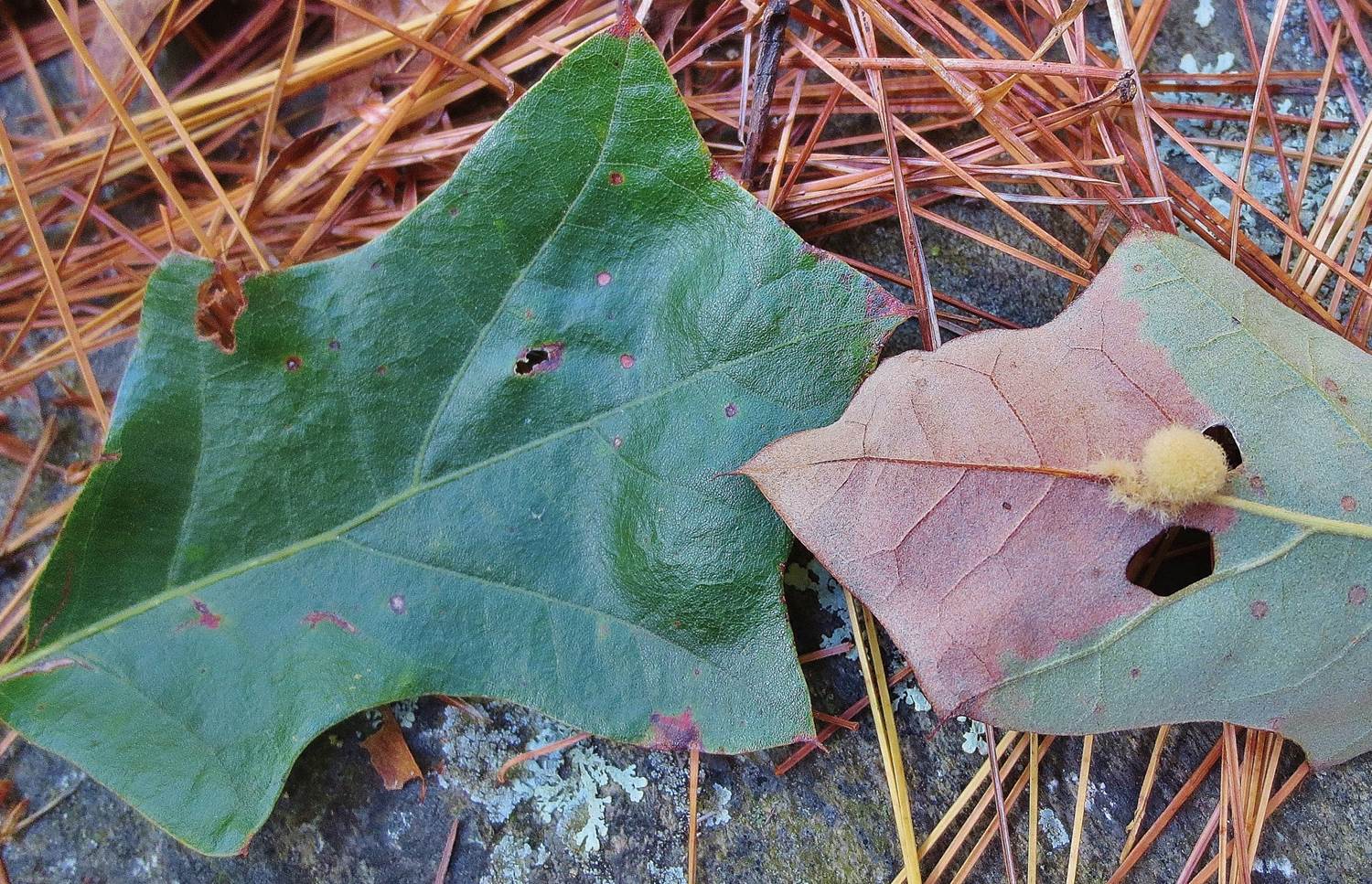
Woolly oak gall on scrub oak, Quercus ilicifolia
Today, a couple of days after a storm blew a lot of leaves off the trees, I returned to the same woods and found that some of the oak leaves now on the ground did indeed have woolly oak galls still attached to the undersides. I found them only on leaves of red oak species: northern red oak (Quercus rubra) and scrub oak (Q. ilicifolia). I did not find any on white oak leaves. Though sources are inconsistent, I don’t think C. lanata lays eggs on white oaks.
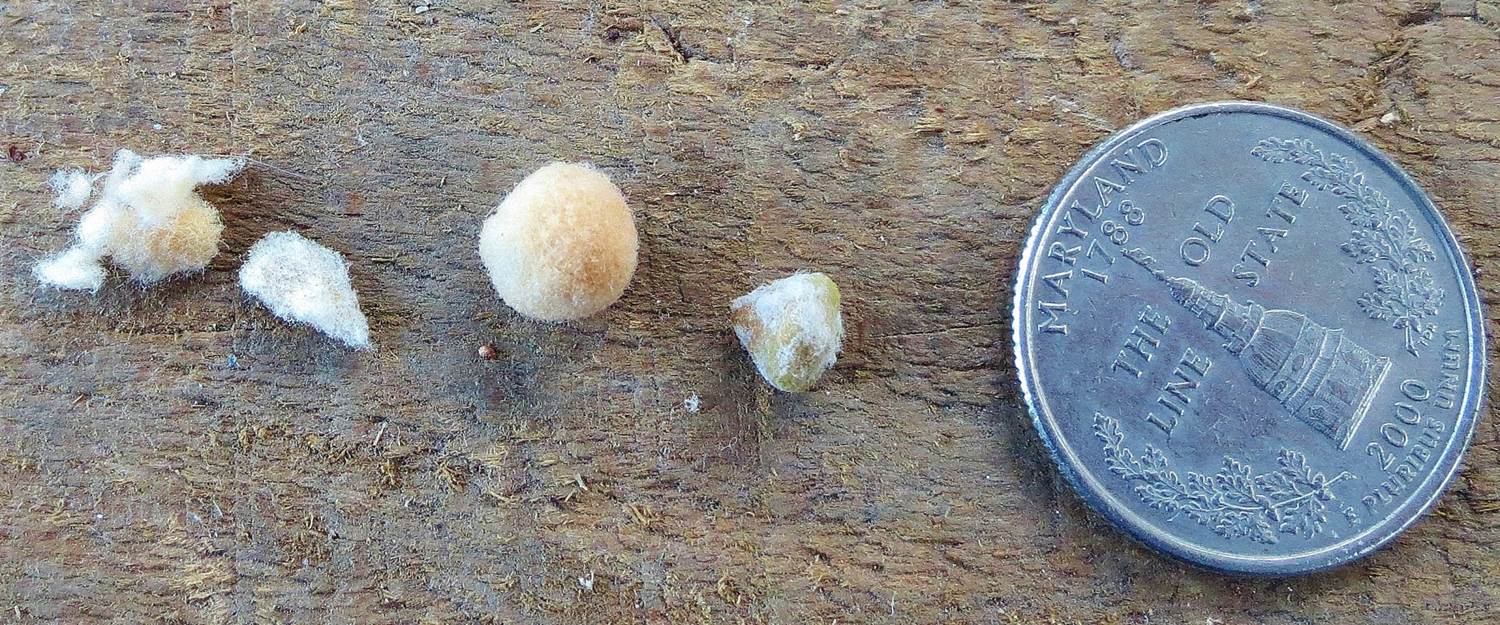
Woolly oak gall, kernel with wool removed on right
If you remove the fuzz from the gall, you find a hard, seed-like kernel, as in my photo above. I was planning to slice one open to photograph the developing larva under a microscope this afternoon, but the nice lady I paid to clean my house today mistook my woolly gall collection for a pile of dust and vacuumed them up. Fortunately, someone else has already posted a photo of a sliced kernel here.

Once you start scrutinizing oak leaves, you’ll notice a variety of galls. Below are photos of some other oak leaf galls I found today. The first photo shows a red oak leaf with a few woolly oak galls, along with at least one other kind of gall. The small, dark one at the upper left of the photo is, I believe, the gall of a midge, Polystepha pilulae. Immediately below that is another gall of similar size, with surface convolutions that make it look like a little brain. Is that another P. pilulae? Something else? If you know what it is, please leave a note in the comment section under this post.
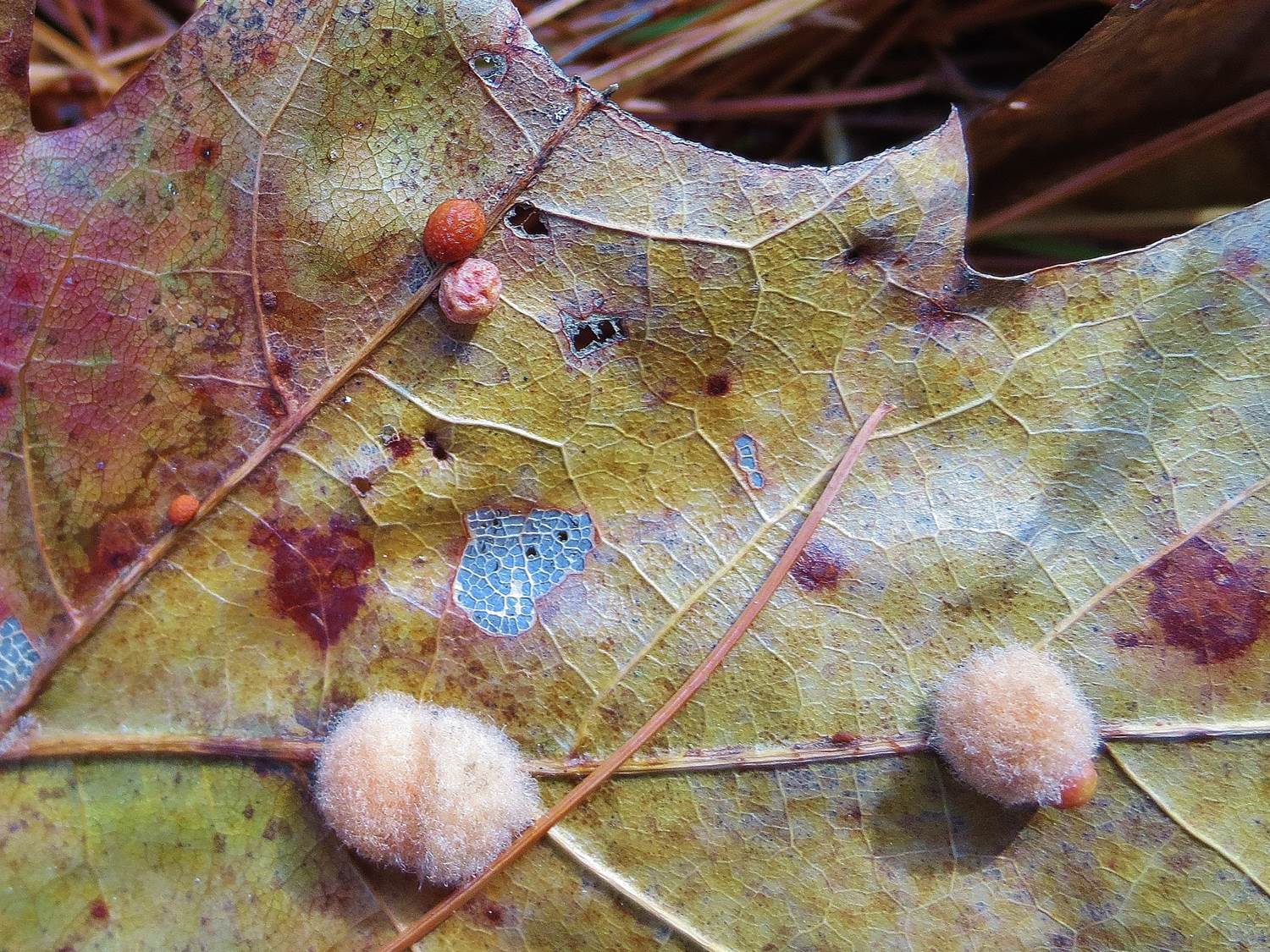
Wooly oak galls, and Polystepha pilulae gall (small dark gall at upper left)
In the final photo, a disfigured red oak leaf wears a messy cluster that looks like a bunch of woolly oak galls weathered by rain and hiking boots. Or is it another type of gall altogether?
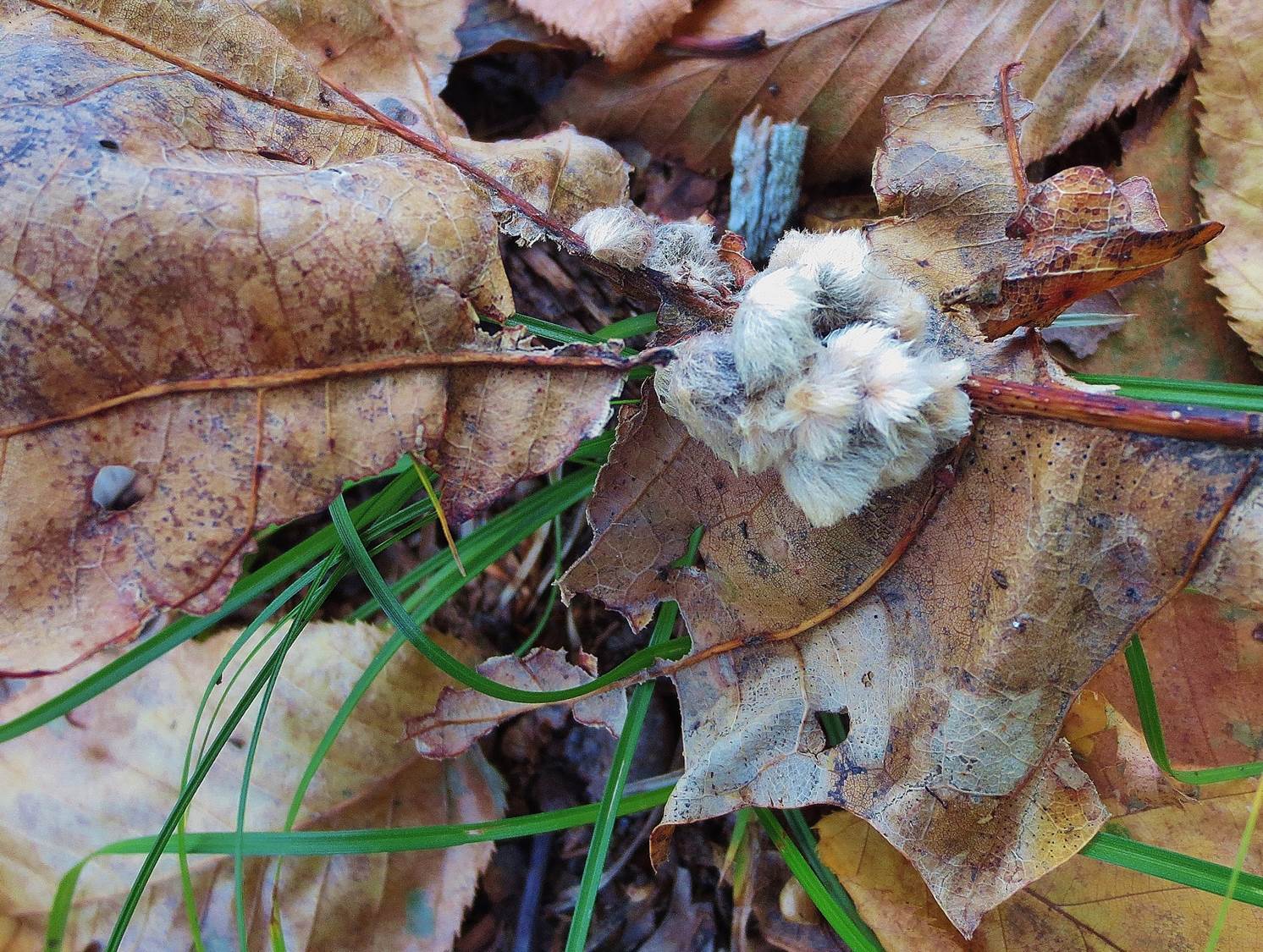
Northern red oak leaf with cluster of woolly oak gall (or some other type of gall?)
Interested in a quick overview of the formation of oak galls in general? If so, visit this page.