
Leave seed heads for wildlife
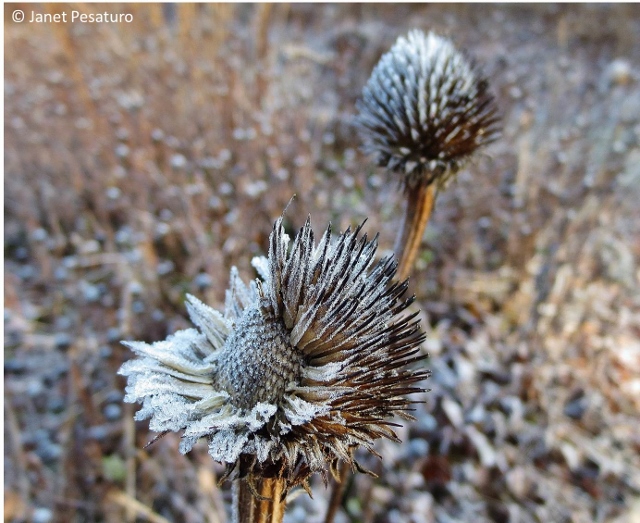
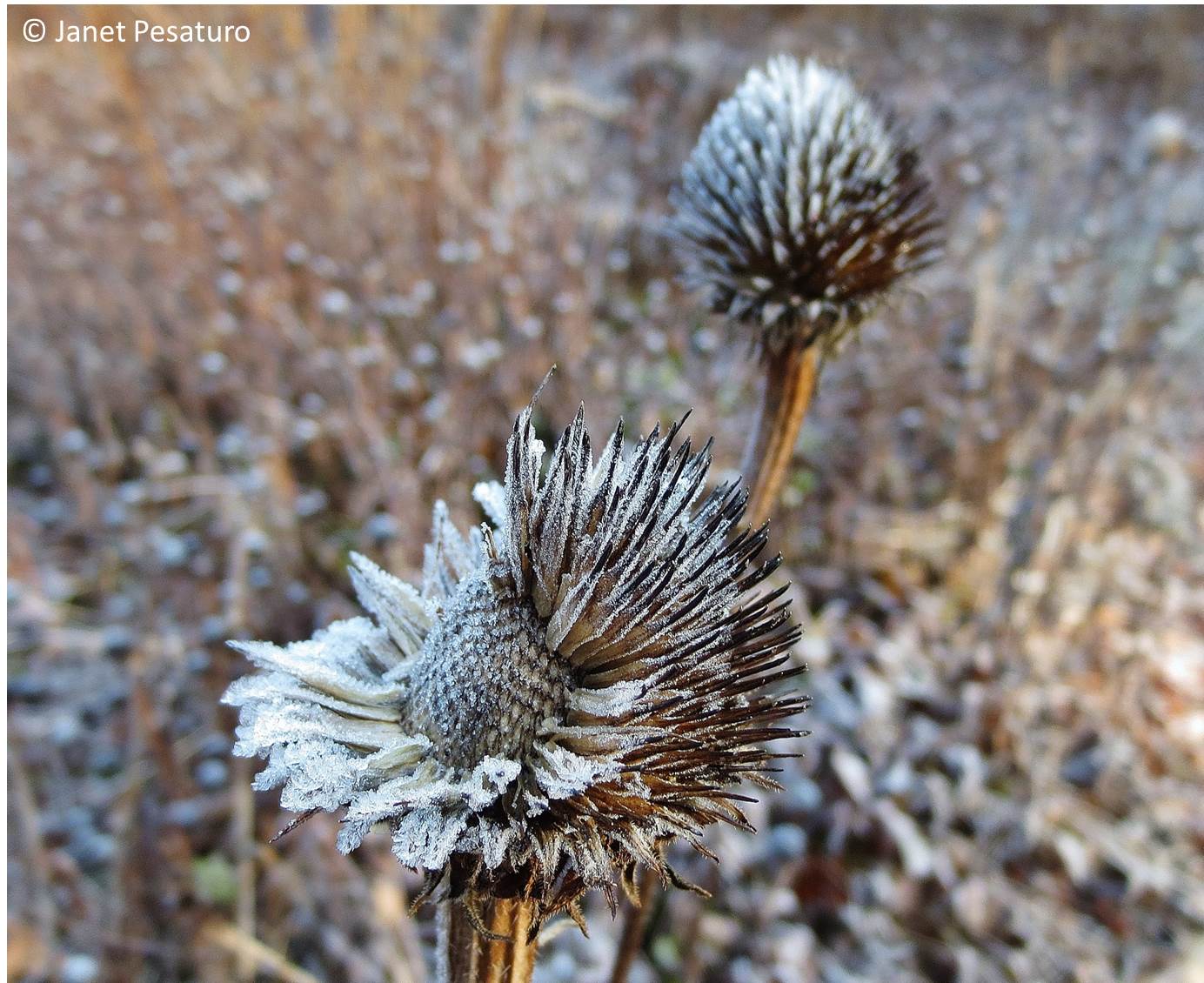
Seedheads of purple coneflower glisten with early morning frost. Goldfinches have harvested seeds from the one in the foreground.
Sustainable living goes beyond reduce, reuse, and recycle. It’s about consideration for the larger framework of Earth’s diversity of species. It involves managing your living space in a way that allows wildlife to thrive. One small but meaningful way to provide for wildlife is to leave patches of weeds and wildflowers, whether naturally occurring or planted by you, in place over winter. These patches of dead vegetation provide food, cover, and water for a variety of species. And, their interesting forms and subtle shades of brown and gray are beautiful, if you like the natural look. In fact, it was the unexpected beauty of this untidy garden on a chilly morning that inspired me to take these photos and write this post.
Seed heads of purple coneflower (above) and globe thistle (below) are finch magnets. They settle in right on top, and eat seed after seed. Sparrows, juncos, and small mammals forage for fallen seeds on the ground beneath.
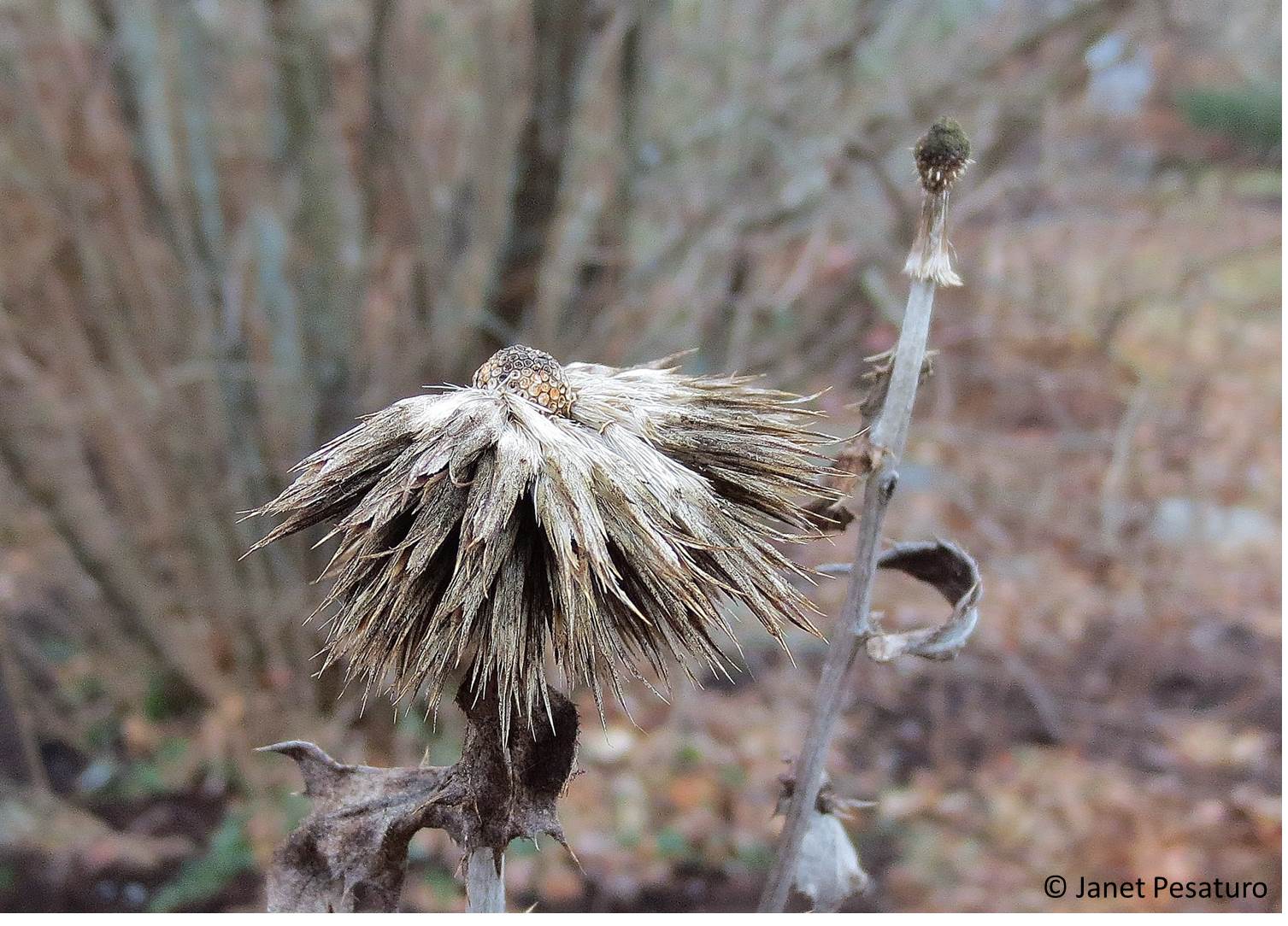
Birds have already harvested many of the seeds from this globe thistle, and the one in the backyard has been plucked clean
Black-eyed Susan is a relative of purple coneflower, but in my yard, the seeds are taken later, often after most of the purple coneflower seeds are gone. Perhaps the seeds are less nutritious or more difficult to harvest.
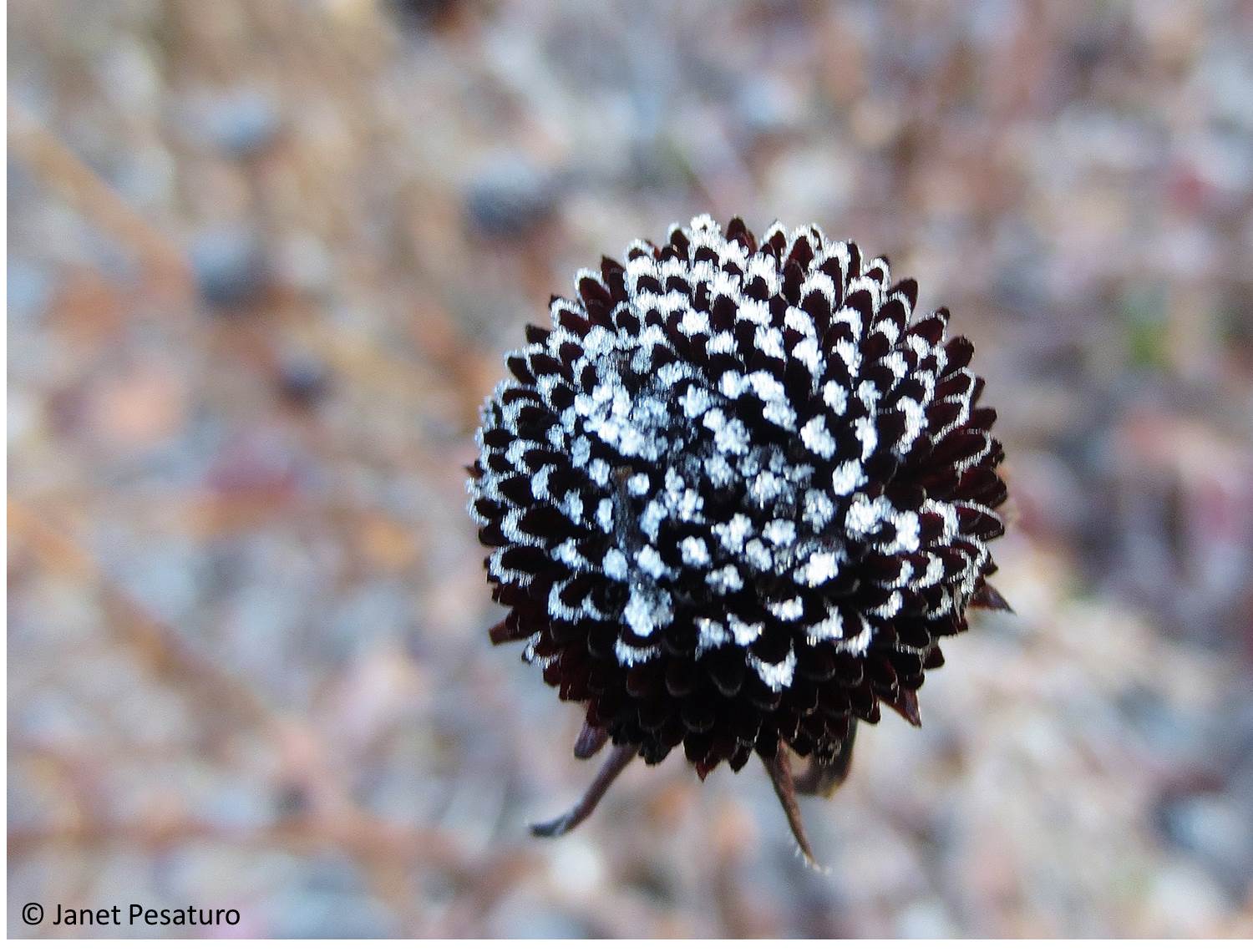
Seed head of black-eyed Susan with frosty crystals
Here’s another black-eyed Susan, below, so beautiful in the morning light with its coating of frost. It looks like the head has been pried apart by a probing beak.
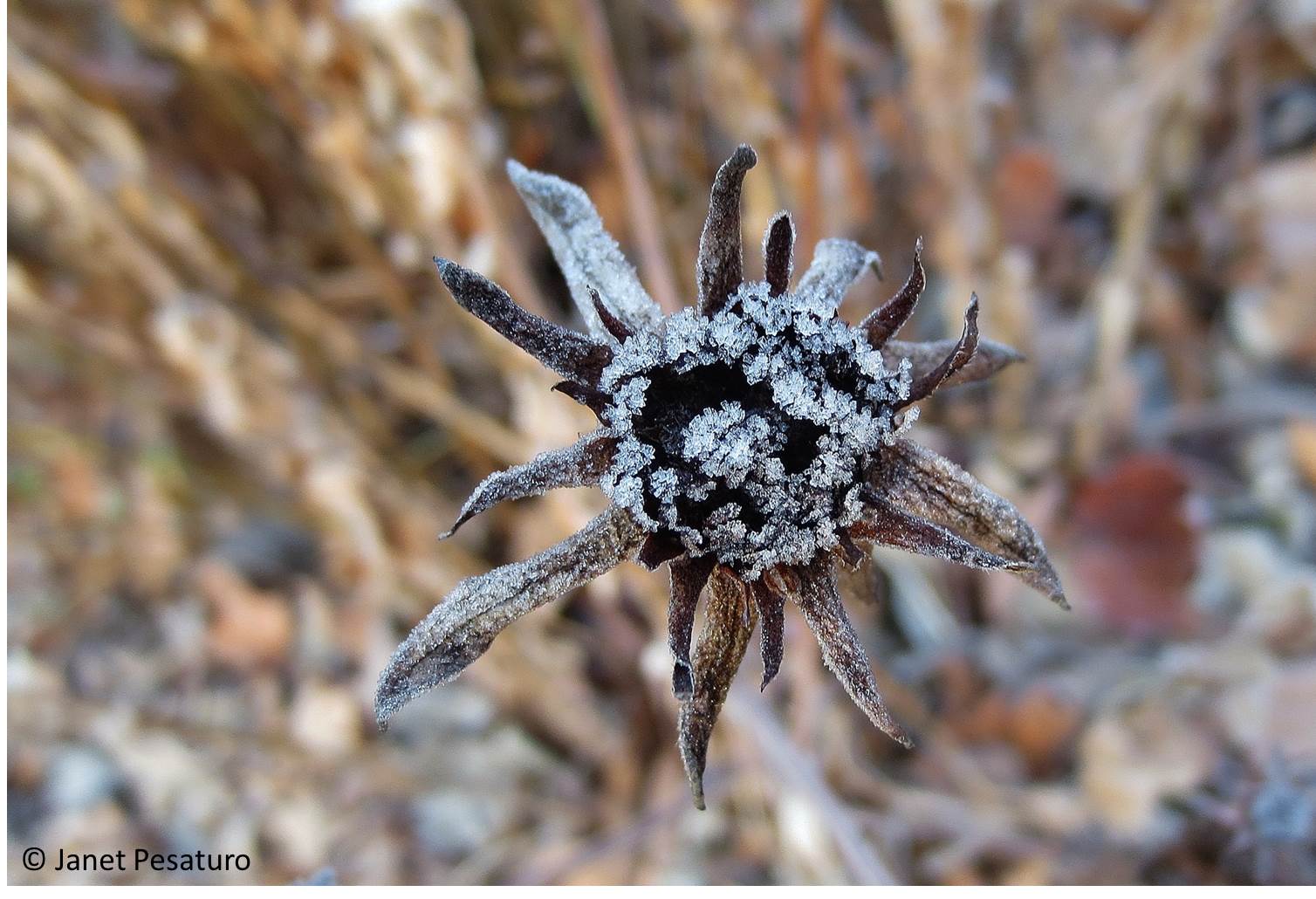
Frost covered black-eyed Susan seed head from which a few seeds have been harvested.
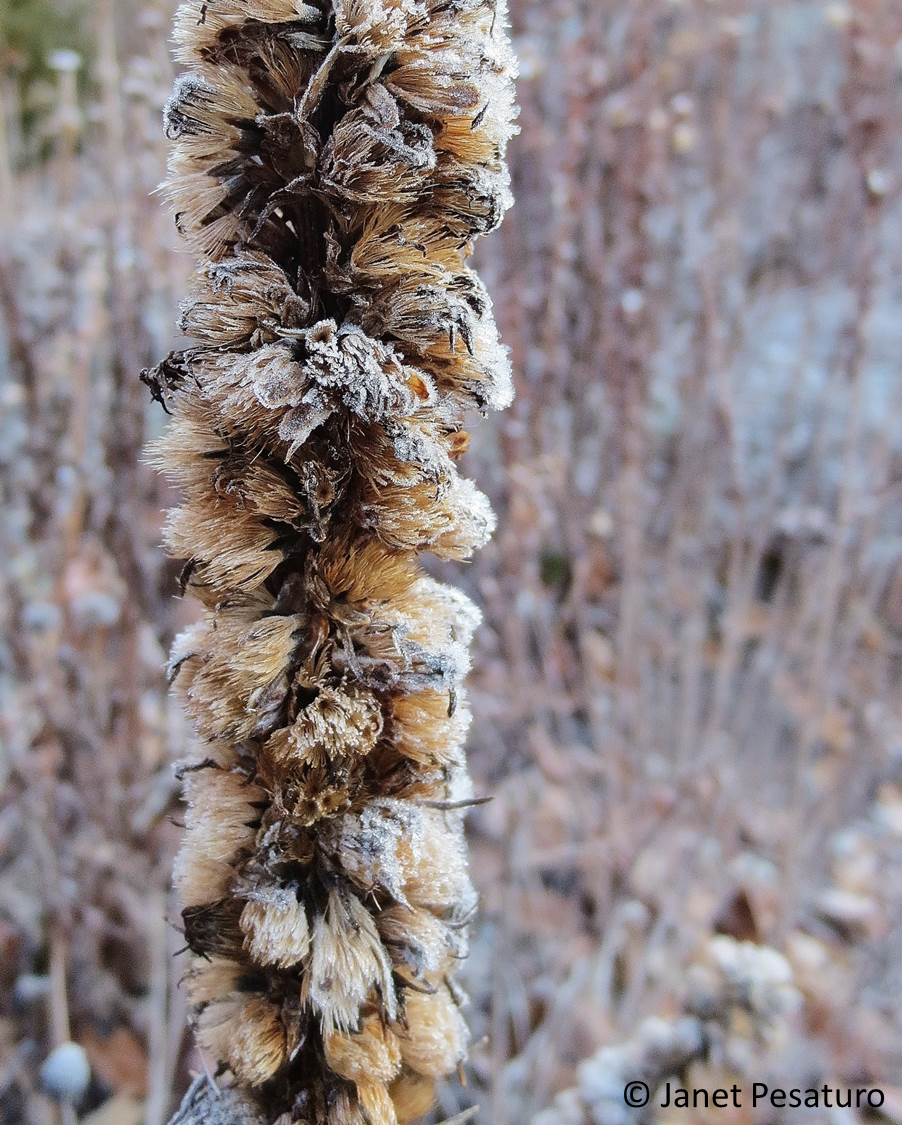
Liatris spicata seed head (click for larger view)
Small birds use the dried spikes of Liatris (right) as perches, and probably consume the seeds, as well. The nooks and crannies in the spikes could be cozy spots for overwintering insects, which are also excellent food for hungry birds.
New England aster, below, is highly attractive to pollinators, including monarch butterflies. And, if you don’t clean it up in fall, birds feast on the seeds for as long as they last. In the photo below, some of the seed heads have been plucked clean.
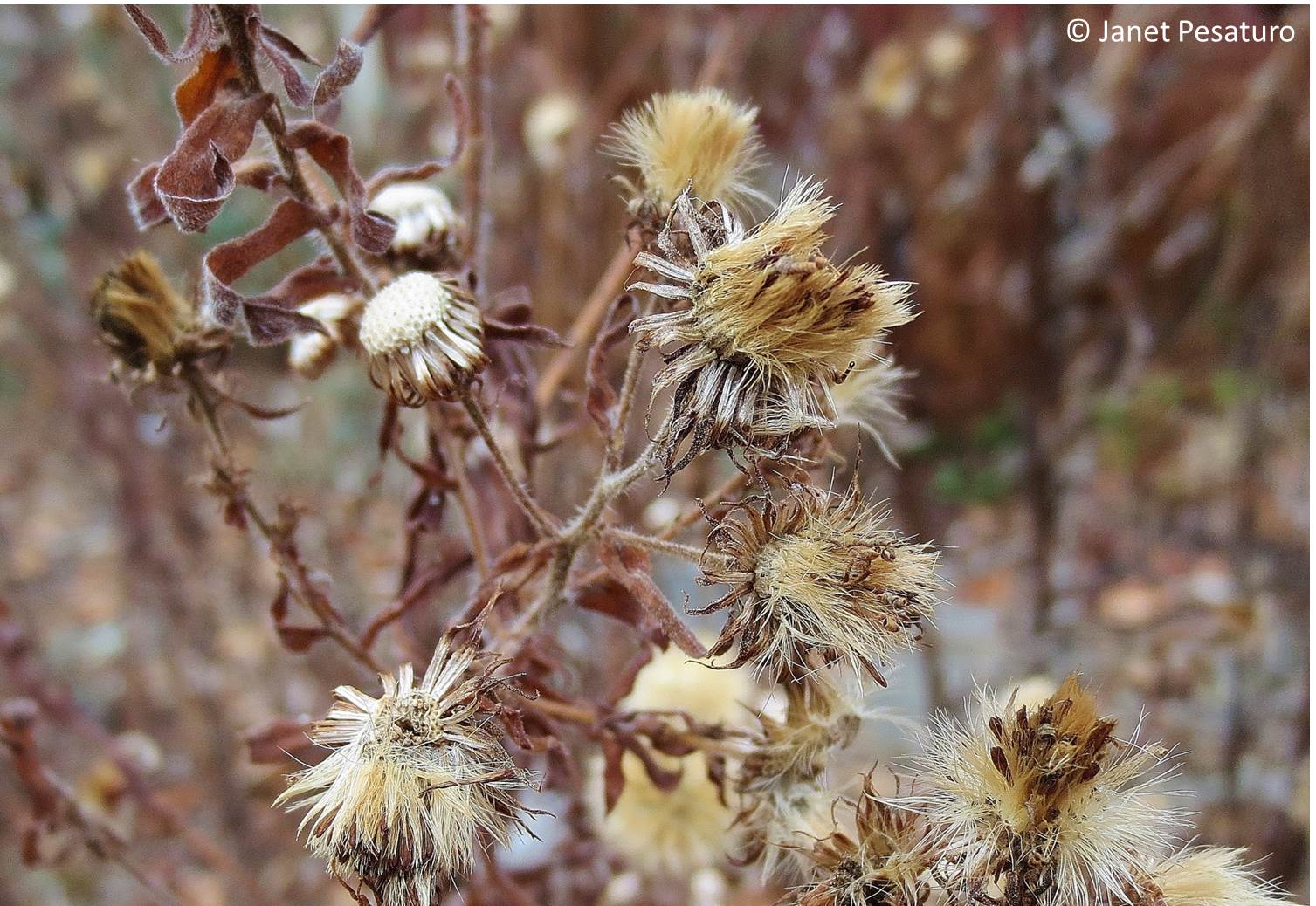
New England aster seed heads.
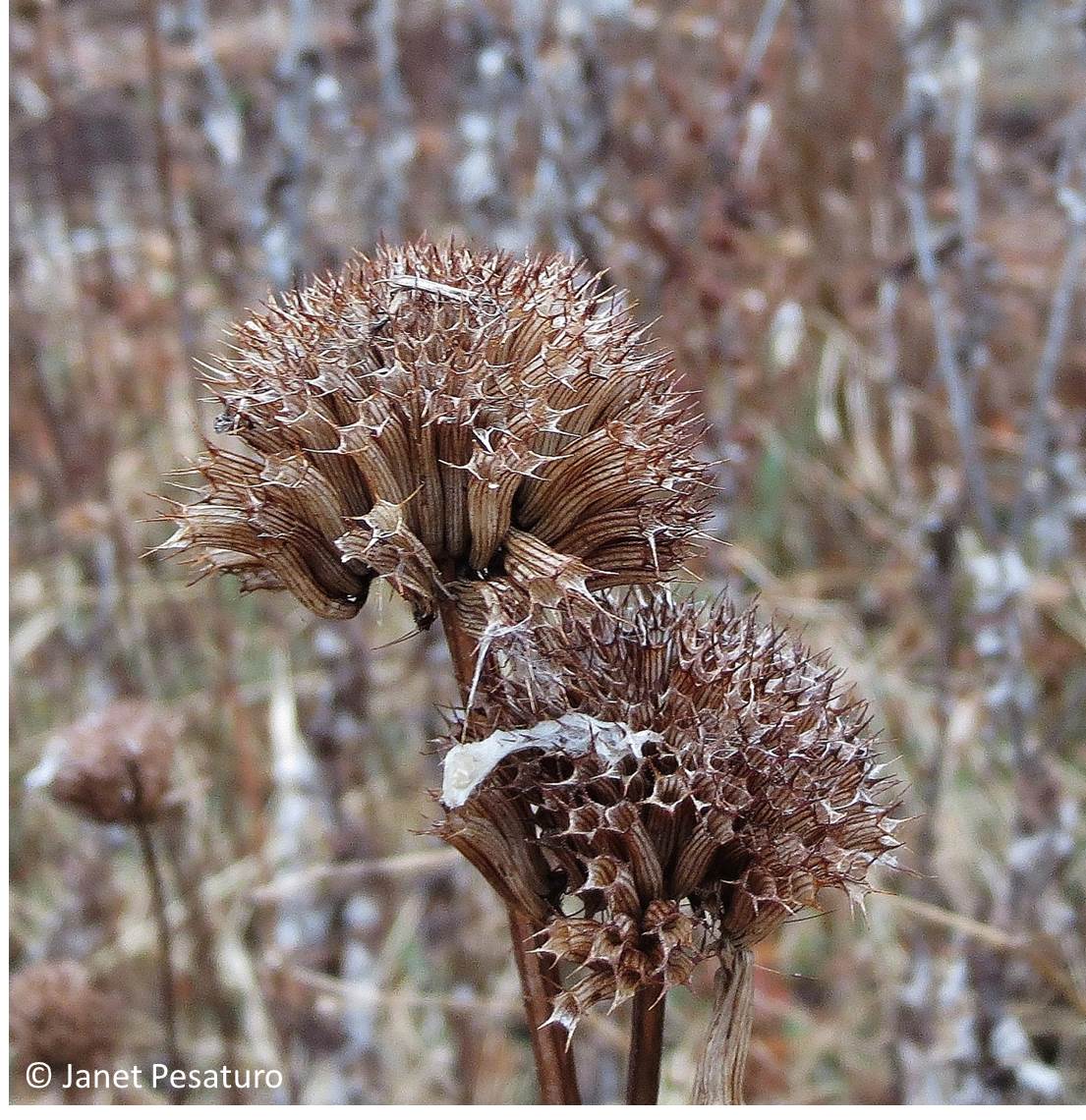
Seed heads of bee balm (click for larger view)
Once the showy flowers of bee balm (right) have withered, you have to look closely to appreciate its quiet beauty. Inside each tiny, striped tube is one small, dark seed. I don’t know what species eats them, but I do notice that some of them appear picked apart.
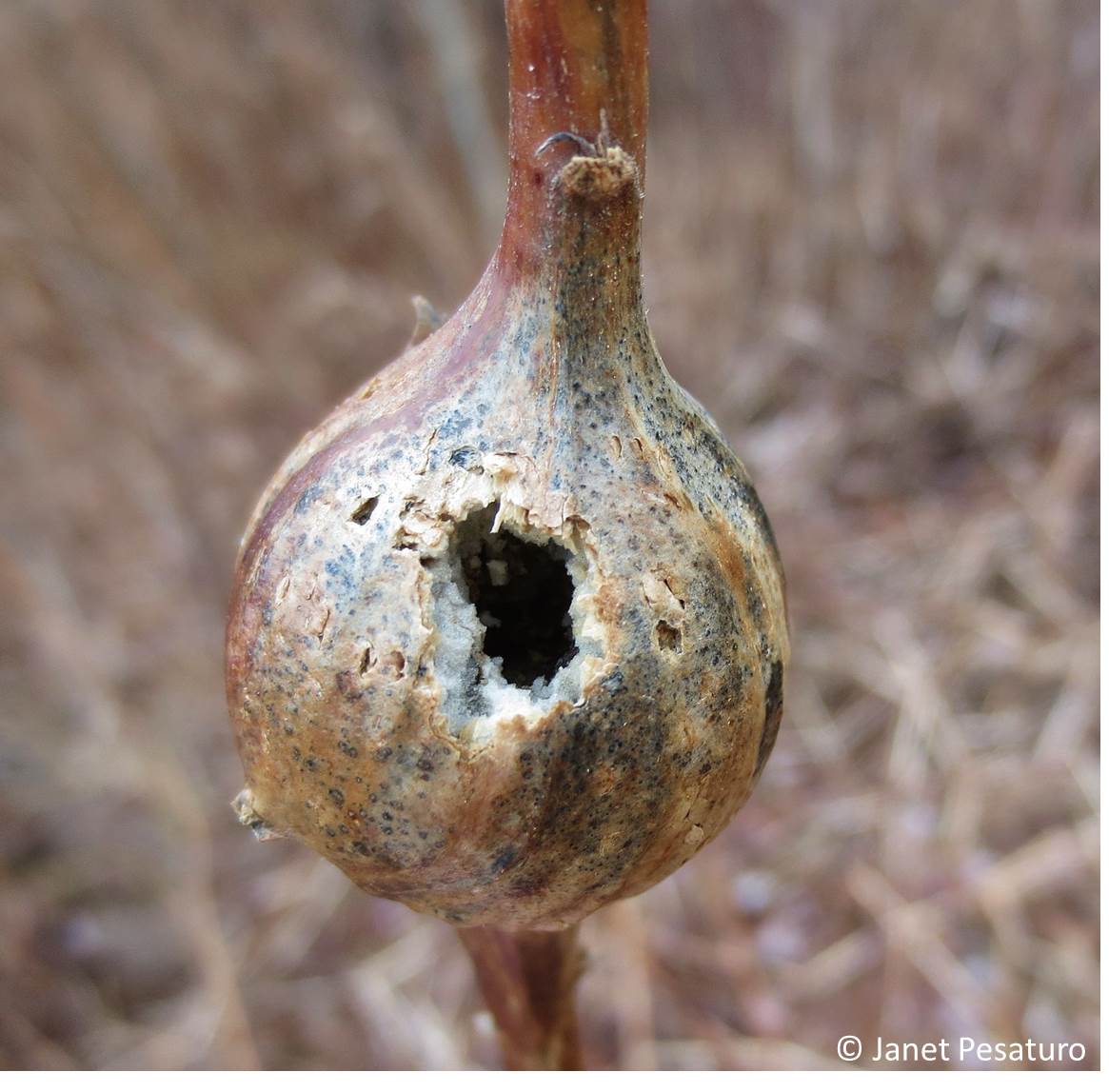
Goldenrod gall harvested by downy woodpecker
Seeds are not the only food provided by dead wildflowers. If you leave a patch of goldenrod standing, you might notice large, spherical growths in some of the stems. These are galls, produced by the goldenrod gall fly. The fly injects her egg into a goldenrod bud in spring. When the larva hatches, it migrates down to the stem. There, it secretes a chemical that causes the stem tissue to grow a thick-walled protective sphere to house the larva.
Downy woodpeckers and chickadees somehow know that a juicy larva hides within each gall. They peck through the thick walls and gobble them up.
Everyone knows that many birds love sunflower seeds. But, like goldenrod, dead sunflowers have something else to offer birds. Renowned wildlife tracker Mark Elbroch writes in Bird Tracks and Sign that birds visit them in the morning to drink the dew that collects in the cup behind the nodding seed head.
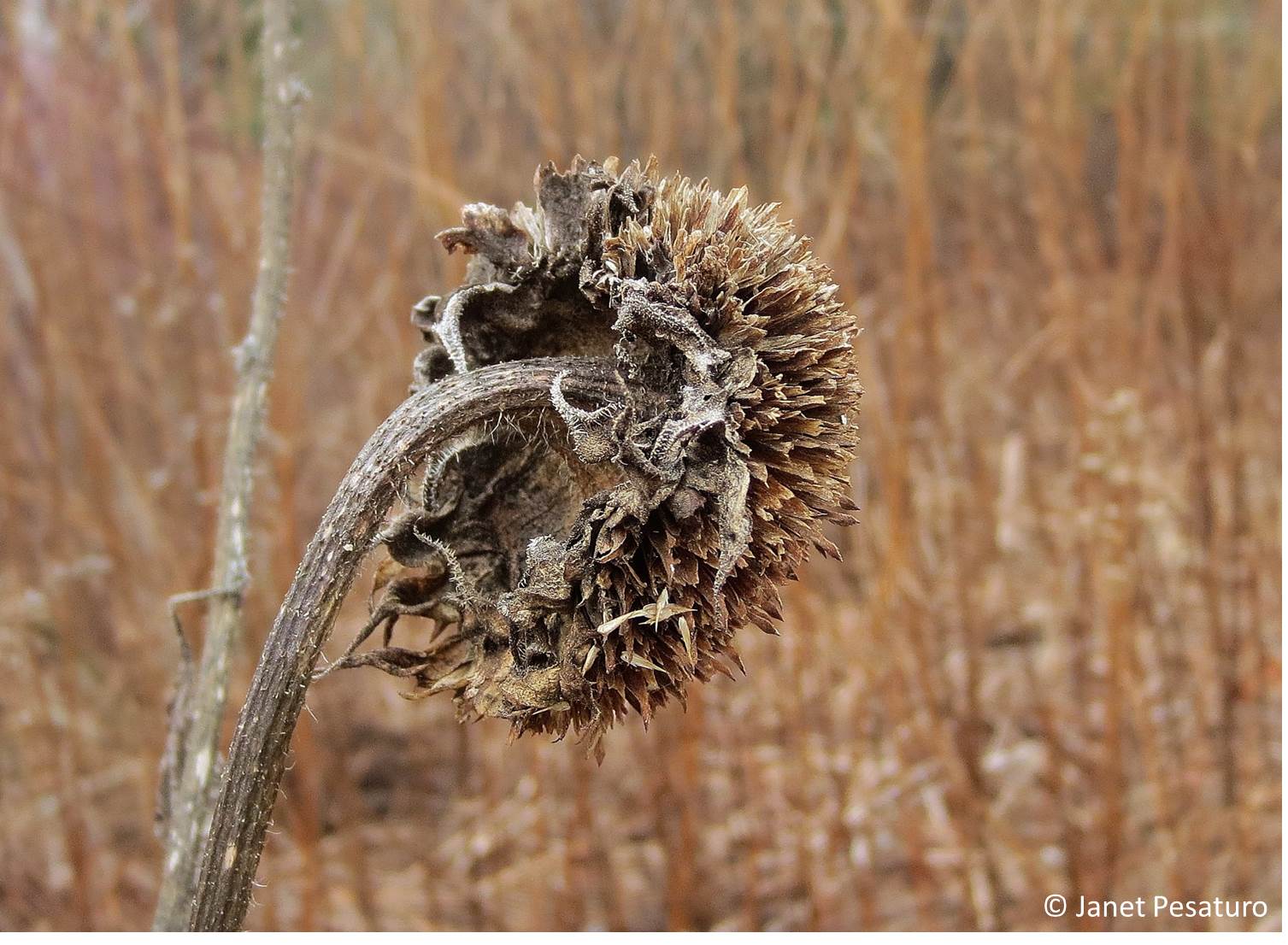
Seed head of “Autumn Beauty” sunflower
I am not sure what eats the seeds of common milkweed. Something must – perhaps small mammals, if not birds. But I imagine the open pods could be dewy reservoirs, just like the cup behind sunflower seed heads. In any case, the pods are so pretty that I can’t bear to pull them out.
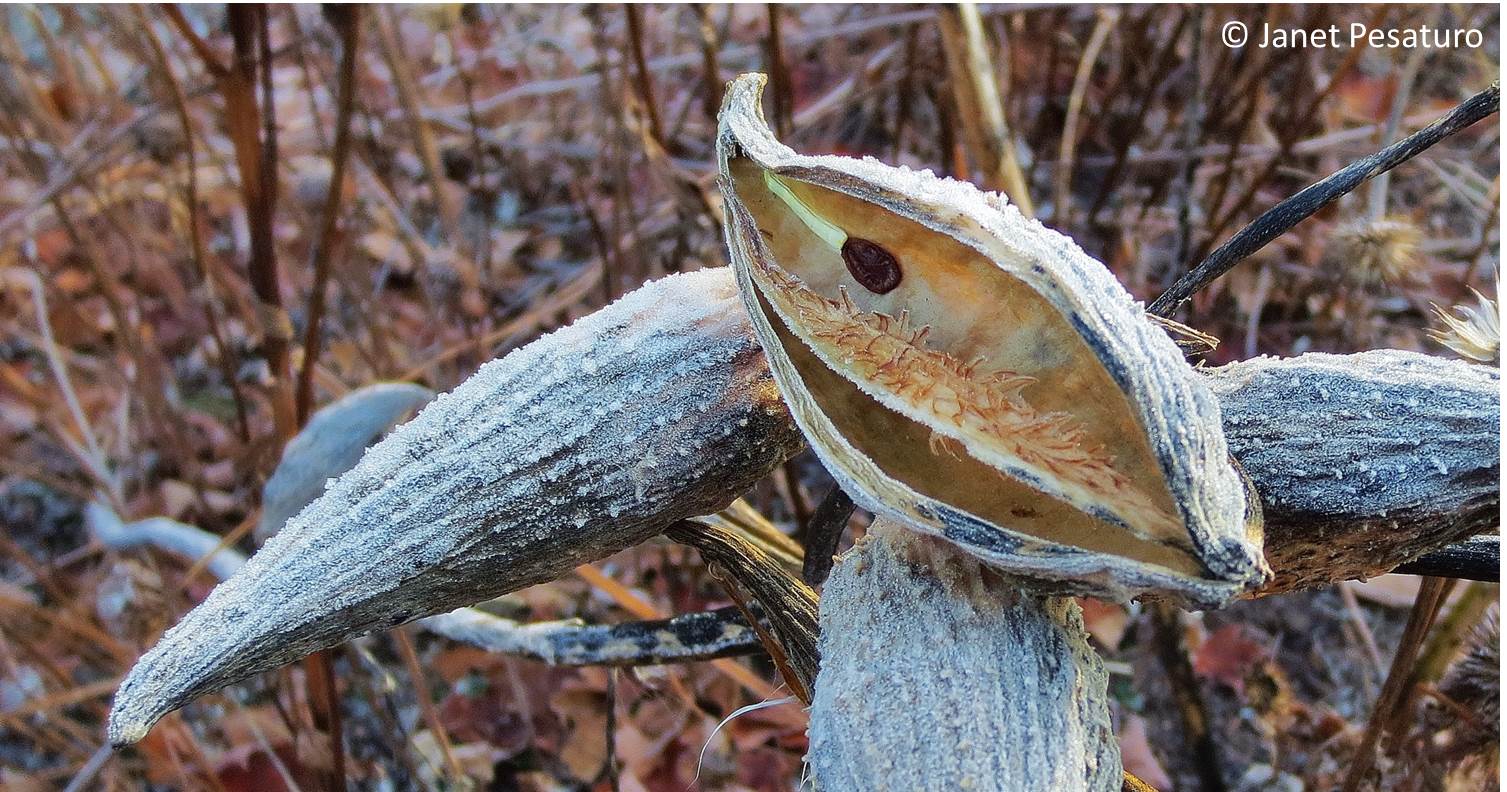
Common milkweed pods glisten with frost in the early morning light
Finally, the entire patch of vegetation is excellent winter cover for many species, from invertebrates to birds to small mammals, and to larger predators that come looking for small prey. So don’t be a garden neat freak. Sit back and appreciate the interesting forms and subtle hues of these plants as they dry and decay, and watch for birds and other wildlife. It’s so much easier than filling bird feeders, and more valuable to wildlife. Sometimes it’s good to be messy.
Shared on: From the Farm Blog Hop, HomeAcre Hop #48, Homesteaders Hop #21, Mostly Homemade Mondays #58, Homestead Barn Hop #139, Thank Goodness it’s Monday #48, Creative Home and Garden Hop #20, Backyard Farming Connection Hop #60, Old-Fashioned Friday #46, Wildcrafting Wednesday #123, Green Thumb Thursday