
River Otter Tracks and Sign: The Basics
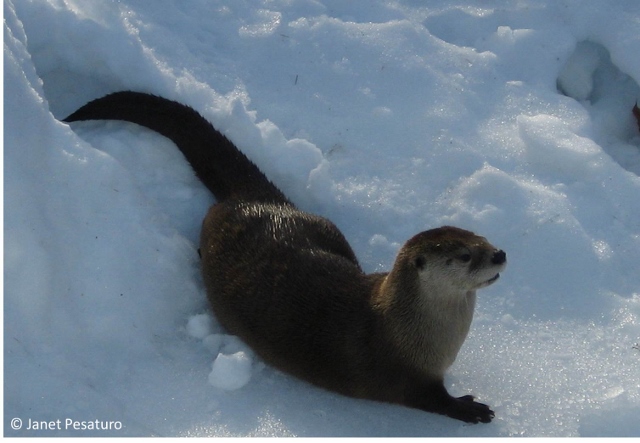
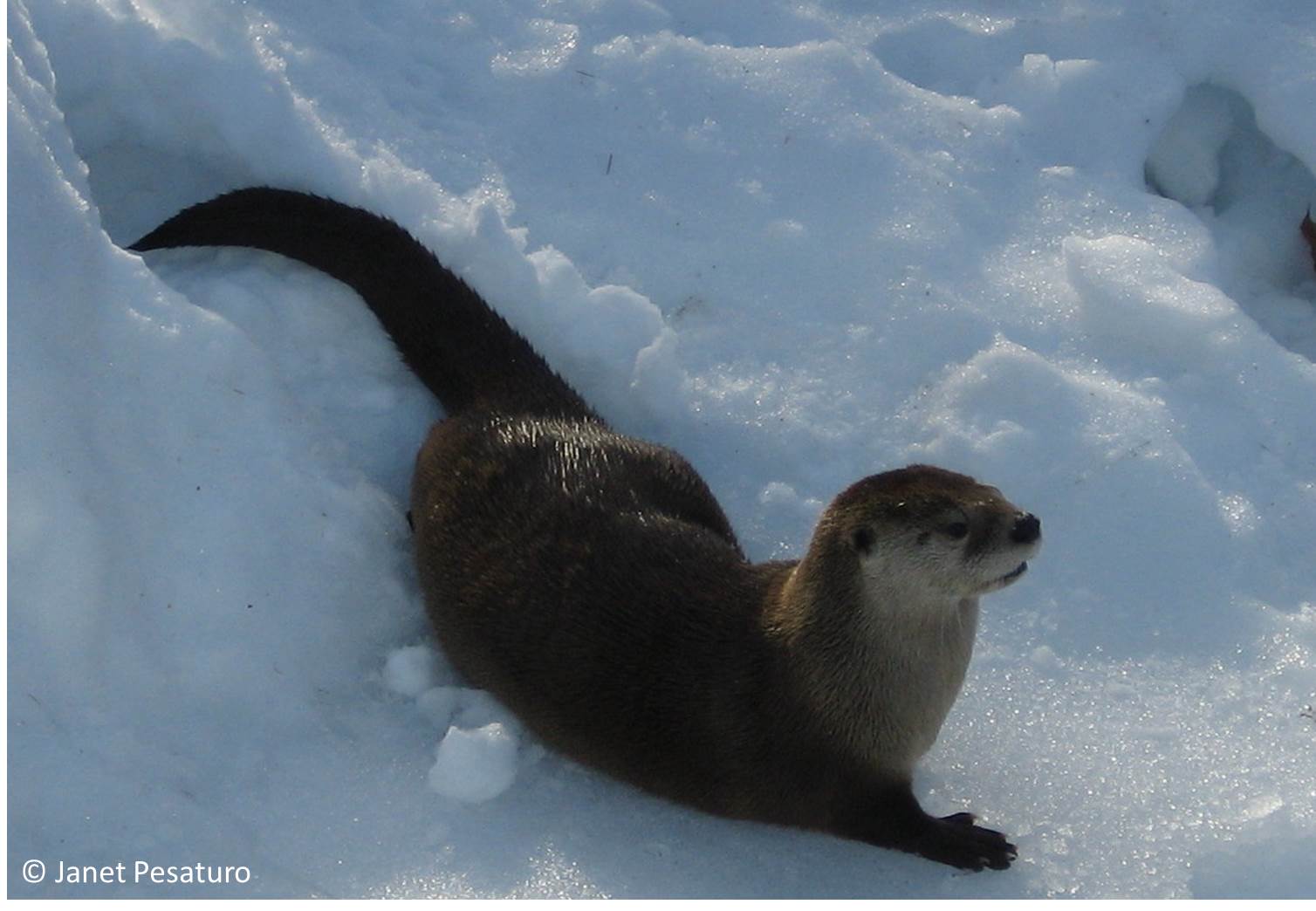
North American river otter, Lontra canadensis, in captivity. Learn the basics of river otter tracks and sign in this article, so you can track them in the wild.
They play, they slide, they run, they’re social, and they create sign that is easy to distinguish from other species. All of that makes this large, semi-aquatic member of the weasel family, the river otter, fun and rewarding to track. And the fact that this predator generally does not hunt small pets or raid chicken coops means most pet lovers and backyard farmers can love and admire it without conflicting feelings. Read these basics of river otter tracks and sign recognition, and you’ll be well equipped to identify them, should you encounter them along a river, stream, or beaver pond.
What’s a river otter?
With an adult weight of 15-30 lbs, this is one of the larger members of the weasel family (called mustelids). Here in New England, it is the largest. It ranges over much of the eastern and western US, and most of Canada, as you can see here. Like the other mustelids, river otters have long slender bodies with short legs. That physique lends itself to a kind of slinky-like locomotion on land, and you can see a brief clip of it here.

The semi-aquatic river otter spends about 75% of its time on land and 25% in the water. It prefers to dine on fish, but also eats crayfish, and occasionally small mammals and birds. It rests in burrows, dense shrubbery, under the root system of overturned trees, etc., so look for them along rivers and streams and around lakes and ponds, where there is a lot of forest and shrubby cover.
Otter tracks
Otters share many characteristics with their weasel family relatives. Like other mustelids, otter feet have 5 toes, claws, and a C-shaped palm pad. Sometimes only 4 toes show in the track, and sometimes the substrate (the snow, sand, mud, etc.) is so poor, that you can’t see the tracks clearly. Sometimes claw marks show, and sometimes they don’t. But if you can see the tracks clearly, you can easily narrow the diagnosis to either otter or fisher, a terrestrial mustelid relative.
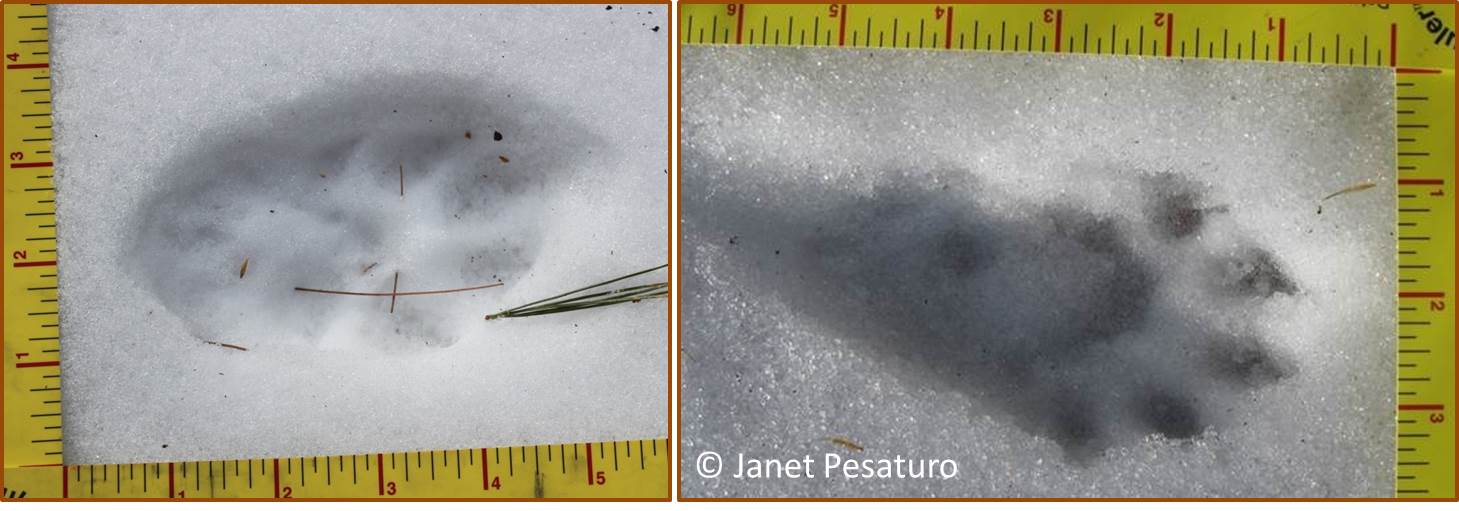
River otter track on the left, fisher track on the right. Both have 5 toes and a C-shaped palm pad.
It can be very difficult to distinguish otter from fisher based on the appearance of individual tracks…So difficult, in fact, that I’m not going to cover that. Fortunately for the tracker, there are behavioral clues: The otter is a social animal that loves to swim and slide, but does not climb trees. The fisher, in contrast, is a solitary, climbing animal that rarely swims or slides.
Otter slides
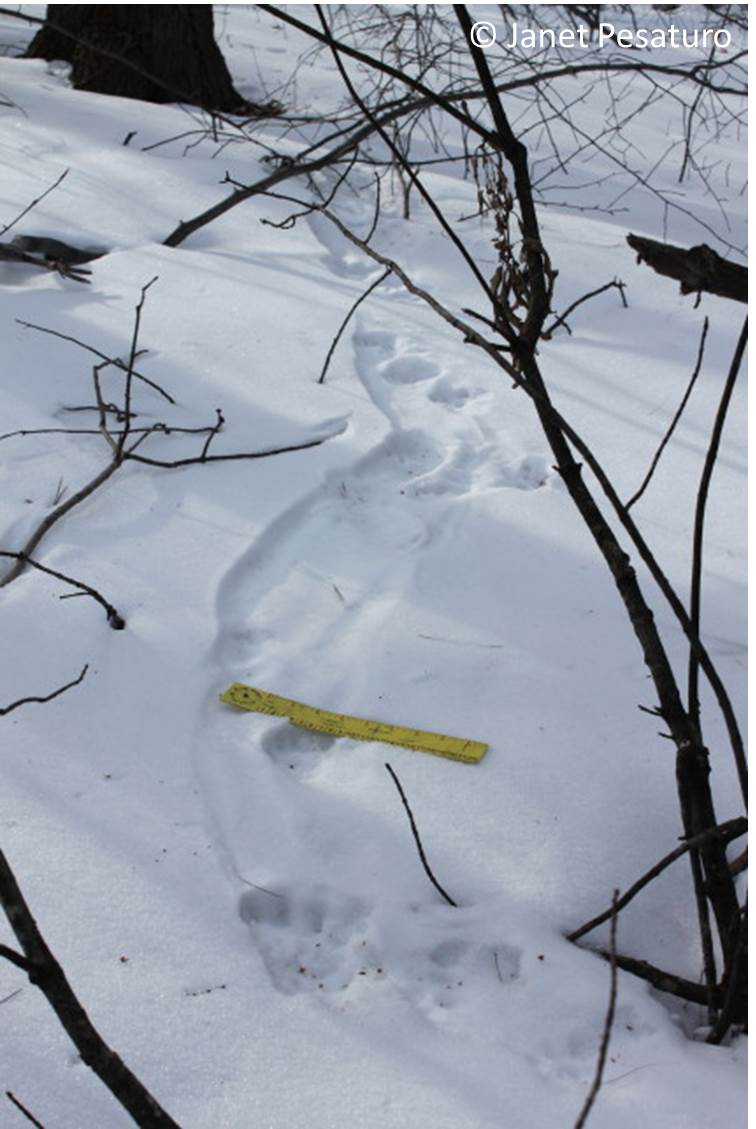
Up hill otter slide. Click for larger view.
Otters often move by sliding: on ice, snow, mud, and even on fallen leaves. If the animal is moving down hill, the slide may appear uninterrupted for a long distance. But if the otter is sliding up hill – and they can indeed slide up hill – the slide will be punctuated with foot prints created as the animal propels itself forward (see photo to the right). It’s easiest to find otter slides on snow, where this is a preferred method of locomotion.
In contrast, the closely related fisher almost never slides, and when it does, the slide appears to reflect unintentional slipping on ice. You’ll know it when you see it. It gives the impression of a flailing animal, not a smooth and graceful slide.
Otter trail patterns
Despite their propensity for sliding, otters do sometimes run for long distances over snow, using the same basic gaits that fishers use. In deep, soft snow, both species move in what is called a 2-2 lope, producing pairs of tracks as seen in the left side of the photo below. In shallow or no snow, both species are more likely to move in a 3-4 lope or gallop, producing groups of 3 and 4 tracks. You can see examples in the photos below, but if you want to understand how they are moving to produce these patterns, I encourage you to check out one of the many excellent mammal tracking books for further reading.

Otter trails: A 2-2 pattern on left, and a 3-4 pattern on right.
Otters are playful and social, so sometimes you will find evidence of multiple otters simultaneously running and sliding. Females with young of the year spend the winter together, and sometimes groups of mature males hang out together.
Otter plunge holes and haul outs
These are where otters enter or leave the water, which they do quite frequently. Fishers almost never enter the water, however, so if the tracks lead into a stream or pond, it’s most likely an otter. On the other hand, otters don’t climb trees, so if the tracks disappear at a tree, it’s probably a fisher.
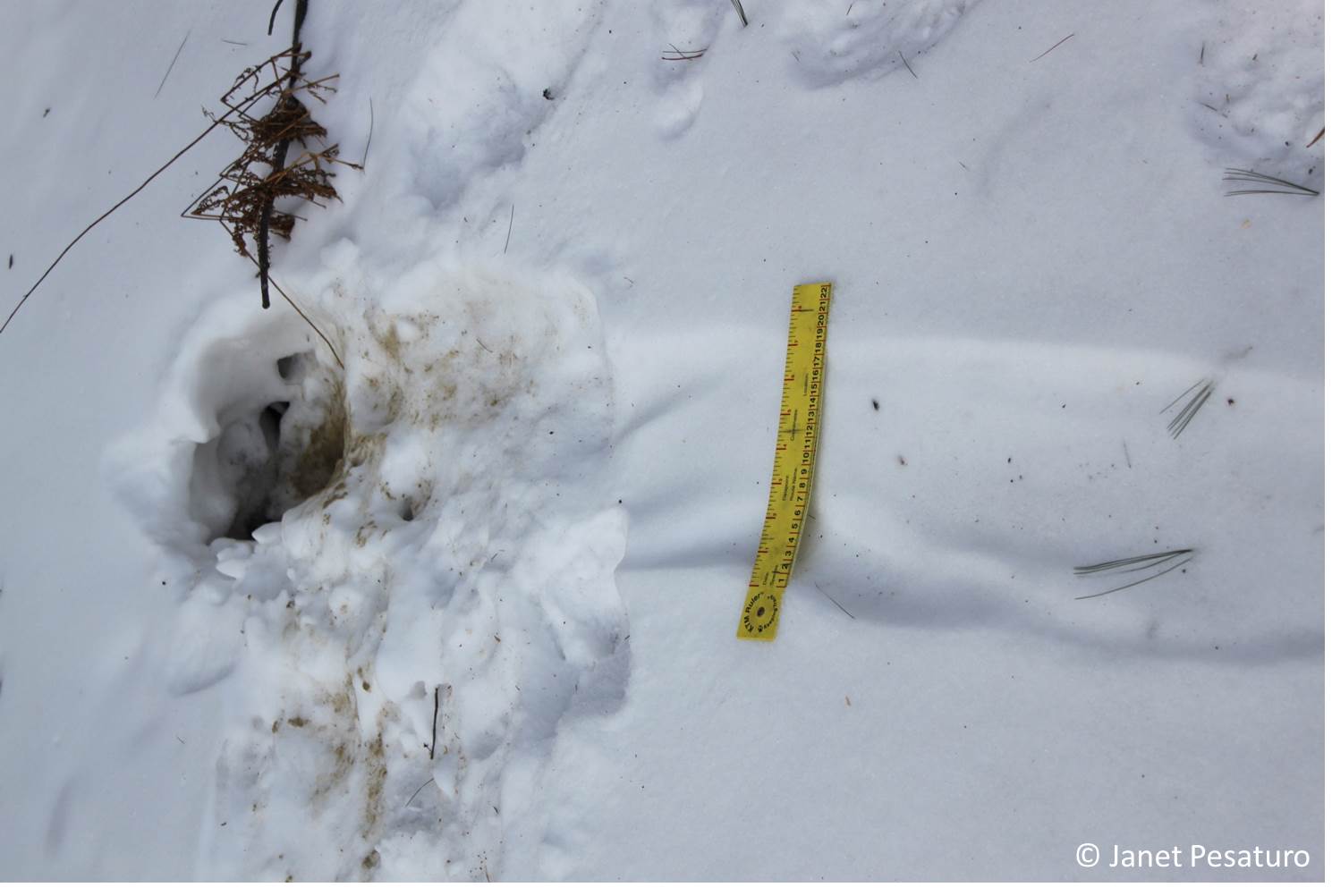
An otter used this hole in the ice to enter and exit the water.
Otter scat
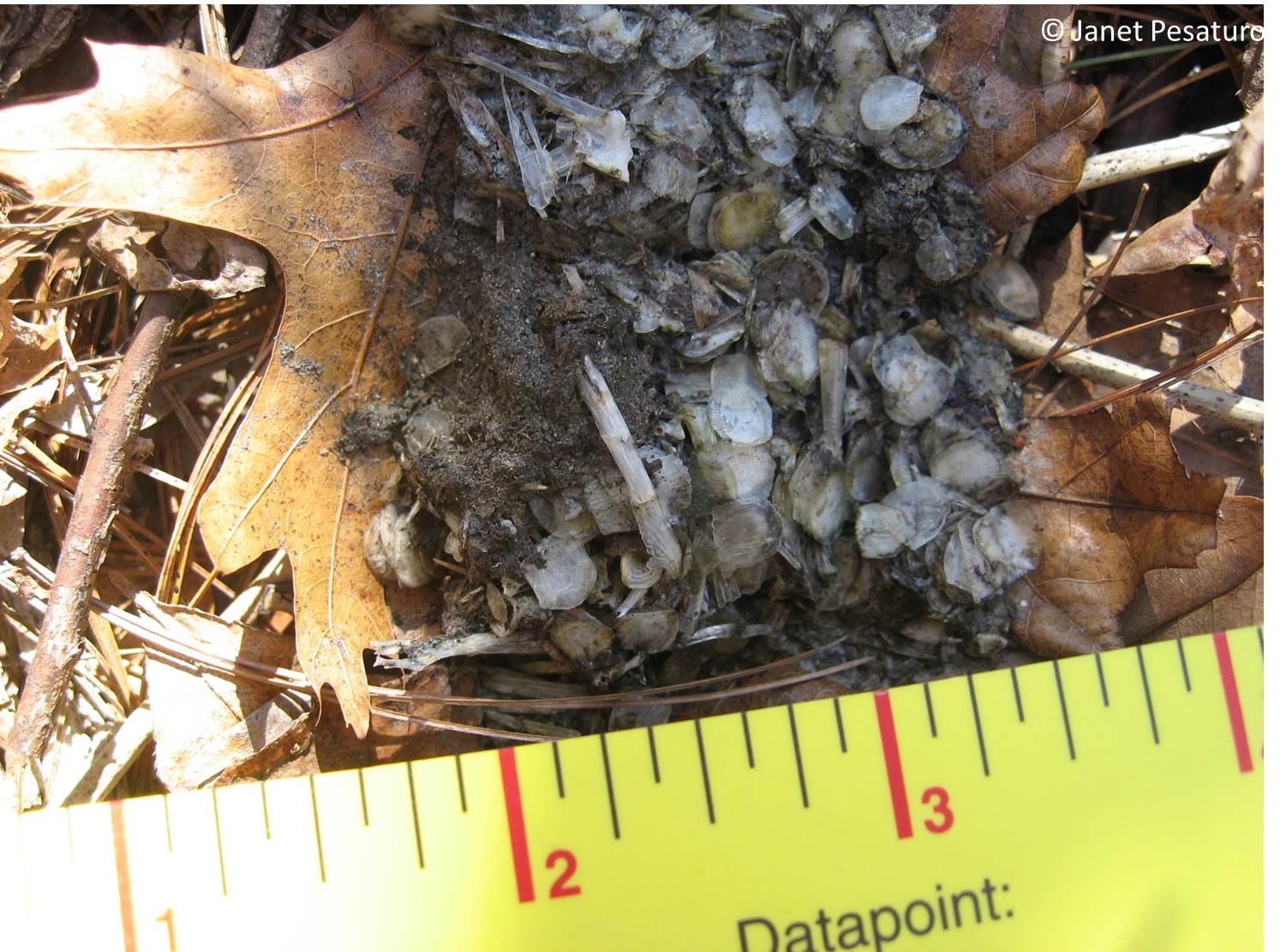
Fish scales in otter scat
Fresh otter scats are often poorly formed blackish splats, but sometimes they are more tubular. As they decay, you can usually see either fish scales, or slightly reddish crayfish remains. You won’t confuse otter and fisher scat, because the latter (despite the name) generally does not eat fish and produce scats that look quite different. Otter scat can be confused with raccoon scats, and distinguishing between the two can be tricky business (pun intended), because raccoons do frequent waterways and happily consume fish and crayfish. Usually there are other associated tracks or sign to help you make the distinction.
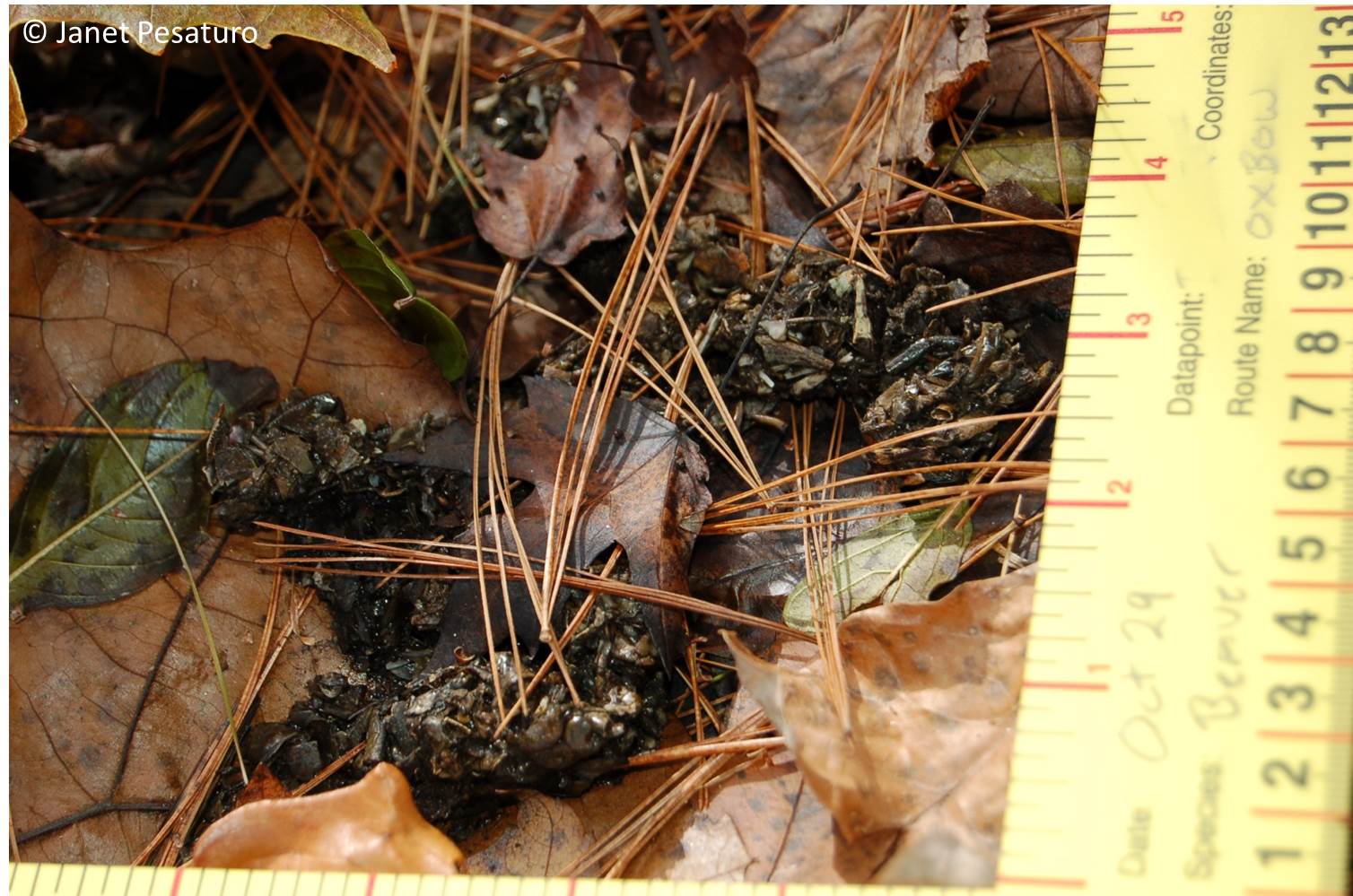
Otter scat containing fish scales
If the scat is fresh, you might find urine near it, and you might notice evidence of rolling around in the soil or vegetation in the scatting location. This is probably scent marking behavior. More on that in some future post, perhaps.
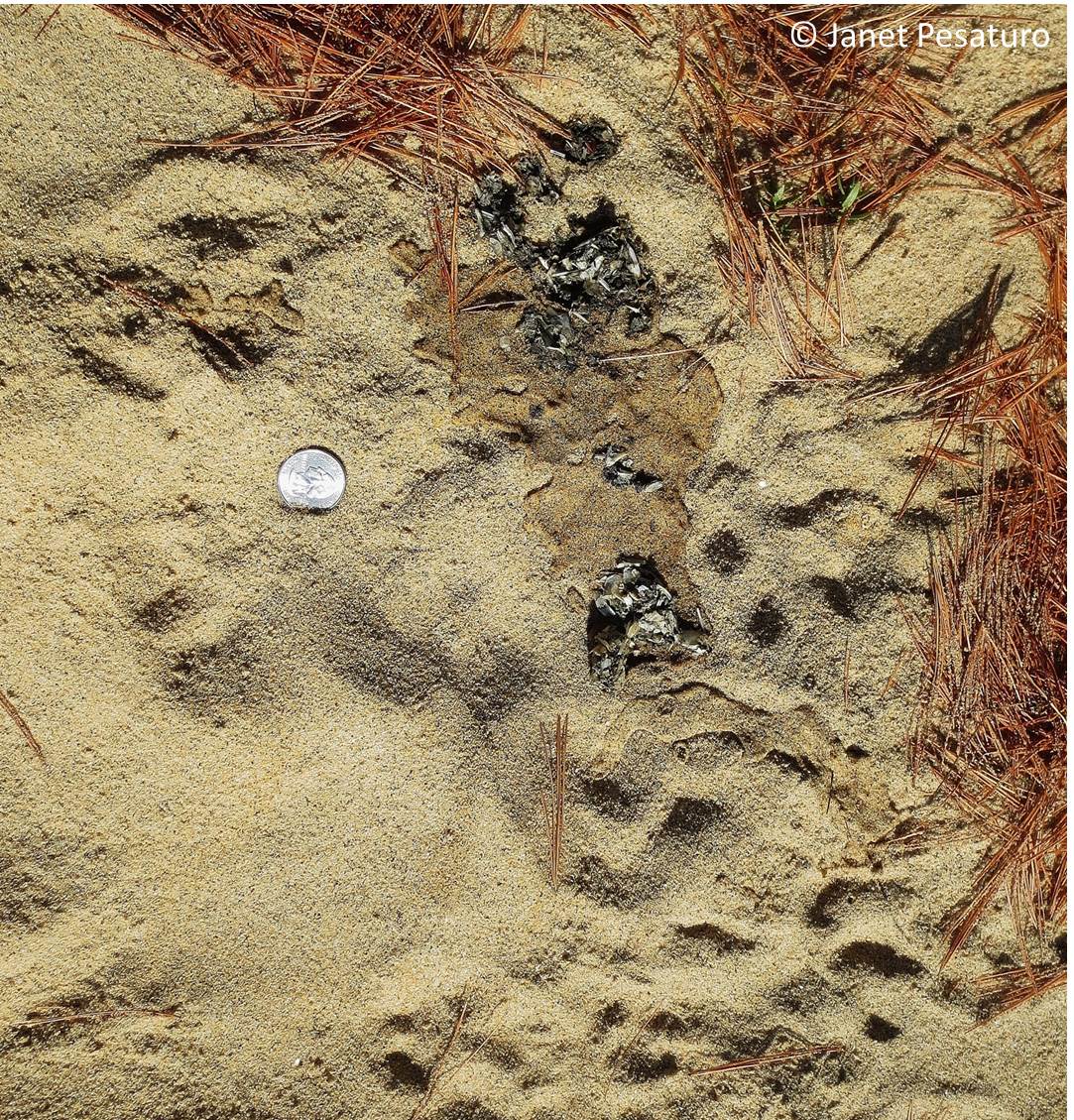
One or more otters left scat, urine, indistinct tracks, and evidence of rolling on this sand near a lake.
Shared on: Homestead Barn Hop #141, Backyard Farming Connection Hop #62, HomeAcre Hop #52, From the Farm Blog Hop, Natural Living Monday, Mostly Homemade Mondays, Thank Goodness it’s Monday, Teach Me Tuesday, Tuesdays with a Twist #41, 120th Wildcrafting Wednesday, Simple Life Sunday #3, Wordless Wednesday #79