
18 Best Foraging Blogs
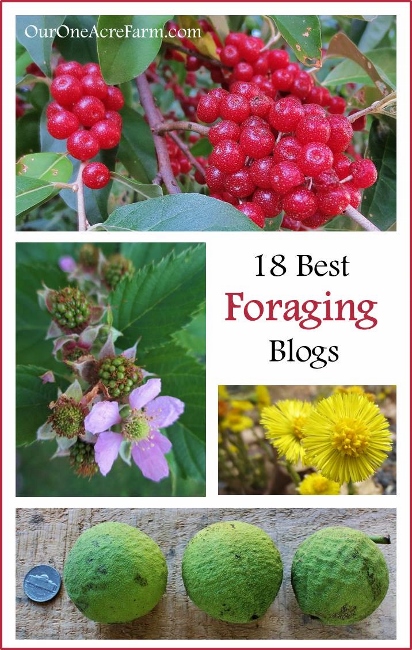
I’ve been meaning to create a list of great blogs on edible wild plants for my own personal use, and now that I’ve done so, I thought why not share it with all of you! So here it is, my list of favorites, organized and profiled for your consvenience. I hope you find it as useful as I do.
18 Best Foraging Blogs
Foragers are a varied crowd. Among them, you will find hard core botanists, nature nerds, homesteaders, chefs, herbalists, philosophers, and fortune tellers, to name a few. I’m over to the left, in more ways than one, but I’ve learned something from authors of all persuasions. This list represents many of them.
But that doesn’t mean that I endorse everything said in these blogs. I’ll be honest, I’m a stickler about evidence based science, which means I’m skeptical about assertions buttressed by anecdote, secondary sources, or nothing at all. Whether you intend to use wild plants for food or medicine, I urge you to consult several authoritative sources. Blogs are a tremendous resource, but they are just a start. There are many excellent books for greater depth. Here are a few:
My criteria for inclusion in this collection of 18 best foraging blogs are listed below. Few blogs satisfy all of them. Some hit the ceiling in certain areas, so I overlooked a few weaknesses.
- I am aware of the blog and enjoy reading it.
- Featured plants are relevant to a sizable geographic range within the US (to be sure it is useful to many of my readers).
- There is enough information to comprise a substantial resource for foragers.
- If foraging is not the main focus of the blog, the foraging posts are easy to find, and not buried within other topics.
- References to authoritative sources are cited to back up statements about medicinal qualities and health benefits, especially if such topics are the thrust of the post.
- Photos and illustrations are (as far as I could tell) the work of blog authors or contributors.
- Posts somehow add to existing information on the internet. That can be in content, clarity, or creativity, in writing, photography, illustration, or recipes.
So here they are, in alphabetical order within each section:
18 Best Foraging Blogs
Blogs specifically about foraging for edible wild plants or mushrooms
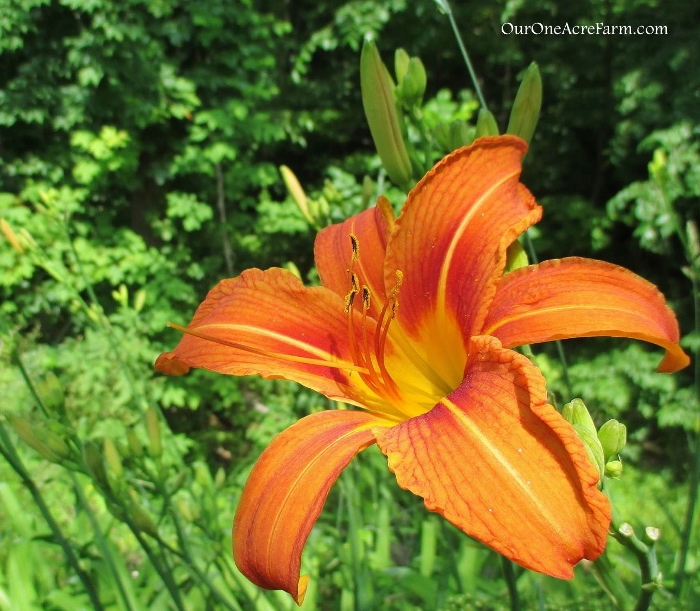
Wild daylily
1. Eat the Weeds Award winning writer and photographer, professional musician, member of MENSA, and nearly life long forager, Green Deane now teaches foraging full time. He has put together a tremendous resource for wild edibles enthusiasts. The well organized site is easy to navigate and covers an enormous array of edible wild plants. He says he’s based in Florida now, but writes from his experience in northern climes as well. Check out his extensive archive, and you’ll see what I mean. Typically lengthy posts cover identification tips, harvesting tips, history, medicinal uses, recipes, and more.
2. Edible Wild Food Several contributors post on this blog. Plants and mushrooms covered are based in experience in Canada and in the northeastern US, but many of them grow elsewhere in the US, too. It is easy to navigate through categories which include weeds, seeds, trees, medicinal plants, poisonous plants, mushrooms, etc. Many plants are covered, each accompanied by a few photos and detailed description. Recipes include main courses, salads, breads, cookies, jellies, pesto, and more. Most are basic and are not accompanied by photo.
3. Forager’s Harvest This is the site of award winning author, Sam Thayer. If you have any interest in wild edibles, you’re probably familiar with his books, Forager’s Harvest and Nature’s Garden. And you’ll have to buy the books to access most of his work, because posts are few and far between. Nonetheless, they are engaging, inspiring, and entertaining, and offer a glimpse into two of the best books on foraging I have seen.
4. Foraging & Feasting is a website which appears to exist primarily to promote the book by the same name. It is not a blog. For daily updates, you need to visit Foraging & Feasting on Facebook, where posts often include illustrations, information, or recipes from the book. The illustrations are art and science at once. You’ll want to hang them on the wall, and also to tote them into the field for aid in identification. Author Dina Falconi and illustrator Wendy Hollender have truly created a unique resource for foragers.
5. Hunger and Thirst Great identification and harvesting tips, a wide variety of creative recipes, and gorgeous photos grace the pages of this well organized and fun to browse blog. A wonderful resource covering many edible wild plants.
6. The Mushroom Forager Blog was created by Vermont based Ari and Jenna, who lead mushroom foraging and cultivation workshops. They provide excellent identification tips, breath taking photos, and charts which help you sort through scientific names, habitats, and culinary value.
7. The 3 Foragers Foraging is a family affair for Robert, Karen, and daughter Gillian. It’s easy to navigate throught the excellent articles featuring identification tips, and interesting recipes. There is even a separate section on eating invasive plants. There are posts dedicated specifically to identification of plants and mushrooms, and others featuring creative recipes. Photos are beautiful, and often capture salient features needed for identification. There are some videos, but since I find videos too time consuming, I have not yet explored them.
8. Wild Foodism is the brainchild of Adam Haritan. He has a background in nutrition and believes that “for humans to function optimally, we must become adherents to the wild food diet”. Rather than identification tips or recipes, Adam teaches us about the health benefits, medicinal properties, and traditional uses of wild plants. His careful citing of primary sources is a breath of fresh air and makes it one of my favorites, even among this list of tops. The only negative is that the site does not make browsing or navigation easy. You will find categories if you scroll way way way down to the bottom of his page. That’s great if you notice it, but even then, some of the posts are classed as “uncategorized”. Speaking of categories, it may be that this blog belongs under “Herbalism”, but I have it in Foraging because Adam is interested in using wild plants for food, as well as medicine.
9. Wildcrafting is not really a blog. It’s a site for learning and sharing. Anyone can browse the extensive plant list, and those who register can submit new plants and their own photos, and can mark location on a map for either private or public use. Basic information, including identification tips and medicinal uses, are provided for each plant. It’s not a site for recipes or for entertaining accounts of foraging adventures.
10. Wildman Steve Brill has authored several books, leads a variety of foraging programs, and offers a wealth of information on his blog. Identification tips, brief mention of medicinal properties, and mouthwatering recipes are there for the taking. I am not sure if he is still actively blogging, but the existing posts comprise a wealth of information, and I make frequent use of them.
Blogs which have foraging as part of a larger topic
Cooking
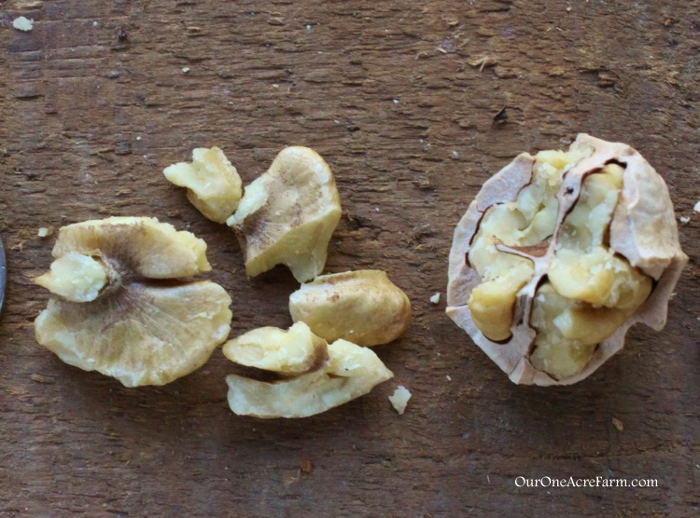
Nuts of Shagbark Hickory
11. Fat of the Land Seattle based author, instructor, and lecturer Langdon Cook relates his experiences foraging land and sea with engaging text, stunning photos, and unique recipes. Use this easy to navigate blog for inspiration, entertainment, and dinner. Not for identification.
12. Hunter Angler Gardener Cook This is one of my all time favorite blogs. Award winning blogger Hank Shaw elevates cooking to an art. The many creative and widely varied recipes are beautifully presented. Categories and menus make it easy to find what you’re looking for. In addition to recipes, Hank sometimes treats us to interesting essays on hunting, fishing, foraging, and gardening. There are also some posts on finding and harvesting wild edibles, but most of the posts are recipes.
13. The Foraging Family This is the blog of “high school science teacher and aspiring caveman” Ben Lord. At the time of this writing, there have been no posts on this blog for about a year. But between 2010 and 2013, it was quite active, with many posts, typically featuring his foraging adventures and interesting recipes, but not identification. Many plants are covered, making this a very useful blog, and you can search the site for specific plants. However, there are no categories or menus to browse.
14. Wild Edible Cindy and Eric, the two contributors of this blog, are committed to sustainably and humanely produced food. They share some creative, mouth watering recipes using edible wild plants and animals. Some examples are wild flower spring rolls, maple bourbon pecan pie, and corned venison cured with celery powder. Each is accompanied by nice photos of the dish, but not necessarily any photos of the featured plant. The recipes look fabulous, but I was not able to find an easy way to search them. It’s a running blog, with no categories or index for the recipes. (If there are, I couldn’t find them.)
Herbalism
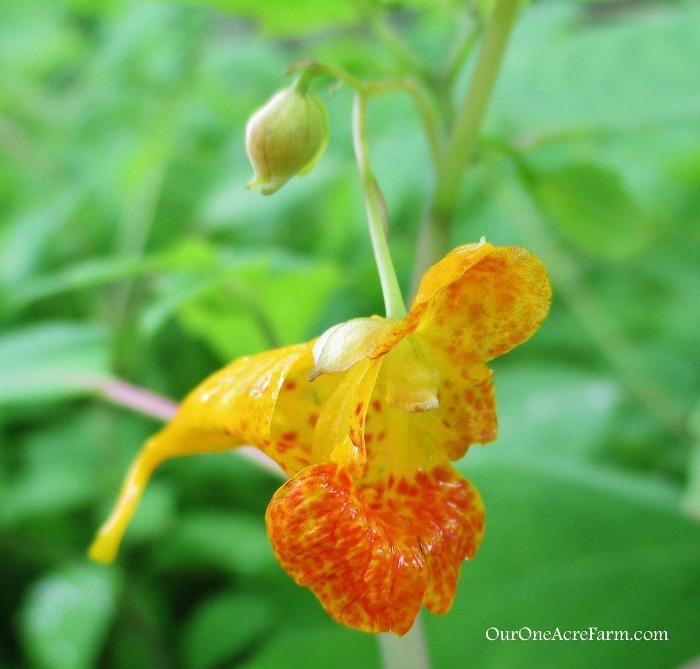
Jewelweed
15. First Ways Author, herbalist, and forager Becky Lerner invites us to join her in “unlocking the secrets of the wild plants all around us”. As an herbalist, her focus is on the medicinal properties of plants, and enjoys working with them “metaphysically”. If that’s not your thing, you might still enjoy her easy to navigate Plant Gallery, with great identification tips. Many plants are covered. She uses wild plants both as medicine and as food, but it seemed to this reader that the focus was more on medicinal properties. Becky often does cite sources, but these are not necessarily definitive studies.
16. Herbal Academy of New England Blog Some wild plants are covered along with cultivated herbs. It appears to be a young and growing site, and I look forward to expanding coverage of wild plants. Tips for locating and identifying wild plants are sometimes provided, but the focus is on medicinal properties. I find it very interesting, but sources are cited inconsistently. Recipes for infused oils, balms, salves, teas, etc., are provided.
Homesteading and farming
17. Common Sense Homesteading Homesteader Laurie Neverman authors this informative and well organized blog. Under “Herbs and Wildcrafting”, many wild plants are covered in depth, with useful photos and detailed botanical description. She discusses medicinal properties, nutritional value, wildlife value, etc. And she cites her sources! Well done, Laurie! I was just recently introduced to this blog, and look forward to perusing it. Oh, and by the way, Laurie has earned degrees in mathematics and renewable energy. Pretty impressive for a homestead blogger. Or anyone, for that matter.
Wildlife and wildcrafting
18. Josh’s Journal In addition to plant identification and foraging tips, Josh teaches us about birds, provides tracking tips, and occasionally quizzes us. The blog is well organized: Under “Explore”, you will find menus for “wild edibles” and “wild medicine”. Quite a few plants are featured. Posts are relatively brief, and focused on a few interesting facts or salient features, rather than exhaustive description. They are well written and accompanied by beautiful photos.
Did I miss any over the top foraging blogs? Which are your favorites?
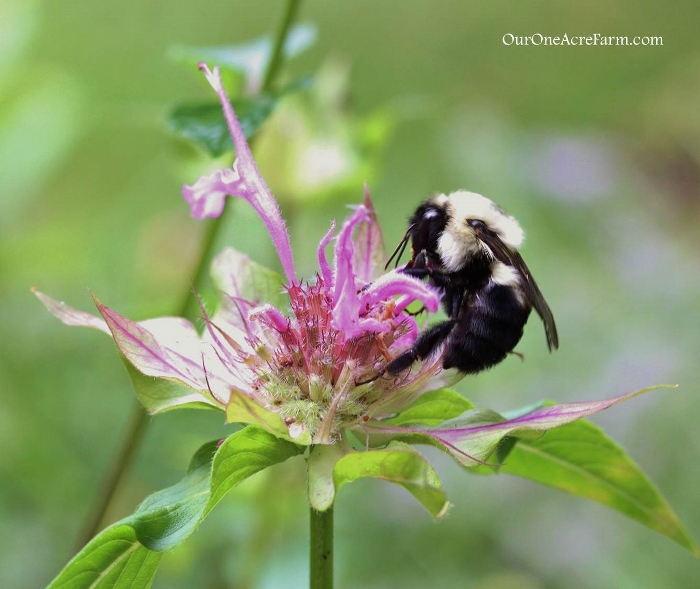
Wild bee balm
Shared on: Tuesdays with a Twist, Backyard Farming Connection, Wildcrafting Wednesday, From the Farm, Homestead Barn Hop #169, Simply Natural Saturdays, Green Thumb Thursday, Homestead Barn Hop, Down Home Blog Hop