
Giant Silk Moths and their Decline
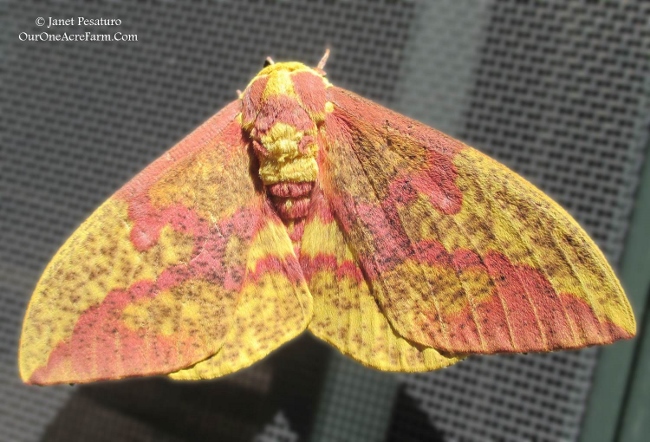
Moths are just as beautiful and fascinating as butterflies! The giant silk moths, in particular, are huge and stunning. How many luna moths have you seen? How about cecropia moths? Not many? Maybe that’s because their nocturnal nature makes them less familiar to us than butterflies. I invite you to go out to your porch lights at night, and let curiosity get the better of you. Moths could use some attention.
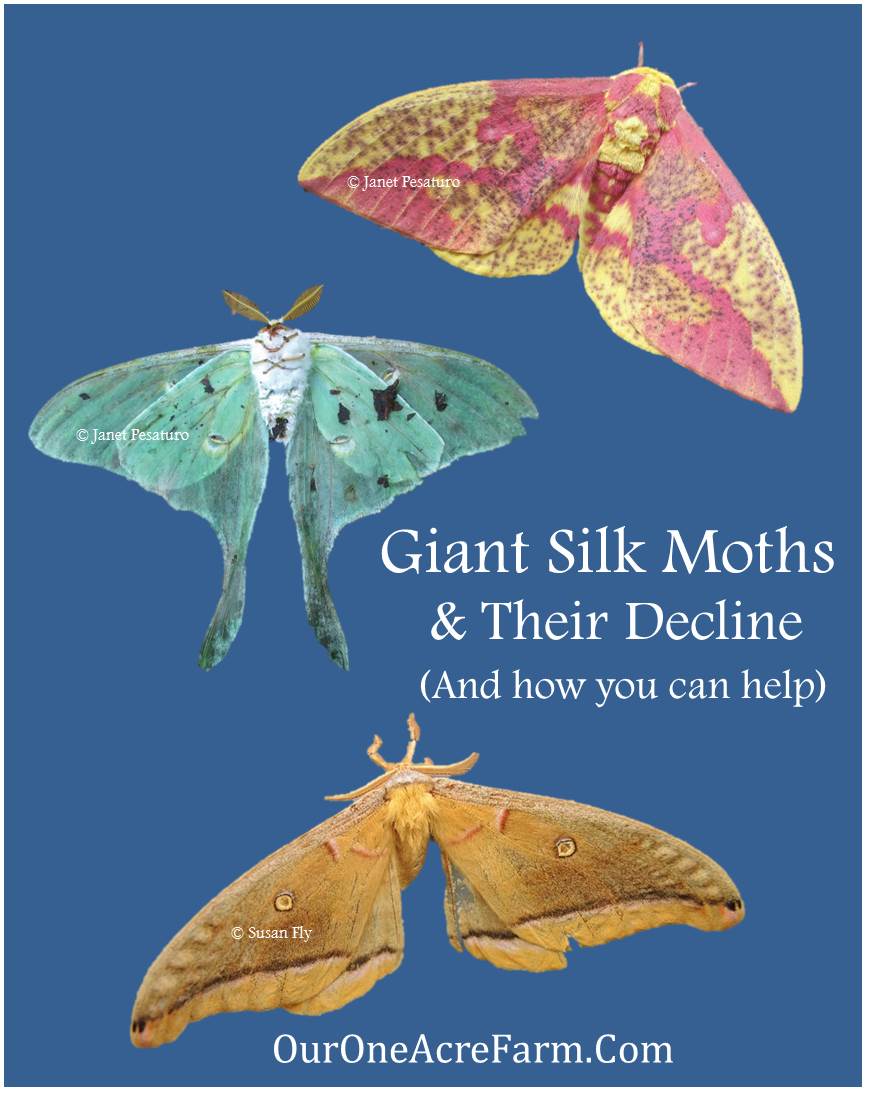
From top to bottom: imperial moth, luna moth, and polyphemos moth. All are in the giant silk moth family.
Many moths are declining, but for some reason the topic receives relatively little attention. Just google “moth conservation” and see what comes up. You get some nice UK websites devoted solely to moth conservation, but no such US sites (at least at the time of this writing). Here, we lump it with butterfly conservation, where moths seem to take a back seat.
I was inspired to read up on them after my kids found a striking and uncommon moth on the screen of a cabin we rented in the Adirondacks last week. To learn more about moths or to teach your kids about them, check out these products:
Giant silk moths
The moth we saw in the Adirondacks was an imperial moth, a member of the giant silk moth family (Saturniidae). This family is not closely related to the Asiatic silkworm moth, which exists only as a domesticated species used in silk production. Saturniidae does include some of the better known moths, such as the luna, cecropia, polyphemus, io, and prometheus moths. Characteristics of most giant silk moths are:
- Large size
- Large, feathery antennae
- Lack of hearing organs
- Inability to feed, in adults, which have only vestigial mouth parts
- Larval diet of tree and shrub leaves, with each moth species having a preference for certain plants
- Larvae spin a tough, papery cocoon (typical) or occupy a small chamber in the soil (less common)
- Overwinter in pupal stage
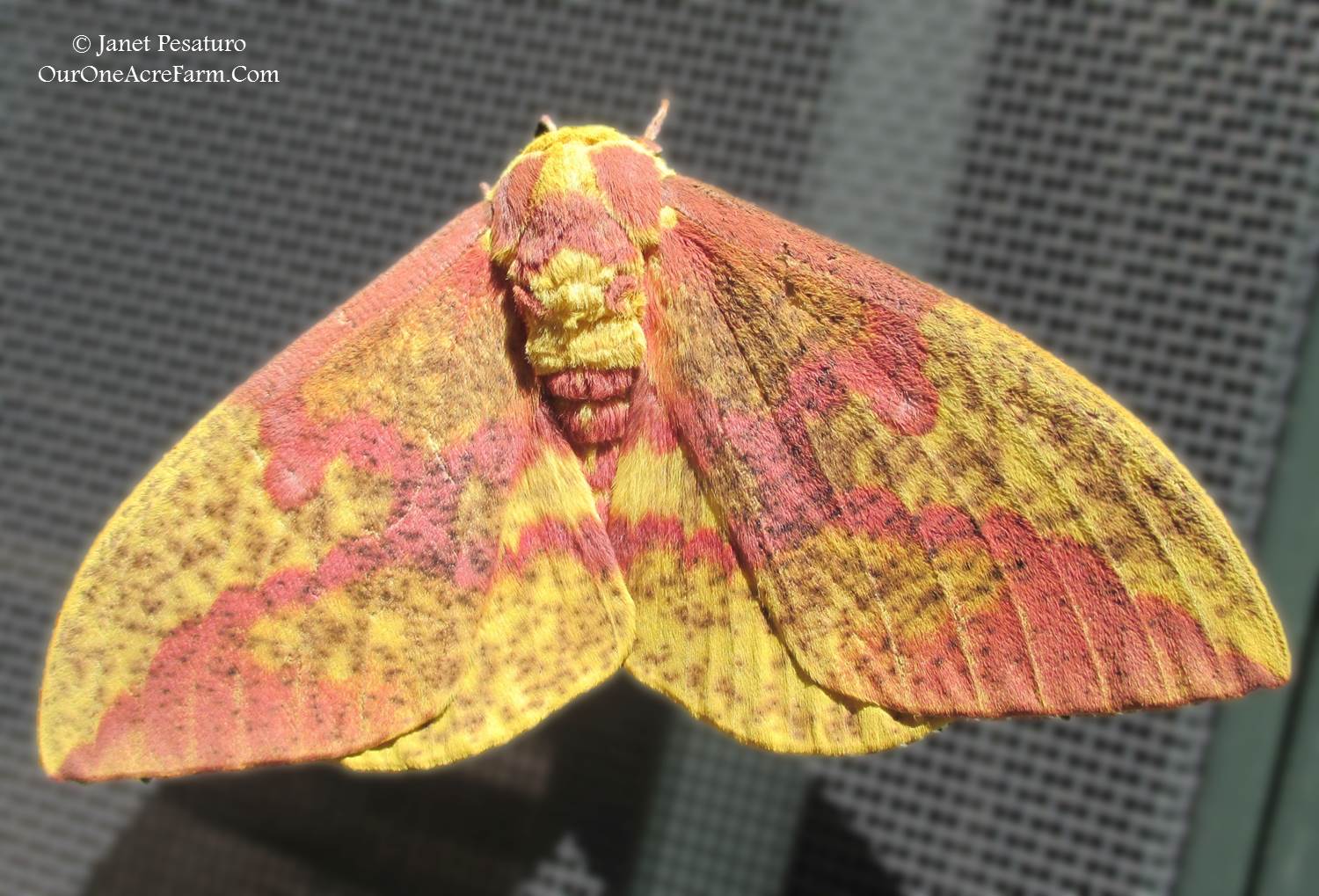
We found this imperial moth, Eacles imperialis, in the Adirondacks of NY. The wing span was about 4 inches. Like some of the other giant silk moths, this species is declining throughout the northeast.
Facts about the decline
The imperial moth, the one we saw in the Adirondacks, has suffered a sharp decline in the northeastern states. And many of the other giant silk moths are declining, too. Here are some interesting observations about the decline:
- Moth enthusiasts report diminishing numbers of giant silk moths at least as far back as the 1950’s.
- Some species, including the imperial moth, have declined on the mainland, but remain common on the offshore islands of Massachusetts, and in more western and southern parts of their range.
- Most of the declining species have larger larvae and a longer development time. This suggests a predator or parasite might be a cause of decline. (Larger larvae are easier to find, and longer time spent in larval stage increases the opportunity for larval infection by a parasitoid.)
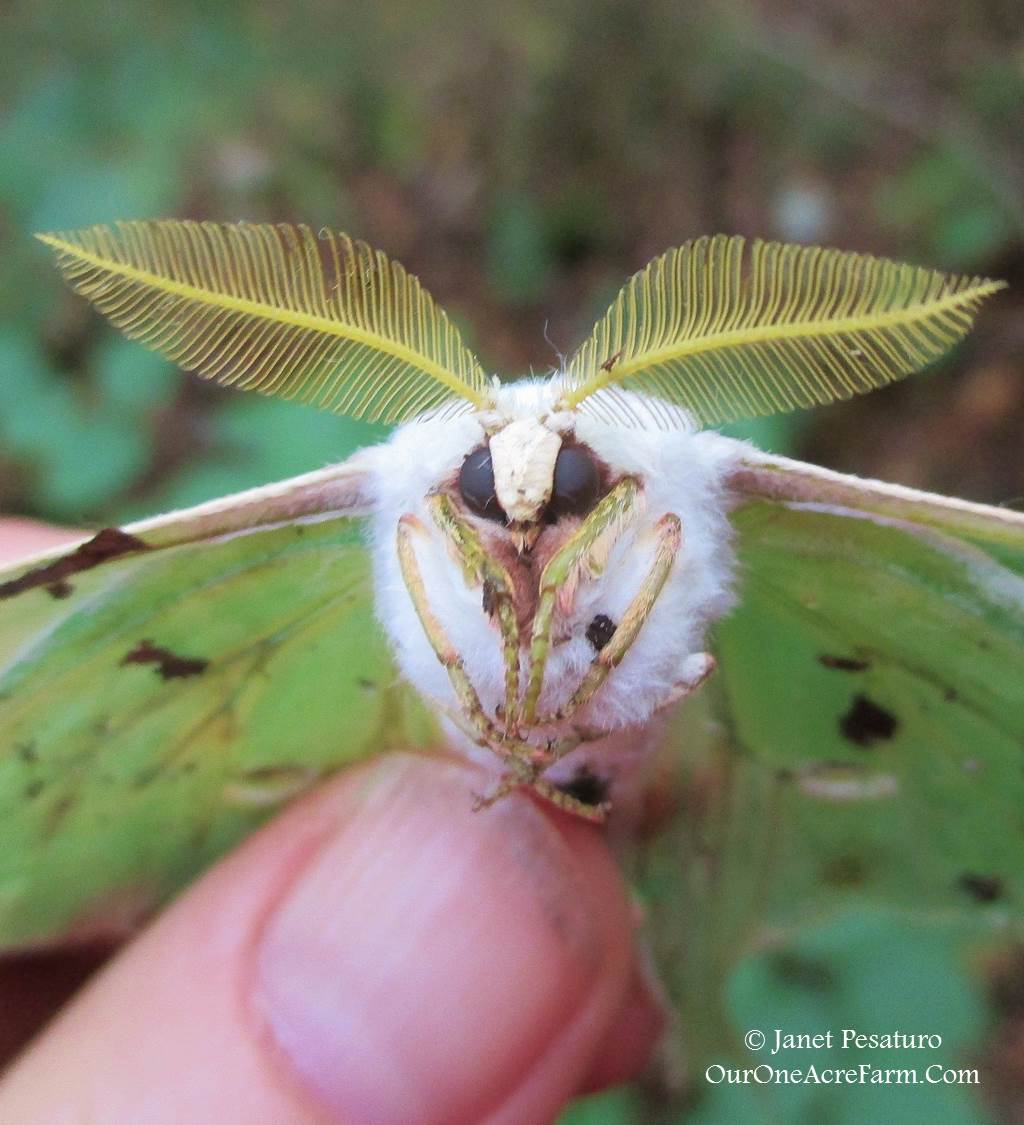
The luna moth, Actias luna, may or may not be declining in the northeast. I have read conflicting reports on that. This moth was dead on the ground when I found it. You can see how large it was, relative to my thumb. This photo shows its beautiful, feather-like antennae.
Causes of the decline
- Loss of habitat to development
- Pesticides
- Light pollution, which might disrupt their internal navigation system which normally makes use of starlight and moonlight
- Climate change
- A parasitiod fly, Compsilura concinnata, which was introduced to control gyspy moths, by injecting its own larvae into gypsy moth larvae.
Recent studies seem to point to the final factor, C. concinnata as a major culprit. And the sad part is that it failed to control gypsy moths. (Gypsy moths are actually controlled by a fungal pathogen.)
Regardless, the introduction of that parasitoid was an unfortunate choice, because it is (and was) known to infect a wide variety of larval hosts. It attacks the larvae of at least 200 native moth species, including giant silk moths. But back in the early 1900’s, people did not think that would create a problem.
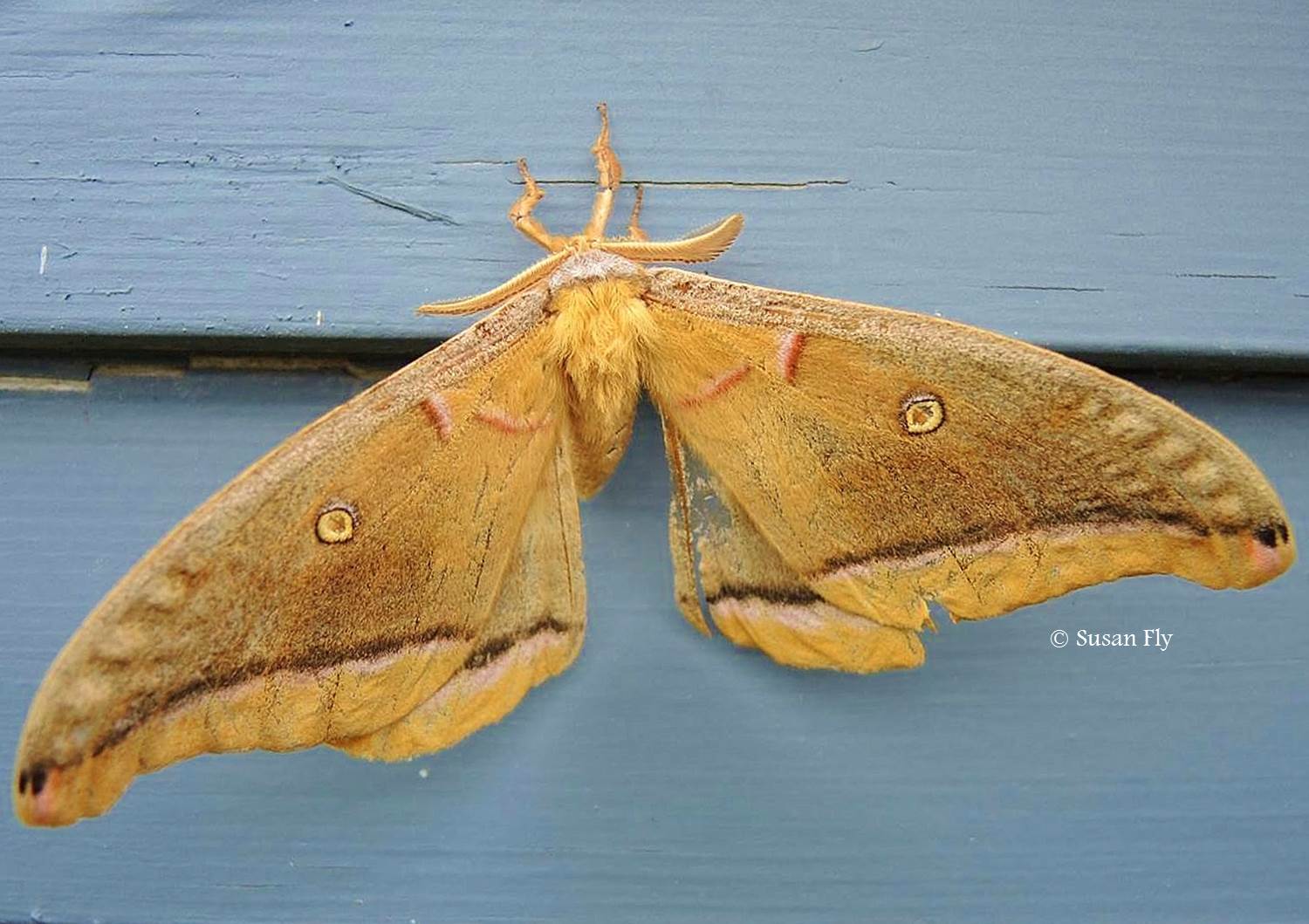
The polyphemus moth, Antheraea polyphemus, appears to be maintaining its numbers, despite the decline of other giant silk moths. This species has a wingspan of 4-6 inches.
Giant silk moths and their decline – How you can help
- Support land protection organizations so that habitat for moths and other wildlife can be protected.
- Avoid pesticides whenever possible.
- Tolerate some leaf damage on trees and shrubs, because moth larvae need eat to leaves.
- Take an active role in reducing light pollution, using some specific suggestions here.
- Reduce your personal impact on climate change with simple steps described here.
- Help educate the next generation on the importance of wildlife and natural habitat. Some schools (like our public school system) have environmental ed programs that depend on volunteers. Our town uses the 4 Winds Nature Program, paid for by our local land trust. Be an activist, and bring such a program to your town!
Sources and further reading
- Effects of a Biological Control Introduction on Three Nontarget Species of Saturniid Moths
- Giant Silk Moths
- Giant Silkworm Moths
- Life history of the Imperial Moth Eacles imperialis (Drury) (Saturniidae: Ceratocampinae) in New England, USA: distribution, decline, and nutritional ecology of a relictual islandic population
- Moth Decline in the Northeastern United States
- The History of Gypsy Moth Control in the United States: A Reflection of Changing Attitudes and Technology
Did you know moths were declining? Have you seen any giant silk moths? Share your thoughts and experiences in a comment!
Shared on: From the Farm, Simply Natural Saturdays, Homestead Barn Hop