
Humane, Sustainable Chicken Farming: A New Tool for Newbies
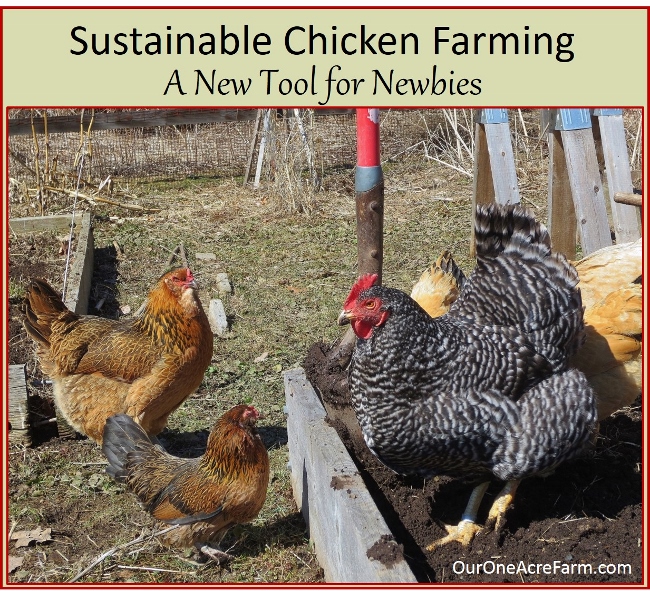
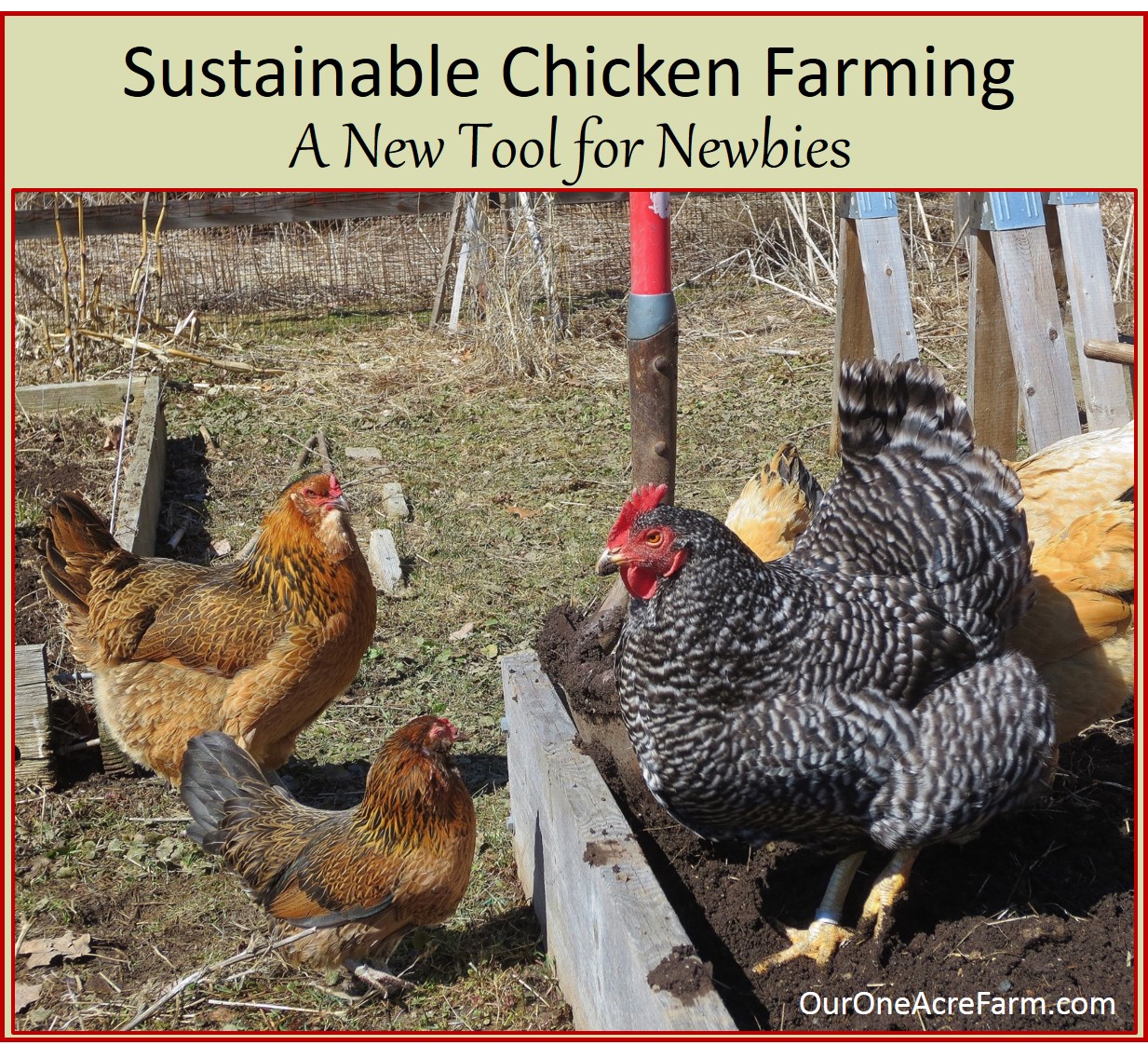
In our little farm, the chickens help with the gardening in spring and fall, and with the composting throughout the growing season.
A young woman handing out flyers urged me to stop eating eggs, as I studied a picture of hens crammed into cages. This was 2-3 decades ago. We were museum hopping in Washington, D.C., and I was annoyed with her for disturbing our leisure. The flyer said that conditions of extreme crowding and tight confinement were widespread in the American egg industry. I scrunched my eyes and shook my head. “Not in our great country!” I thought. I reached for the trash can, but at the last instant, stuffed the flyer into my pocket.
Disclosure: This post is sponsored by Abundant Permaculture. All opinions are my own.
I took it out and re-read it several times, before discarding it at the end of the day. It couldn’t be true. If the photo was real, it could not represent the typical conditions. Perhaps there was just one monstrously callous farmer, and an alarmist animal rights group that got carried away. I didn’t believe it, but I never forgot it. In fact, I thought about it often.
Several years, photos, videos, and articles later, I finally accepted it as undeniable. It’s called factory farming, a system which disregards animal welfare in the name of efficiency and economics. It was unconscionable, and I decided it was time to take more responsibility for the animals which produce our food.
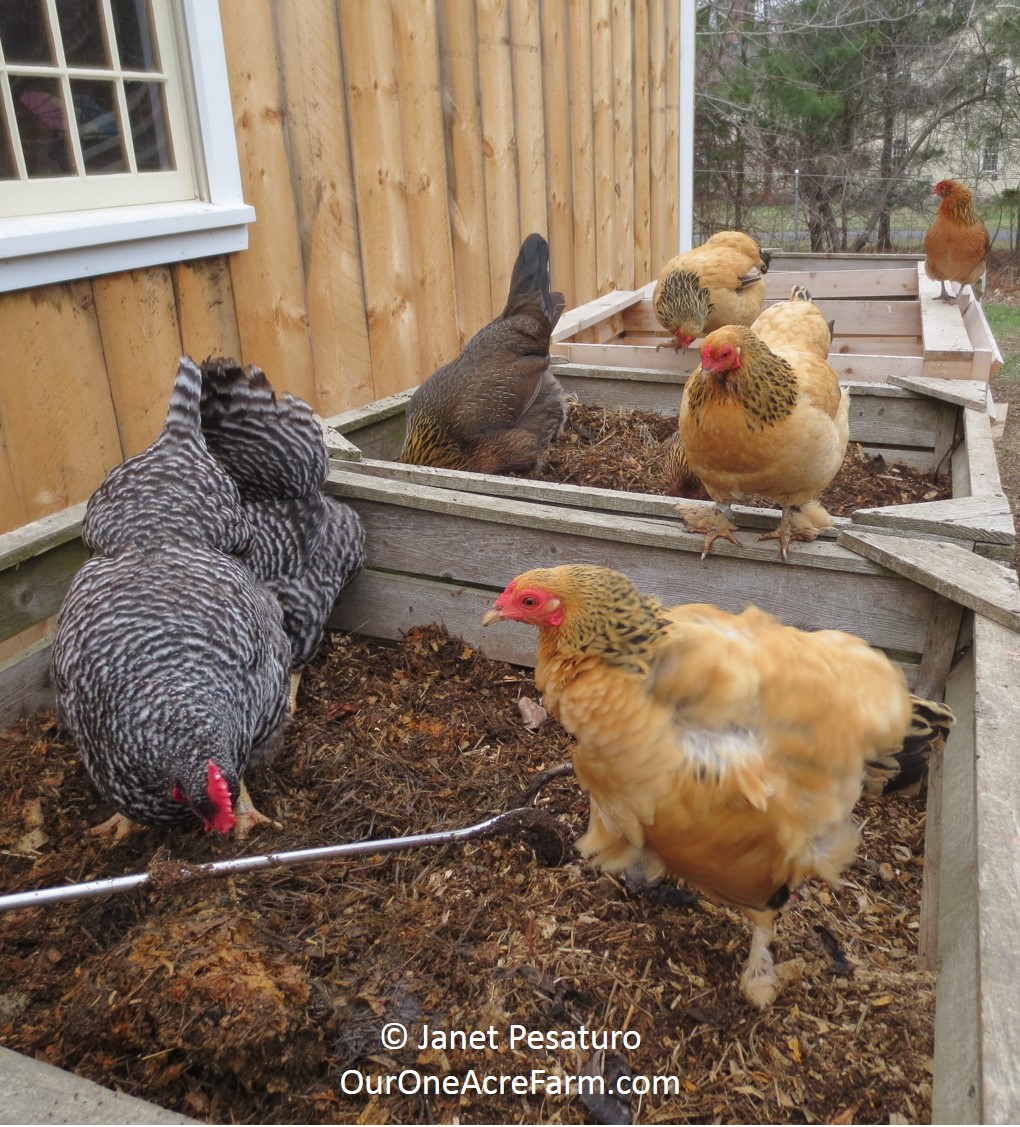
Allowing chickens to feed on the biota within freshly turned compost reduces the need for purchased feed.
I began buying food from small, local farms we could trust. I wanted to try my hand at livestock, and began reading about chickens. There was a lot to learn: proper housing, protection from predators, and the various and sundry poultry diseases, for example. How could something that the average family did, in days gone by, seem so complicated and fraught with pitfalls? It really isn’t all that complicated, but it had become unfamiliar.
I also learned that factory farming is not just inhumane. It produces less healthful food, and at huge environmental cost. Restoring the healthfulness is easy, at least in theory: Lose the pesticides, chemical fertilizers, and growth hormones, and feed grazers on grass instead of grain. Just like they did in the old days.
But what about the environmental impact? The old fashioned way isn’t necessarily best. We read about old “abused” farmland here in New England. Pastures were poorly managed and wetlands were drained. A different system is needed, one that combines the best of old time family farming with current thinking in ecology.
Humane, Sustainable Chicken Farming: A New Tool for Newbies
And now there is a resource in progress which can bridge the generation gap, while implementing the latest advances, to assist the average person in creating a sustainable family farm. That would be Abundant Permaculture’s film project, Permaculture Chickens. The project revolves around chickens, because their small size makes it possible for many people to keep them. And they are a good place to start, even for people with space for larger animals. They are a “gateway” animal, as Justin Rhodes, the mastermind behind the project, puts it.
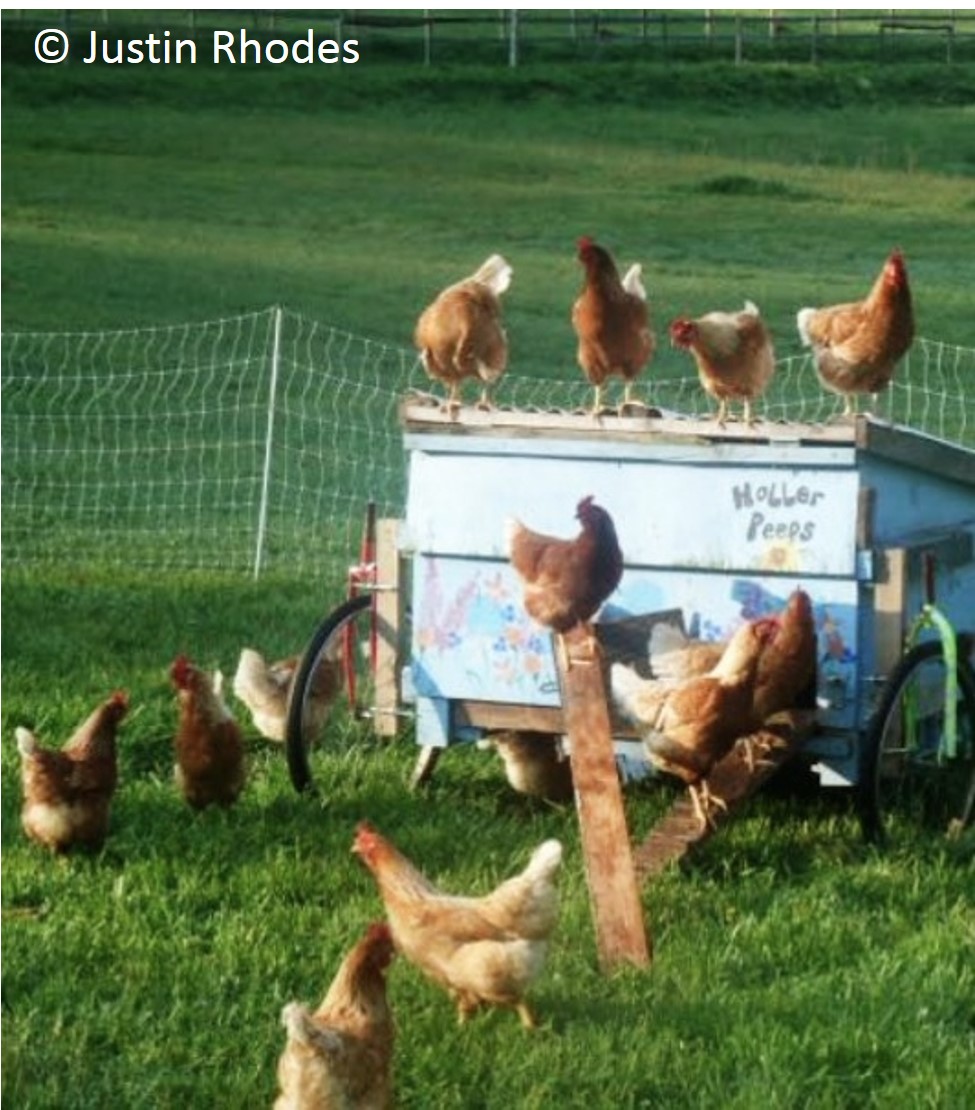
Justin’s flock of hens on pasture in a mobile chicken coop.
Justin is a certified permaculture designer and experienced homesteader. Through this film, he will show us how to get started with chickens, construct appropriate housing, begin a breeding program, hatch eggs, compost with chickens, use mobile shelters and electric netting, butcher humanely, and much more. I am honored to support this project, and wish it had been available when I started my flock.
Watch the Permaculture Chickens trailer, and you will see a friendly, accessible, and easily digestible film in the making. It will feature leaders like Joel Salatin of Polyface Farm, Jim Adkins of Sustainable Poultry Network, and author Pat Foreman. They will mentor you the way parents and grandparents used to teach children on the farm, but with the benefit of modern advances in permaculture and poultry science. Watch the trailer and support the kick starter campaign here.