
Autumn olive: foraging for autumnberries
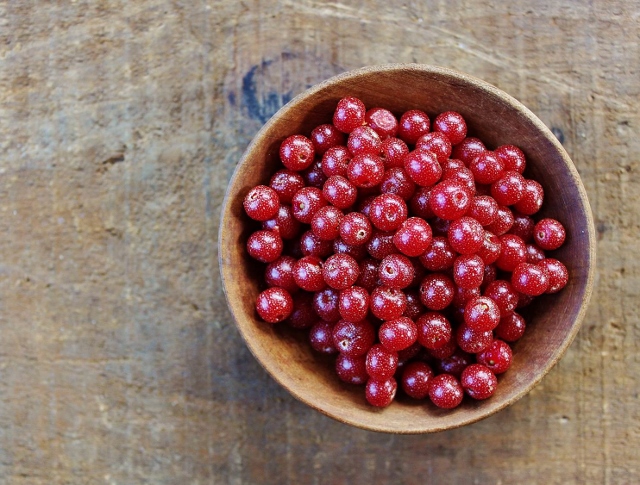
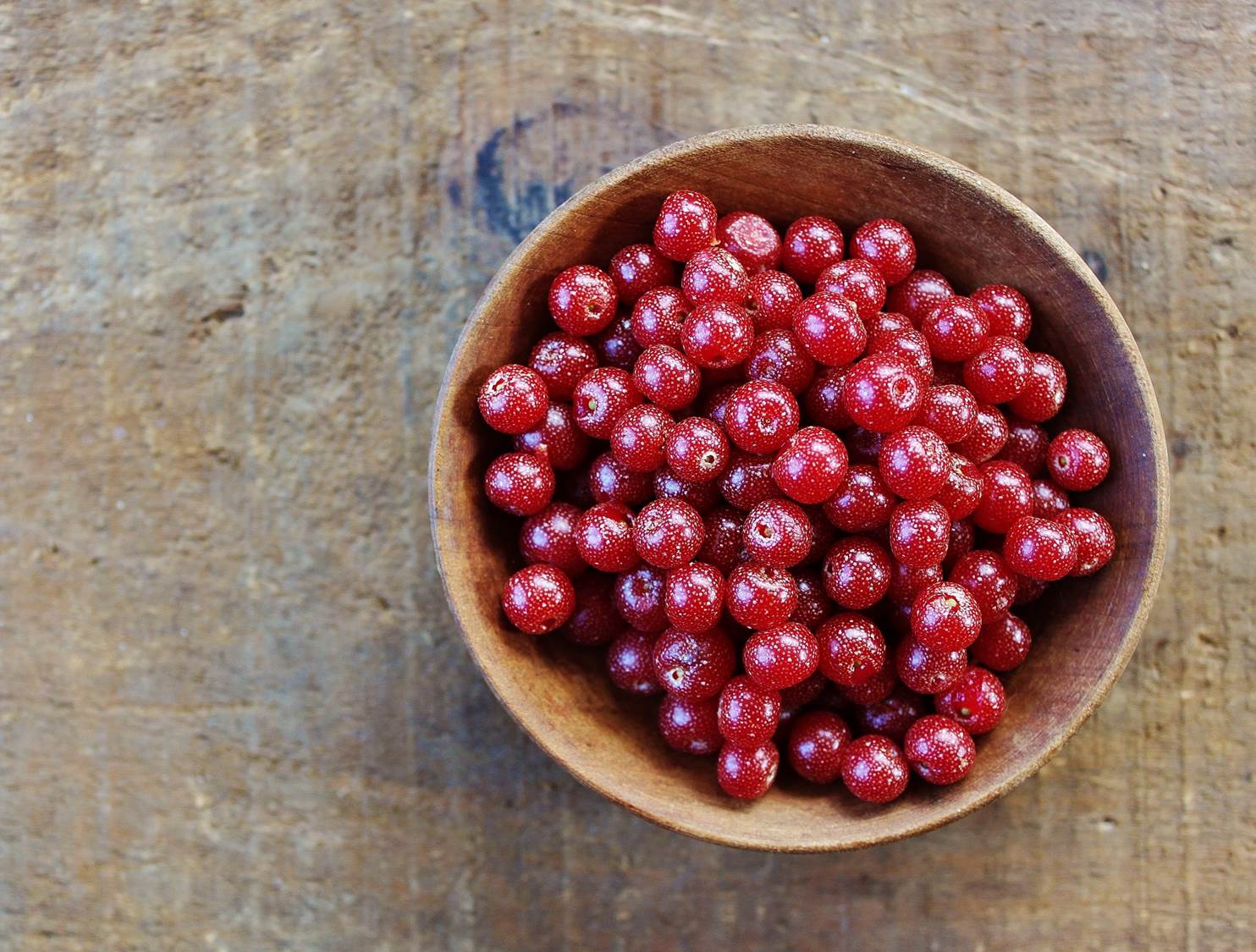
Harvested “Autumnberries” from autumn olive, Eleagnus umbellata
Until recently, few people were aware that the berries of autumn olive, Elaeagnus umbellata, are edible. But the secret is out. More and more are harvesting these tasty fruits for both sweet and savory dishes. In addition to great flavor, there are several possible reasons for its growing popularity amongst foragers:
- The fruits are known to be rich in vitamins A, C, and E, flavonoides, and lycopene (Ahmad, et al., 2005, Acta Botanica Croatic, Vol. 64, No. 1, 2005).
- Its new name, “autumnberry”, sounds more palatable than autumn olive.
- The shrub is easy to find because it abounds where people abound. It thrives in suburbia, including the edge of my property. Perhaps it is around your yard, too.
- The easy to harvest berries are produced in great abundance.
- It is an invasive shrub (native to Asia), and environmentally conscious people realize that using the berries for sauces, fruit leather, and jam requires boiling the berries, killing the seeds.
That last point deserves emphasis. Killing the seeds of an invasive shrub reduces its spread. And that method of invasive species control -cooking – is much more adaptive than, say, dousing the plant with herbicides. Eating this plant is a way of going with the flow of nature, learning to adapt to environmental change, rather than waging chemical warfare against it.
Elaeagnus umbellata was introduced from Asia and deliberately planted on sandy slopes along roadsides and bridge abutments, where it does an excellent job controlling erosion. Because birds relish the berries, autumn olive was also recommended as a great shrub for attracting birds. But its attractiveness to birds means that birds contribute to its spread, every time they deposit the seed in their droppings. Perhaps it’s ironic that those very characteristics which in the past made autumn olive “useful” – tolerance, vigor, and wildlife appeal – are the same ones that more recently earned it “pest” status.
And, it appears that our ambivalent relationship with this plant continues to evolve. There is yet another reason to see autumn olive’s vigor, catholic growth requirements, and tremendous productivity as beneficial. Some scientists think it might be a commercially viable cash crop, and fancy selection for genotypes for superior fruit production (Black et al., 2005. Journal of the American Pomological Society 59(3): 125-134).
So, is Elaeagnus umbellata a useful plant to be harvested, or a noxious weed to be poisoned? The choice is ours.
General description of autumn olive
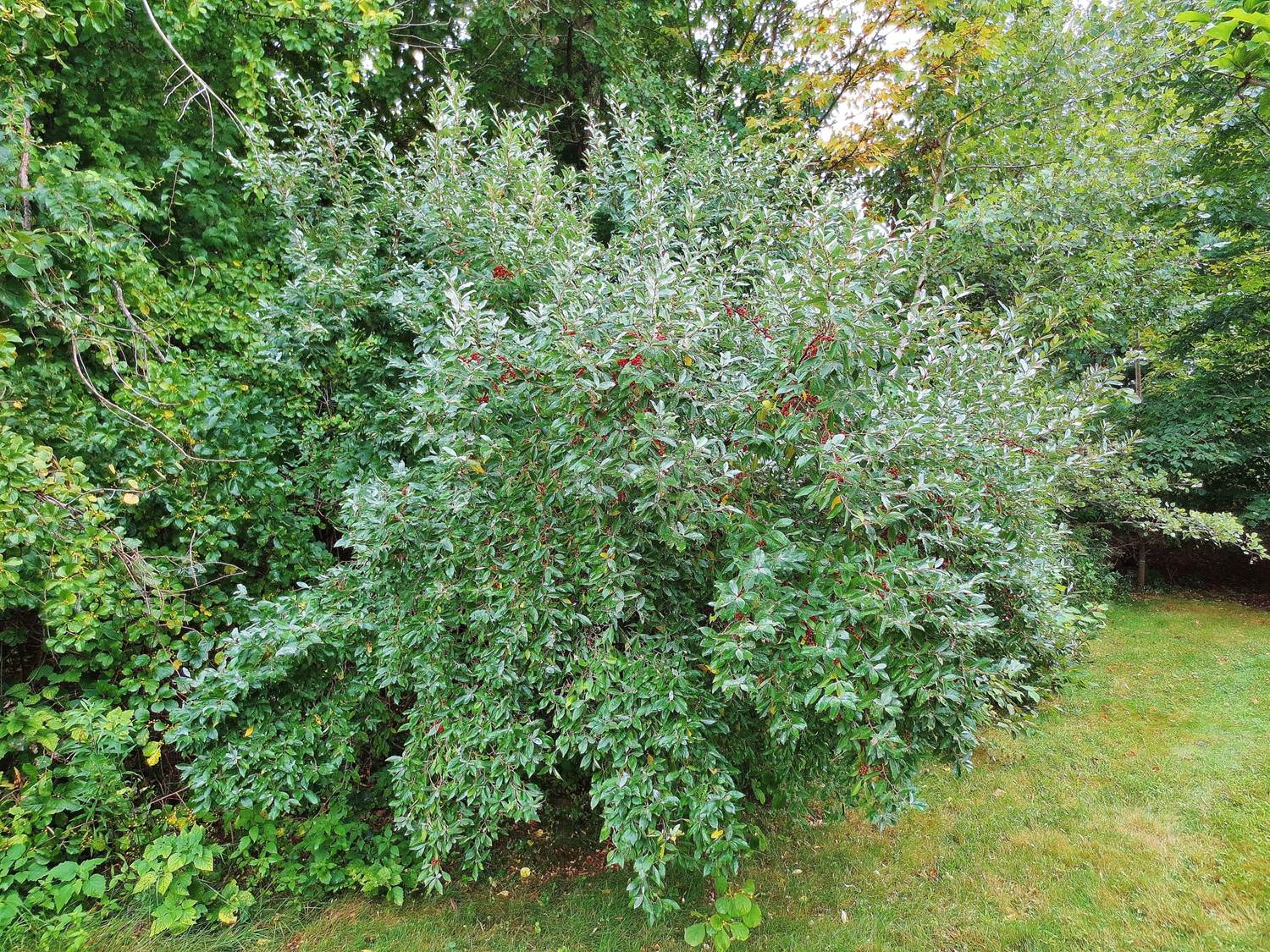
Autumn olive shrub at field edge, loaded with berries.
Elaeagnus umbellata usually grows as a shrub with a widely spreading crown. It can reach 12-15 feet in height. Before it was labeled a noxious weed, autumn olive was often described as “fragrant” in flower, and as “stunning” in fall, with its bright red berries against its silvery foliage. Now the flowers are “cloying” and its growth habit “unruly”. Recently I heard the nickname “Ugly Agnes” for this Elaeagnus shrub. That’s human nature for you.
Autumn olive leaves, twigs, and spines
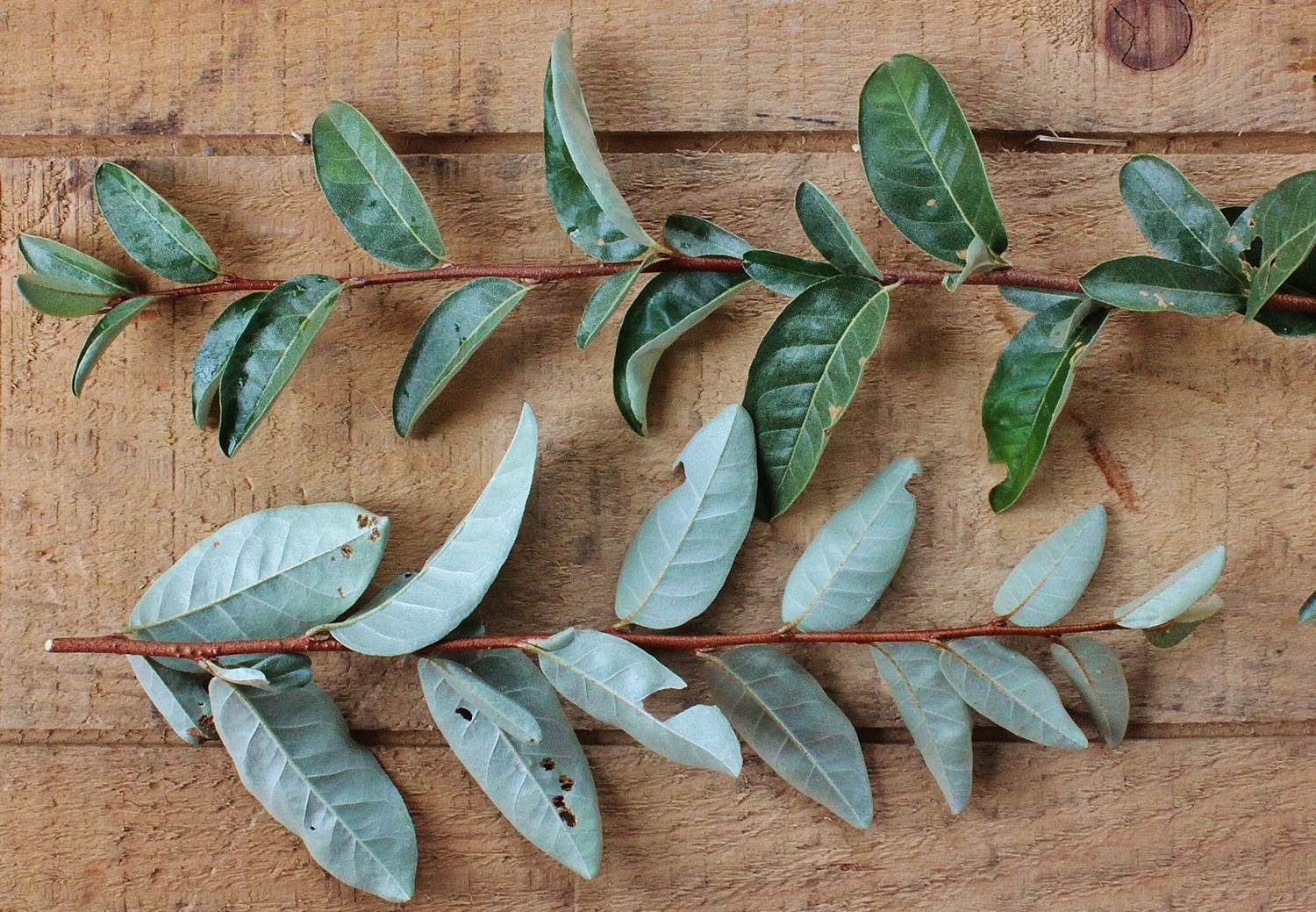
Leaves of Elaeagnus umbellata are rich green above and silvery underneath.
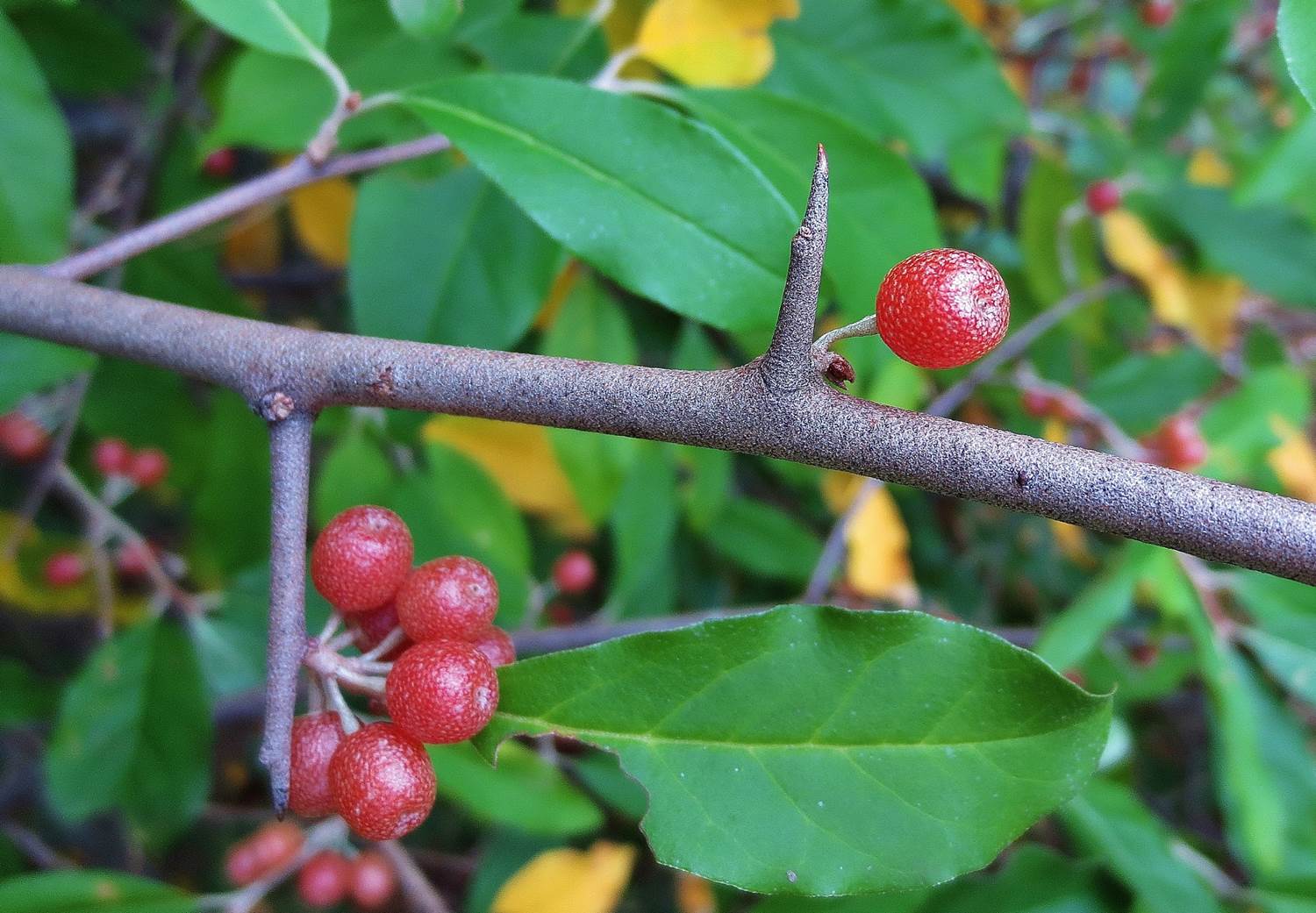
Spine on Autumn olive twig
The 1-4 inch long elliptical to ovate or oblong leaves have smooth edges. They are rich green above, with silvery undersides, and arranged alternately along brown twigs.
The alternate arrange of the leaves is a very important identification clue. This is because some honeysuckle shrubs also have small oval leaves, red berries, and yellow trumpet-like flowers (see photo of flowers, below). Some honeysuckles bear toxic berries, but all of them feature oppositely arranged leaves. So before you eat the berries, confirm that you’ve got an autumn olive by confirming that the leaves are alternate.
Sometimes there are spines on autumn olive twigs. Some specimens seem to have many spines, some have a few, and perhaps some have none at all. But I’ve found that if I look hard enough, all autumn olive shrubs have at least a few. I don’t know why this is so variable. But do look out for spines when you harvest berries, because they are sturdy, sharp, and hazardous to probing fingers.
Flowers of Elaeagnus umbellata
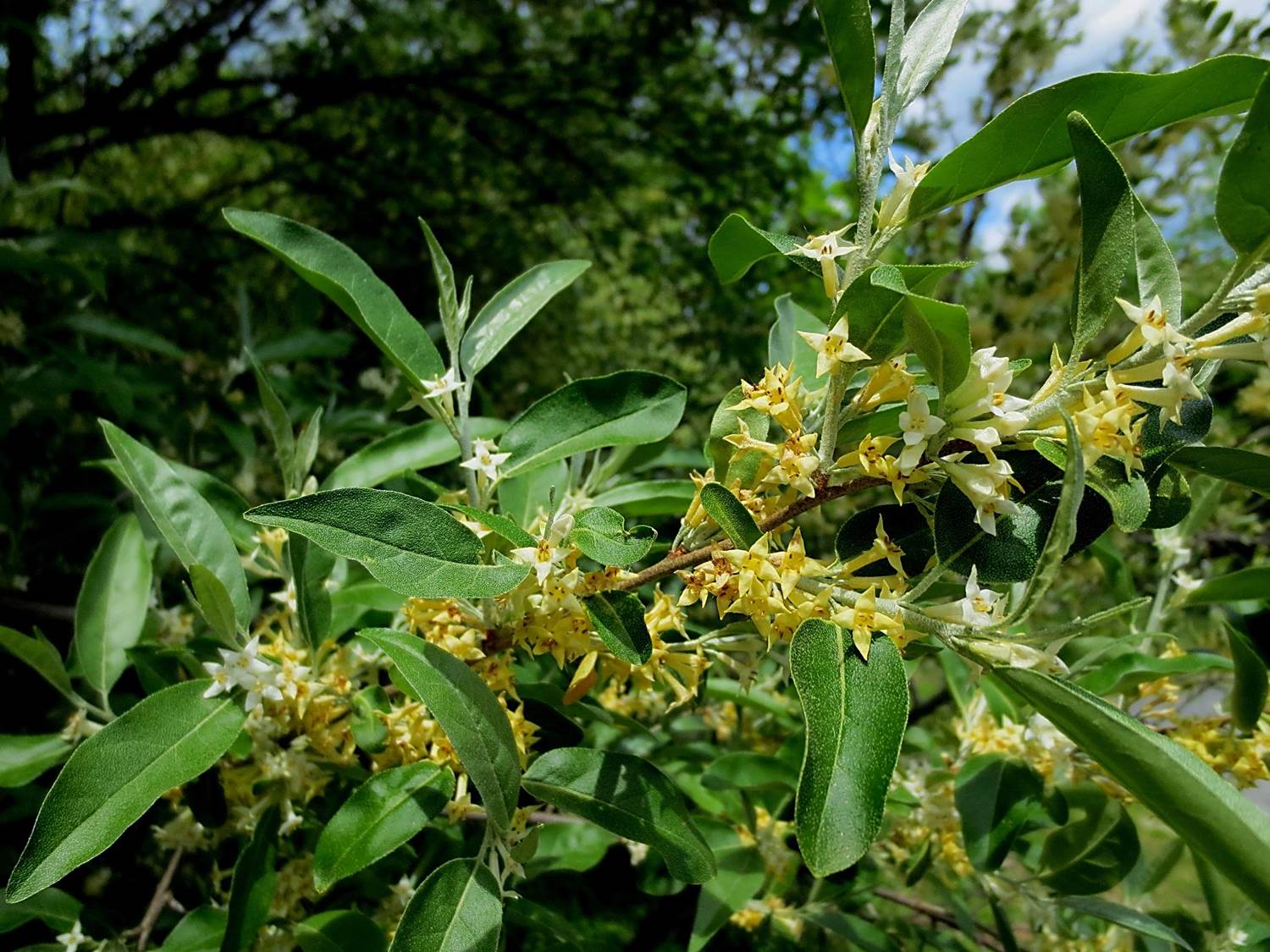
Trumpet-like flowers of autumn olive
The very fragrant creamy to yellow, trumpet-like, tubular blossoms appear in May. As I said above, some honeysuckles have similar flowers. And, as stated above, it’s important to get it right if you want to eat the berries, because some species of honeysuckle bear poisonous berries. Again, be sure you have autumn olive by confirming the alternate arrangement of the leaves (see above).
Autumn olive berries
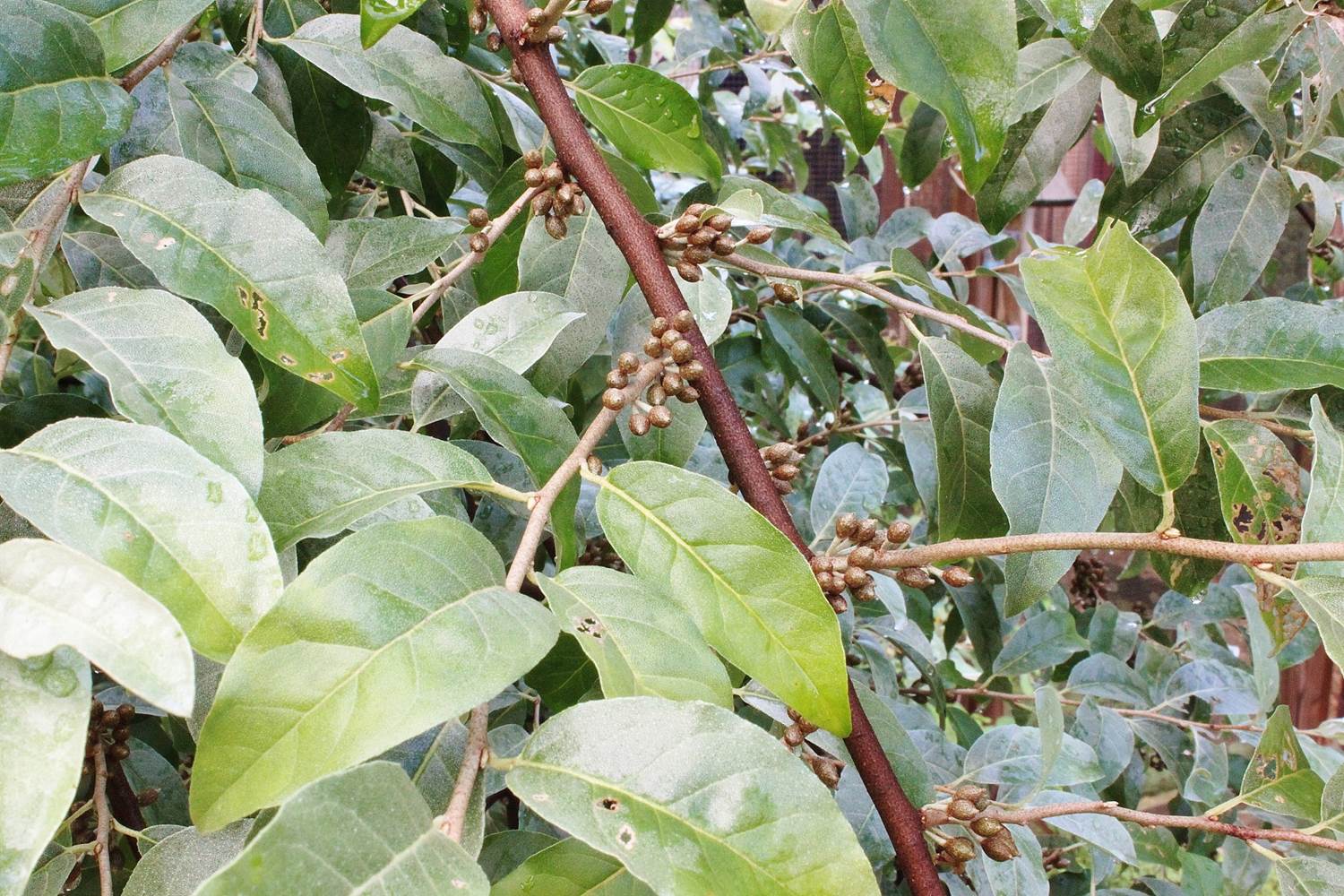
Developing autumnberries in late July, when they are still green
Or “autumnberries” for short. When ripe, they are bright, deep red, speckled with tiny silvery dots. Each berry contains a single pit that is almost small enough to be swallowed comfortably…But not quite.
Berries ripen as early as late August in full sun, but those in part shade ripen as late as the end of September. The flavor is sweet-tart and they sweeten somewhat over time, but the birds get a lot of them if you wait for that.
Sometimes the berries are borne in such abundance that branches sag under the weight. Occasionally an entire shrub will topple under the weight.
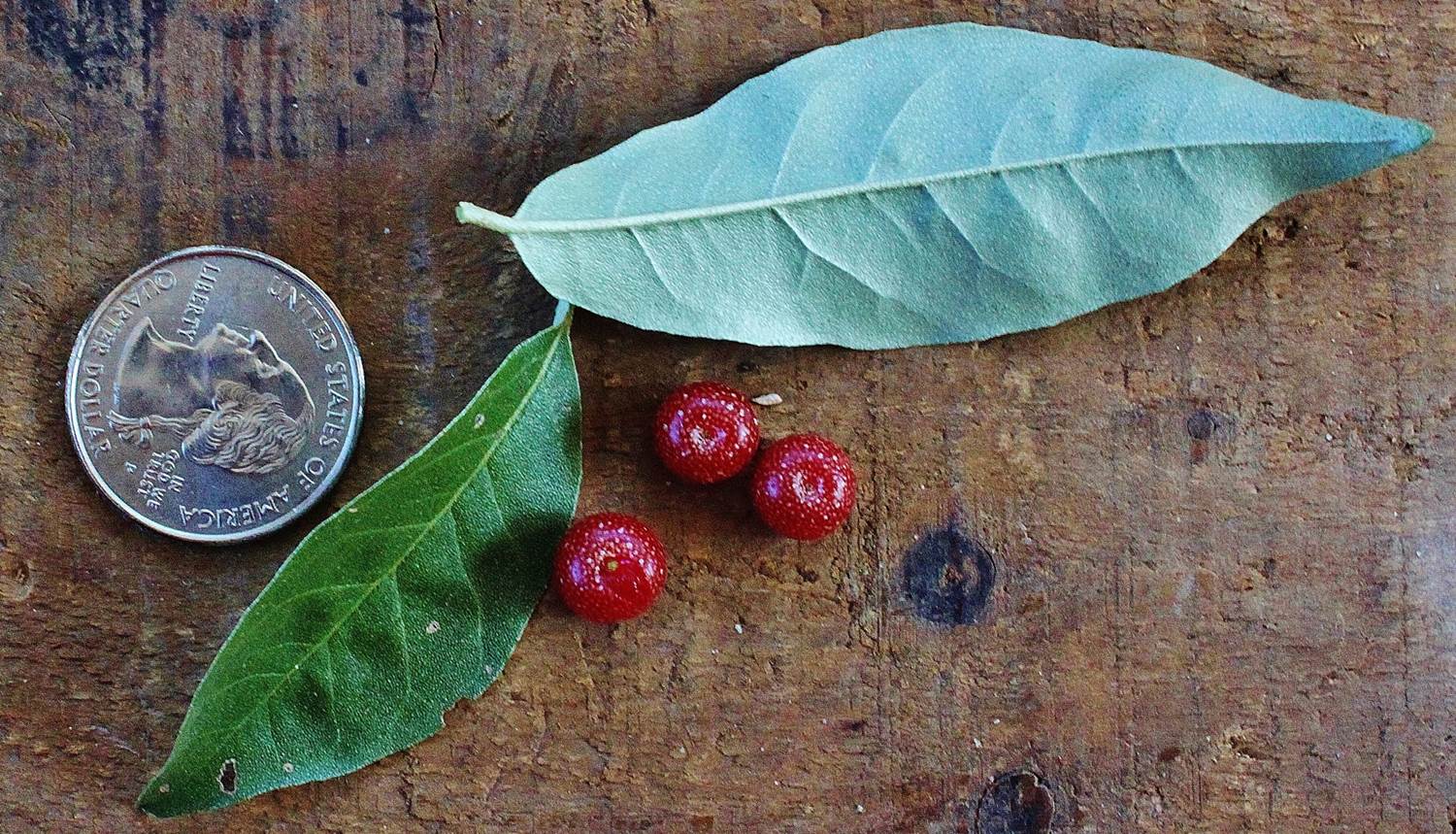
Autumn olive berries and leaves, with quarter for scale
Where to forage for autumn olive
Native to Asia, Elaeagnus umbellata now enjoys life in Ontario and most of the eastern US, as well as some mid-western and northwestern states. If you’re the visual type, have a look at its range map. The bad thing about this plant is that it can be found almost anywhere within its current range….if you hate it as a noxious invasive plant. The good thing about this plant is that it can be found almost anywhere within its current range….if you’re after the delicious berries.
Autumn olive is tolerant of a wide range of soils, from sands to clays, from acid to alkaline. It likes good drainage and tolerates drought. It tolerates part shade but fruit production is best in full sun. So, for ease of harvesting, look for autumn olive in edge habitat, especially in areas with a lot of human disturbance, which often sets the stage for colonization by opportunistic plants such as this one. Field edges and road sides are prime locations.
How to harvest autumnberries

Autumn olive bush loaded with berries
I’ve found that the quickest way harvest these berries is to run the fingers of one hand along berry laden twigs, allowing the berries to fall into a basket I hold with the other hand. In this way you can collect a large quantity within a very short time, but you will also have a lot of leaf and twig debris to pick out later. Even so, it’s much faster than carefully and cleanly picking off one berry at a time.
I harvest them as soon as they turn red, but most people prefer to wait a few weeks for them to sweeten. Everyone’s different: When other people think they’re finally sweet enough, I think they taste a bit rotten. I prefer the mouth puckering tartness of just-ripened berries.
Preparing and eating autumnberries
These juicy, sweet-tart berries would be wonderful to eat by the handful, were it not for the pit that’s just large enough to be annoying. I don’t eat too many of them raw, but when I do, I usually swallow the pits. I sprinkle a few in my yogurt and use them as a garnish, but cooking them greatly expands the possibilities. Boiling, mashing, and running the berries through a food mill removes the pits from the delicious pulp which can be used for sauces, jams, and fruit leather. Here is my recipe for autumn olive berry jam. The flavor lends itself well to both sweet and savory dishes. In my recipe for autumnberry ice cream pie, I layer a nutty graham cracker crust with autumnberry sauce, covered with a liqueur spiked mascarpone ice cream.
Shared on: