
Hickory nuts: Rodent sign
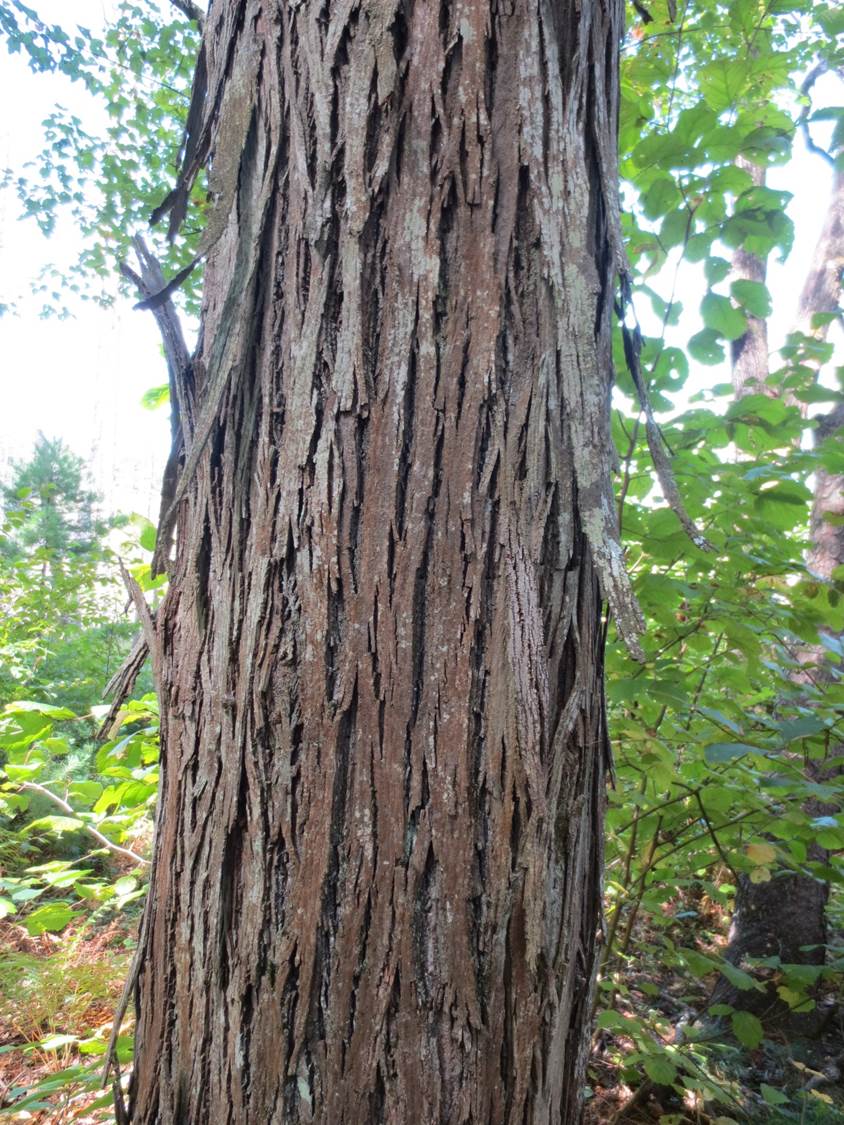
Bark of shagbark hickory tree
While out foraging for shagbark hickory nuts (Carya ovata) in Bolton, MA this morning, I noticed abundant sign of other animals doing the same. Near a beaver wetland in a mixed oak / white pine / red maple / black birch forest, I happened upon one large (about 18 inch diameter) shagbark.
At the base of this tree was a midden pile (2nd photo) of hickory husks, as seen in the second photo. But no nut shell fragments were in the pile, as near I as I could tell. Some husks looked like they had been broken off in their quarter sections, while others had been gnawed open.
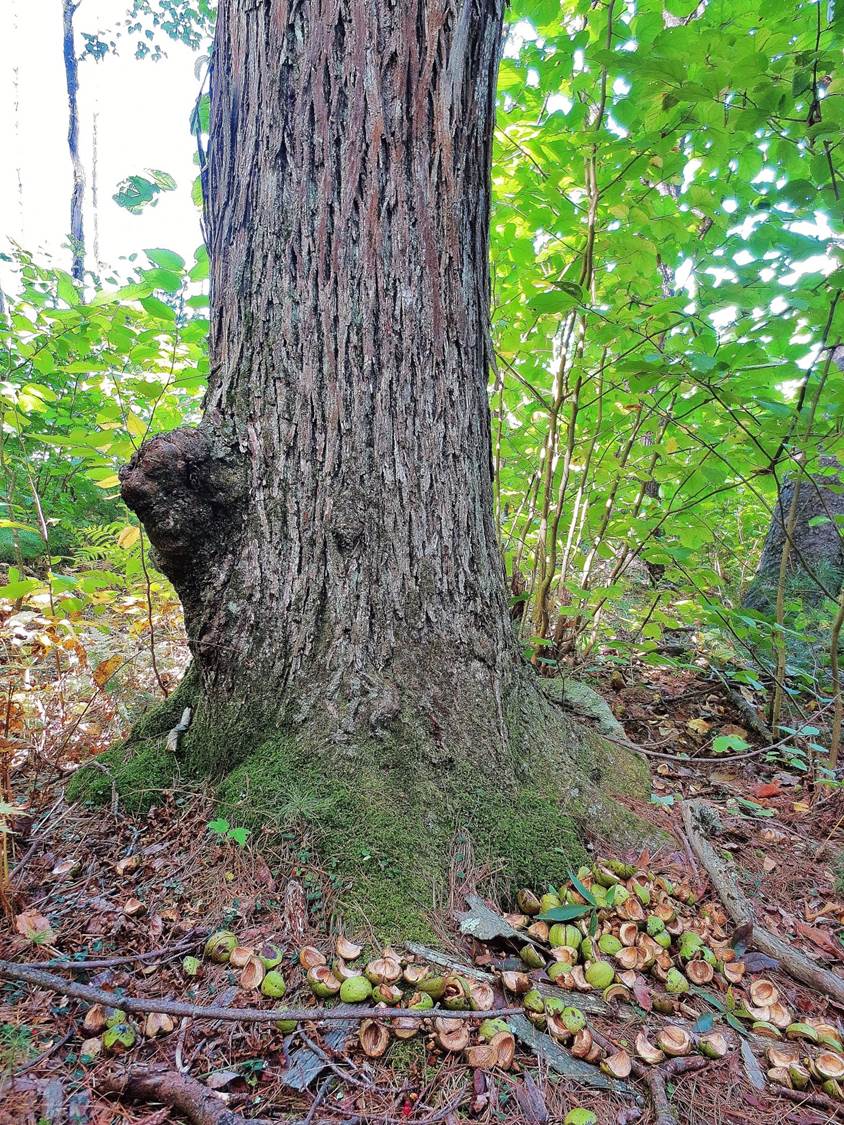
Hickory tree with midden pile of husks
There were plenty of small, gnawed husk fragments at the bottom of the midden pile, under the larger pieces. But, again, no shell fragments. The 3rd photo below shows a closeup of a husk on the midden pile at the base of the tree.
There were additional husk fragments scattered around the vicinity of the tree, but I did not find a single shell fragment, and I looked all around within a 5-10 foot radius.
What species do you think created that midden pile, and why do you think so? Why were only husks present?
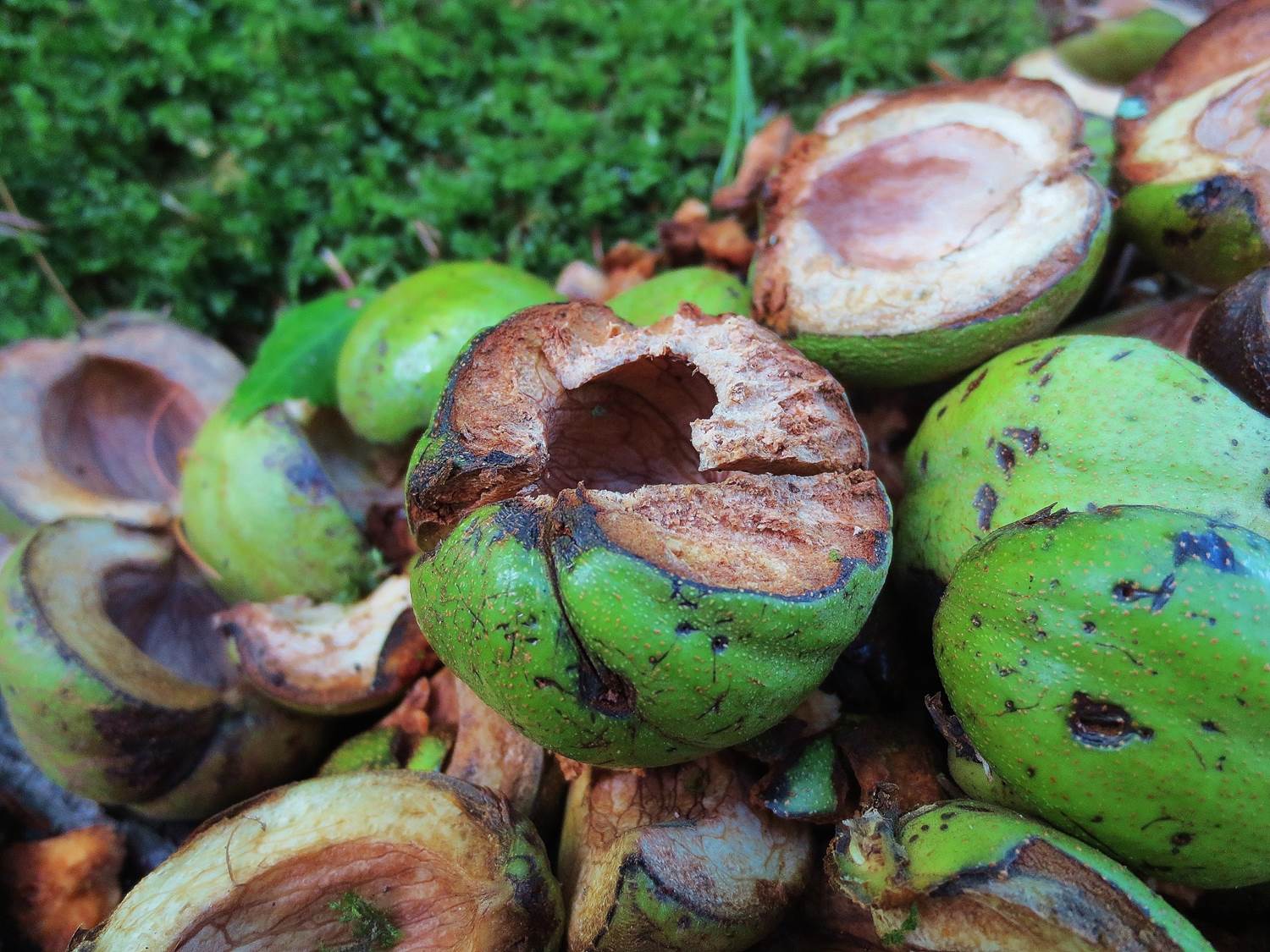
Closeup of husk in midden pile
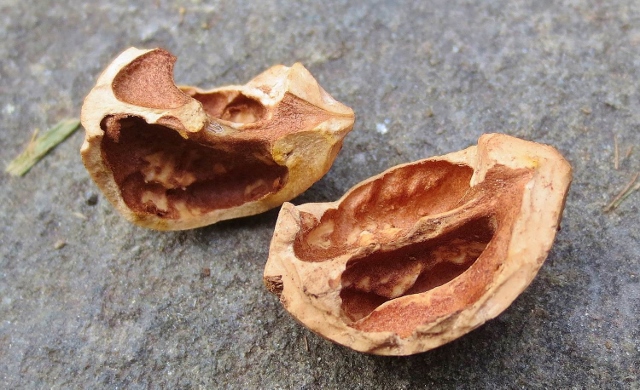
On my way home, I found many shell and husk fragments under another shagbark hickory tree growing along the side of a road. A few of the nuts had small holes on each side, while many other shells had been broken into small fragments of less than half a shell.
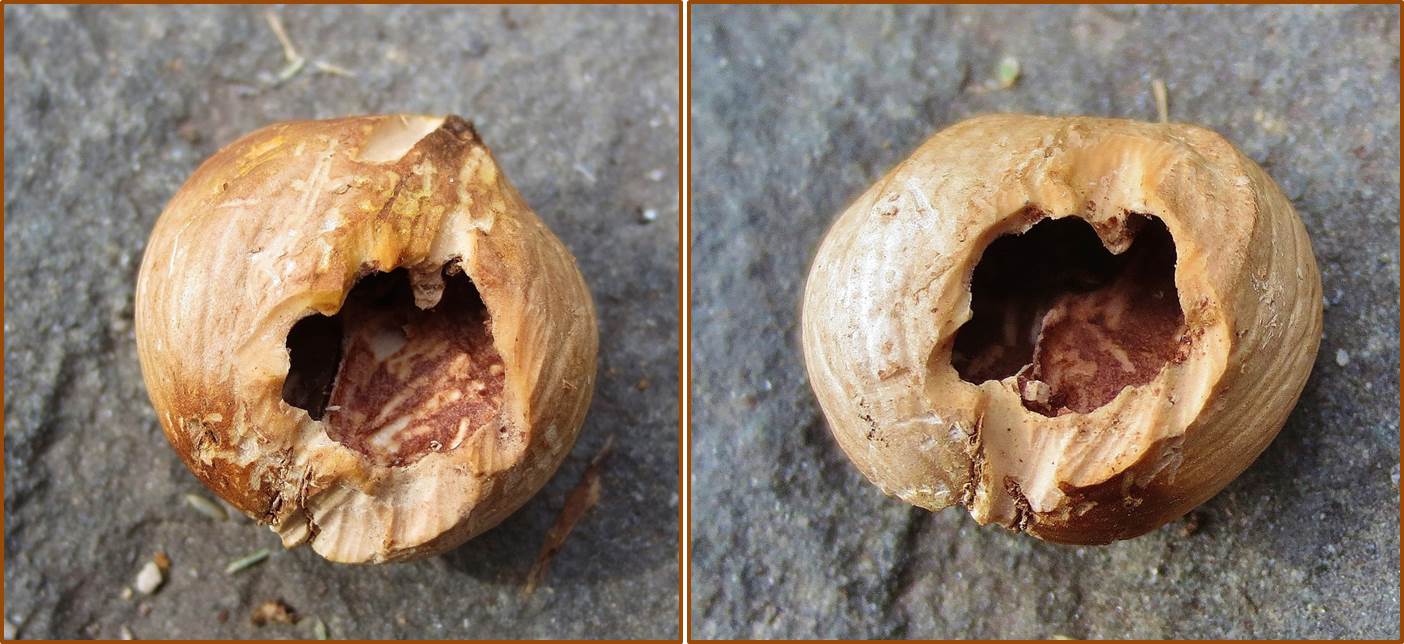
Hickory nut with hole on both sides
What species might have left the shells with holes on either side, as seen in the photo above (which shows both sides of a single nut)?
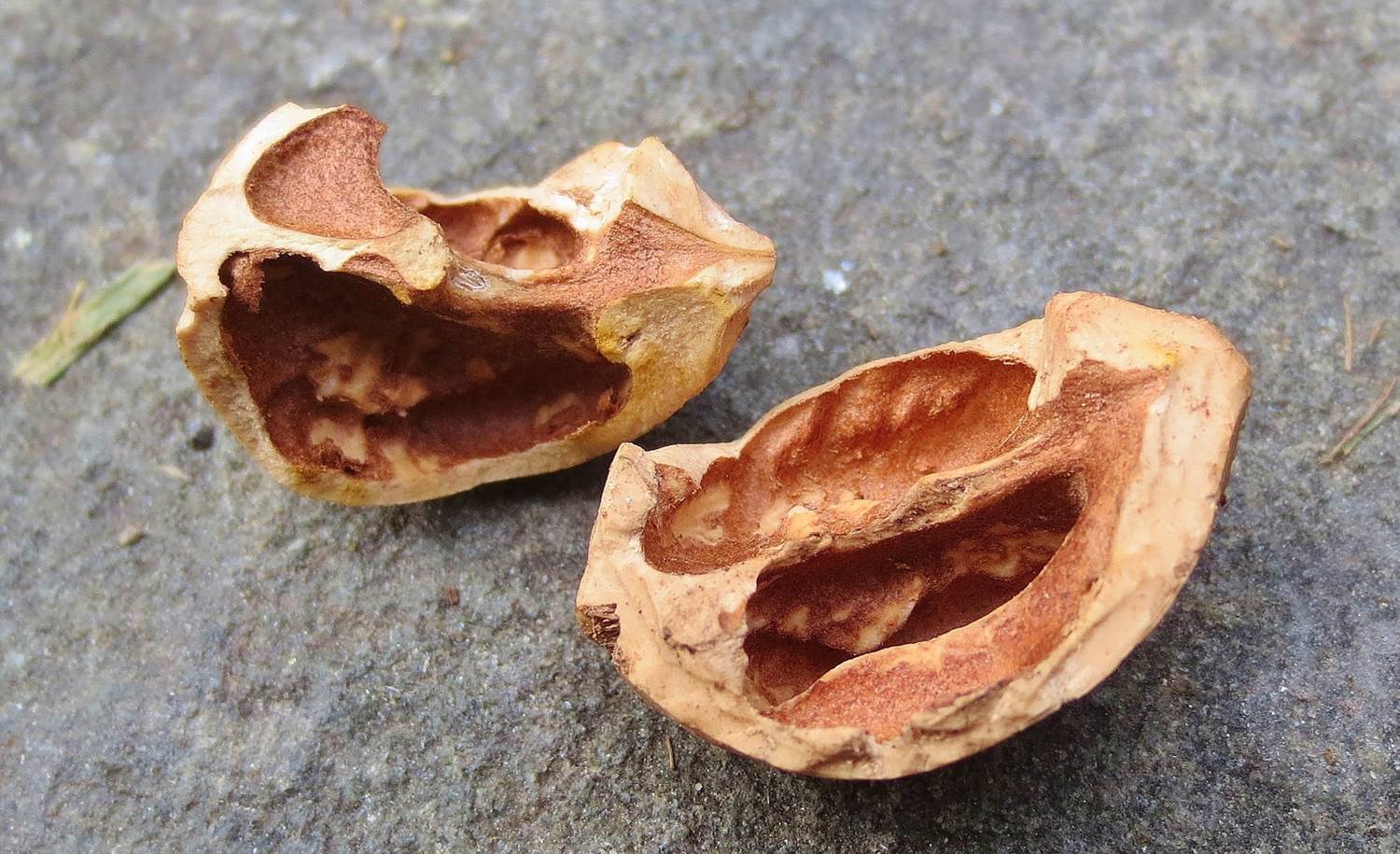
Hickory shell fragments
What species might have left the smaller shell fragments like the ones in the final photo?
I would love to hear anyone’s thoughts, as I am not totally sure of any of the answers! Please respond in the comments section below. Thanks!