
Appreciating the Eastern Coyote and the Story of its Arrival
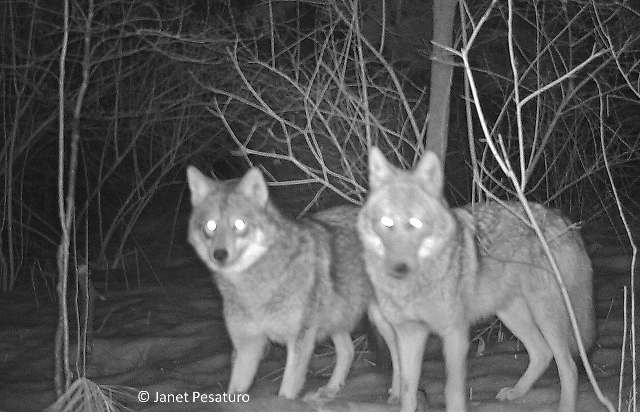
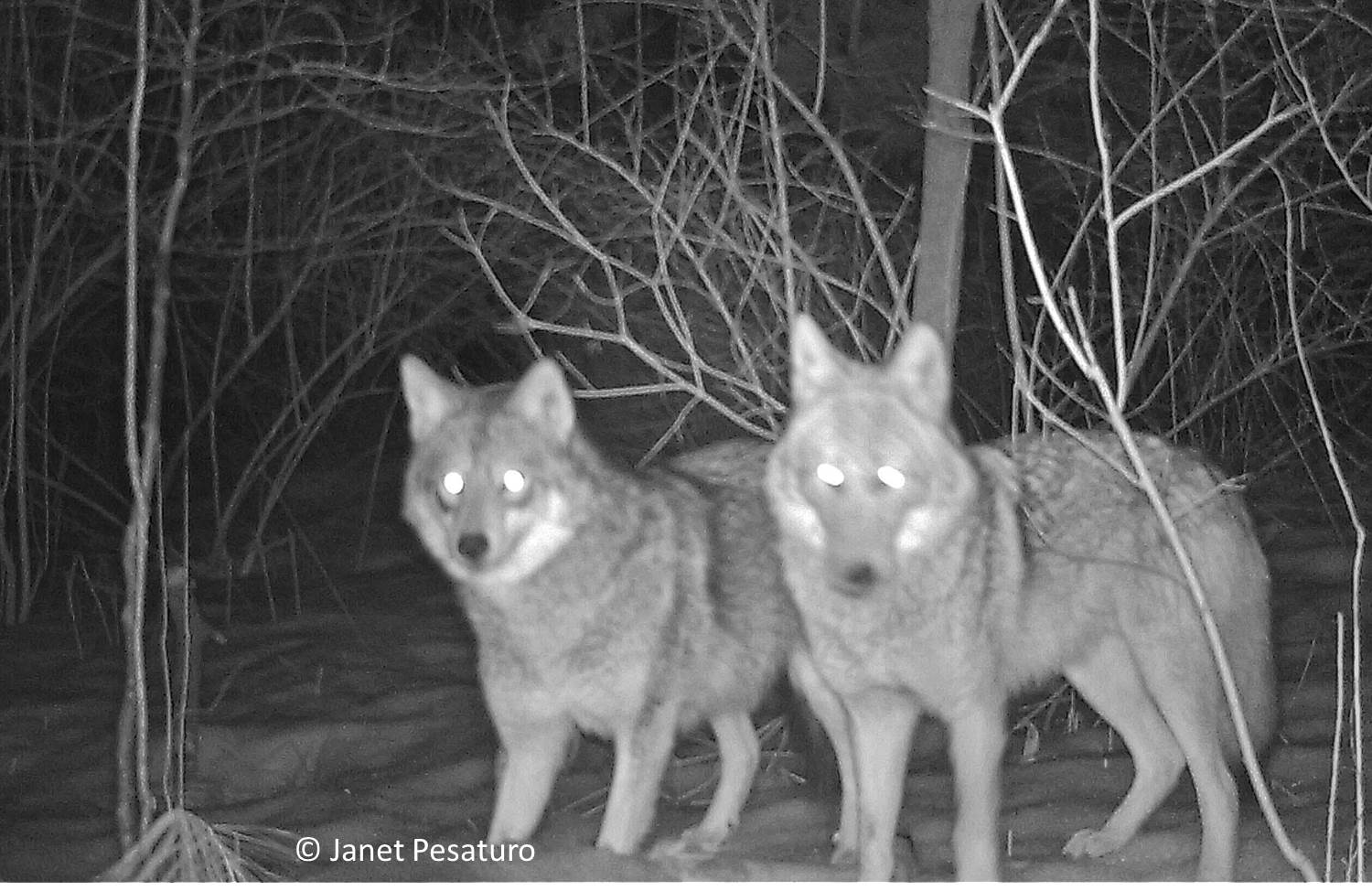
Appreciating the eastern coyote. These two coyotoes were among the cast of characters who visited my baited camera trap.
These clever predators can be quite a problem for both livestock and pet owners, and I’m sure some readers will find this post downright bizarre. But appreciating the eastern coyote is one of the benefits of preventing rather than reacting to attacks by wildlife. In fact, I was delighted to get a glimpse into the life of this striking pair, through my camera trap. I am fascinated with this creature’s wariness, persistence, and social behavior, as well as the ongoing saga of its arrival in eastern North America.
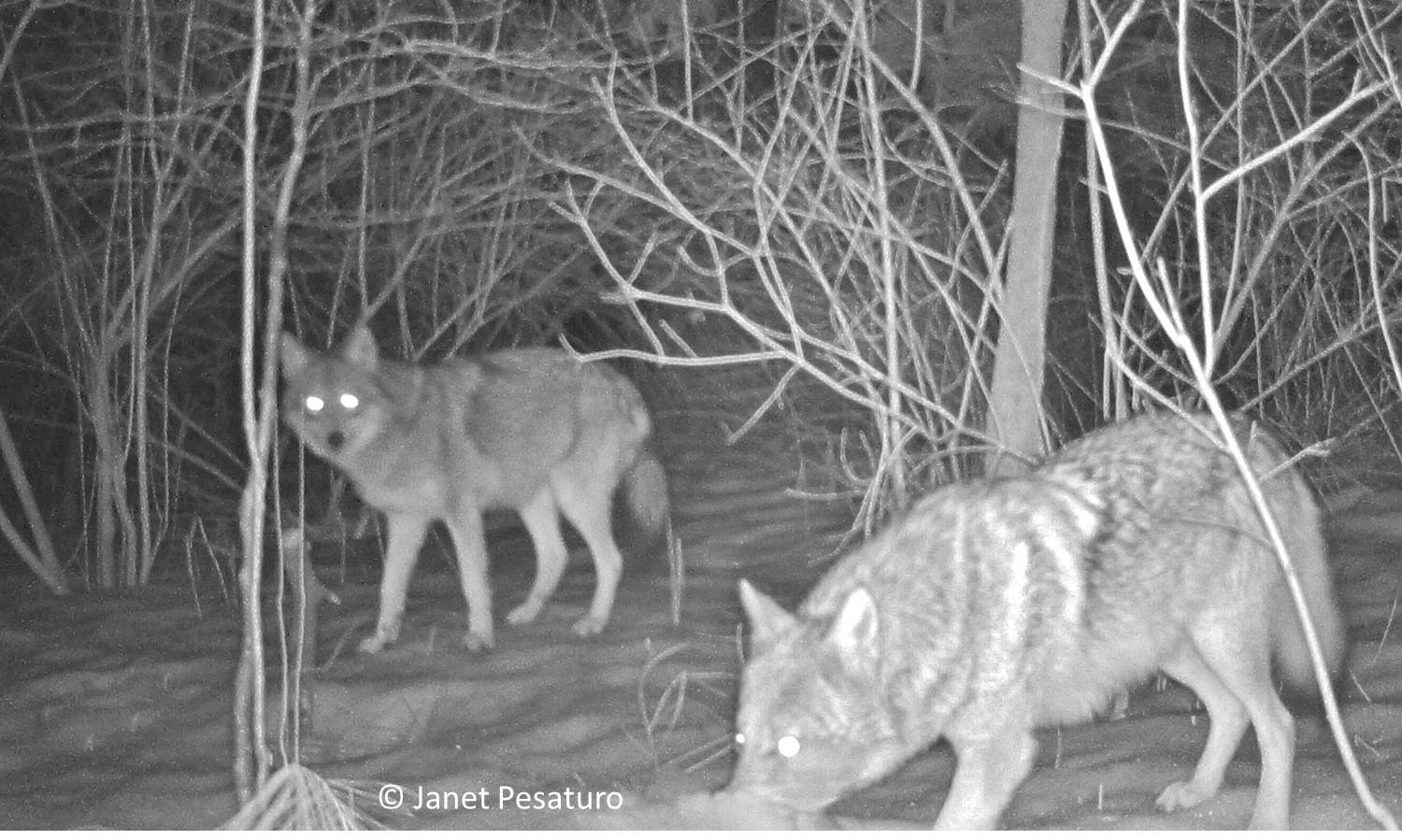
These two eastern coyotes visiting the deer carcass, often looked suspiciously at the camera.
Where did the eastern coyote come from?
The story of the eastern coyote’s emergence is one of evolution in action. Genetic studies show that it is a mix of western coyote and eastern wolf, but with more DNA from its western coyote heritage. Evidently, the western coyote expanded its range eastward as humans cleared forest for agriculture and decimated the eastern wolf population. The rare remaining wolf probably mated with a western coyote when another wolf was nowhere to be found.
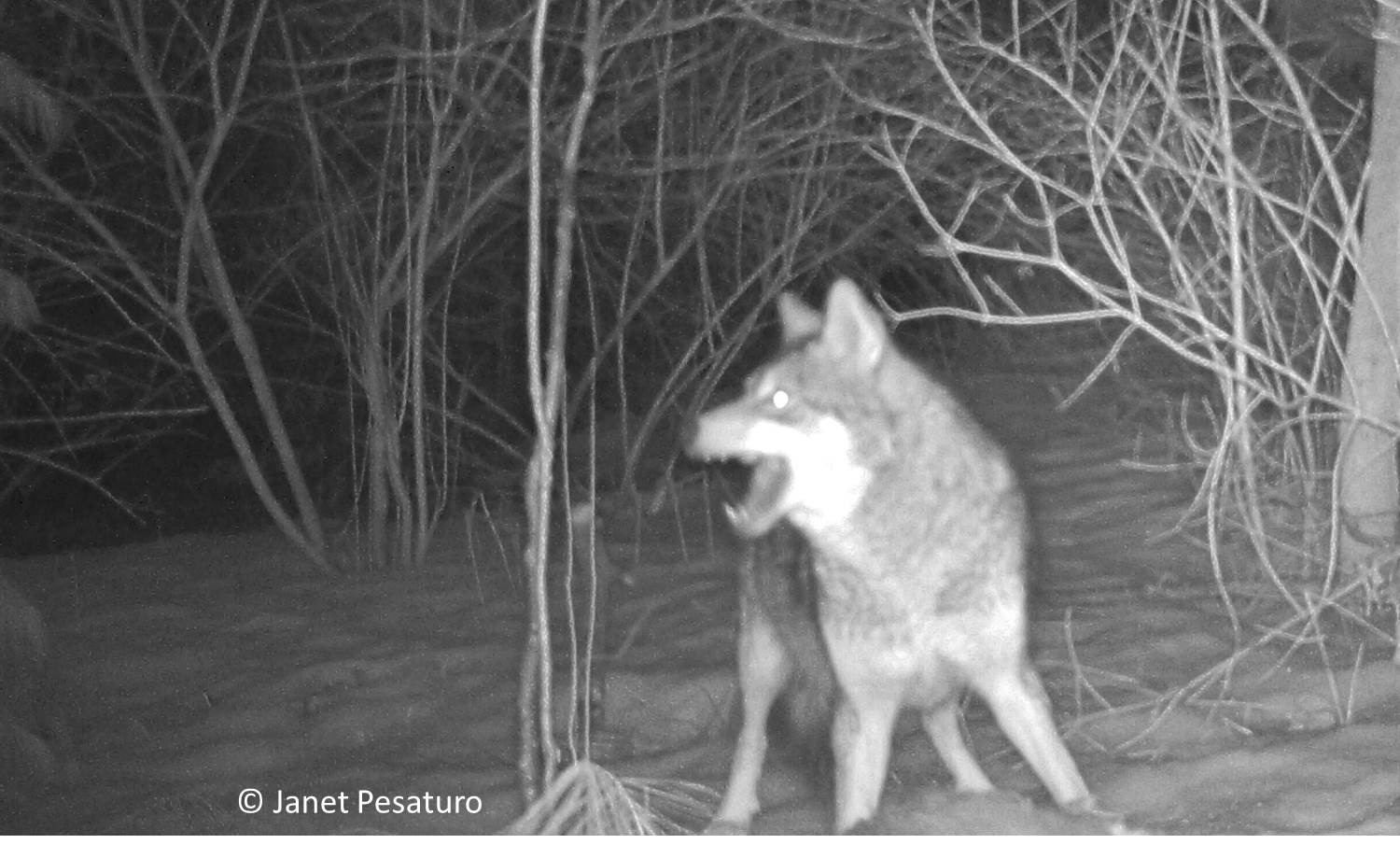
Eastern coyote at deer carcass. When only one appeared alone, it called for the other one, before beginning to feed.
The product of that migration and hybridization, the”eastern coyote”, is a wild canid (member of the dog family) intermediate in size and social behavior. It is larger (35-50 lbs.) than the western coyote (25-30 lbs.), and smaller than the eastern wolf (about 70 lbs.). Like the wolf, it’s more likely to live in small packs and cooperatively hunt larger prey. But, unlike the wolf, the eastern coyote can survive on small prey, which abounds in fragmented suburban and agricultural landscapes.
The intermediate appearance is noticeable in my photos, if you compare them to the western coyote here, and the eastern wolf here. The western coyote has a slender, delicate build, and rather long ears. The wolf has short ears and a broader build. The eastern coyotes in my photos have ears of intermediate length, but I think the animals look about as broad and robust as wolves.
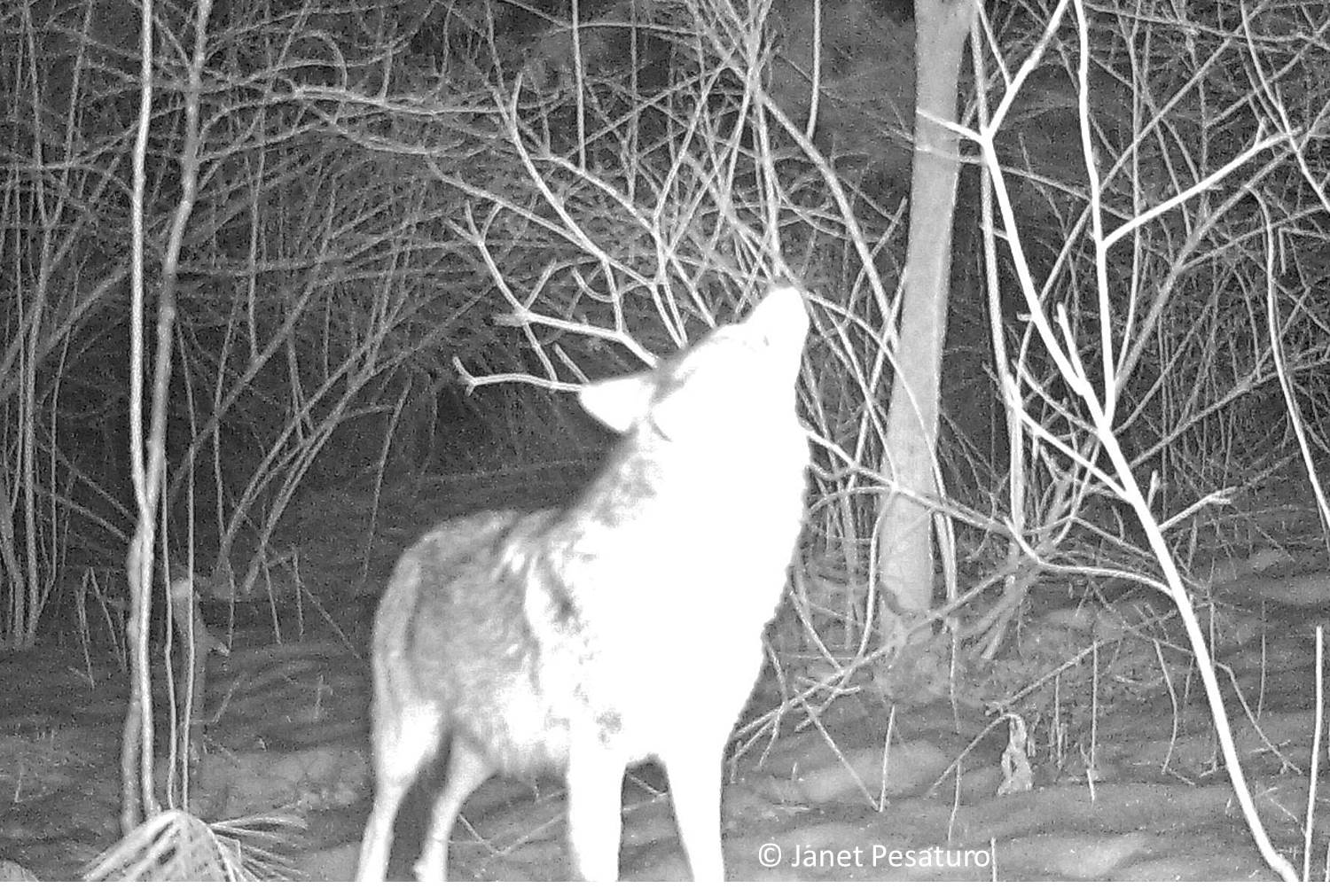
I’ve read that coyotes do not howl to call each other to share food, but photos from my trail camera might suggest otherwise. Sometimes when only one showed up, it appeared to howl or bark. I’m not sure why it would vocalize before eating, if not to call its mate.
Huh? Appreciating the eastern coyote? Isn’t it an invasive species?
Given this history of range expansion and hybridization, some people label the eastern coyote a non-native, invasive species. For many people, that label justifies persecution of this animal whose taste for domestic animals and game species can evoke fury even in dedicated wildlife enthusiasts. And people do kill them, in great numbers. In fact, coyote Biologist Jonathan Way writes that it has been quite difficult to get long term data on coyote behavior, simply because people keep killing his radio collared study subjects. You can read his account in his engaging and compelling (and sometimes humorous) book: Suburban Howls: Tracking the Eastern Coyote in Urban Massachusetts
But I digress. That’s a huge and controversial topic in and of itself…

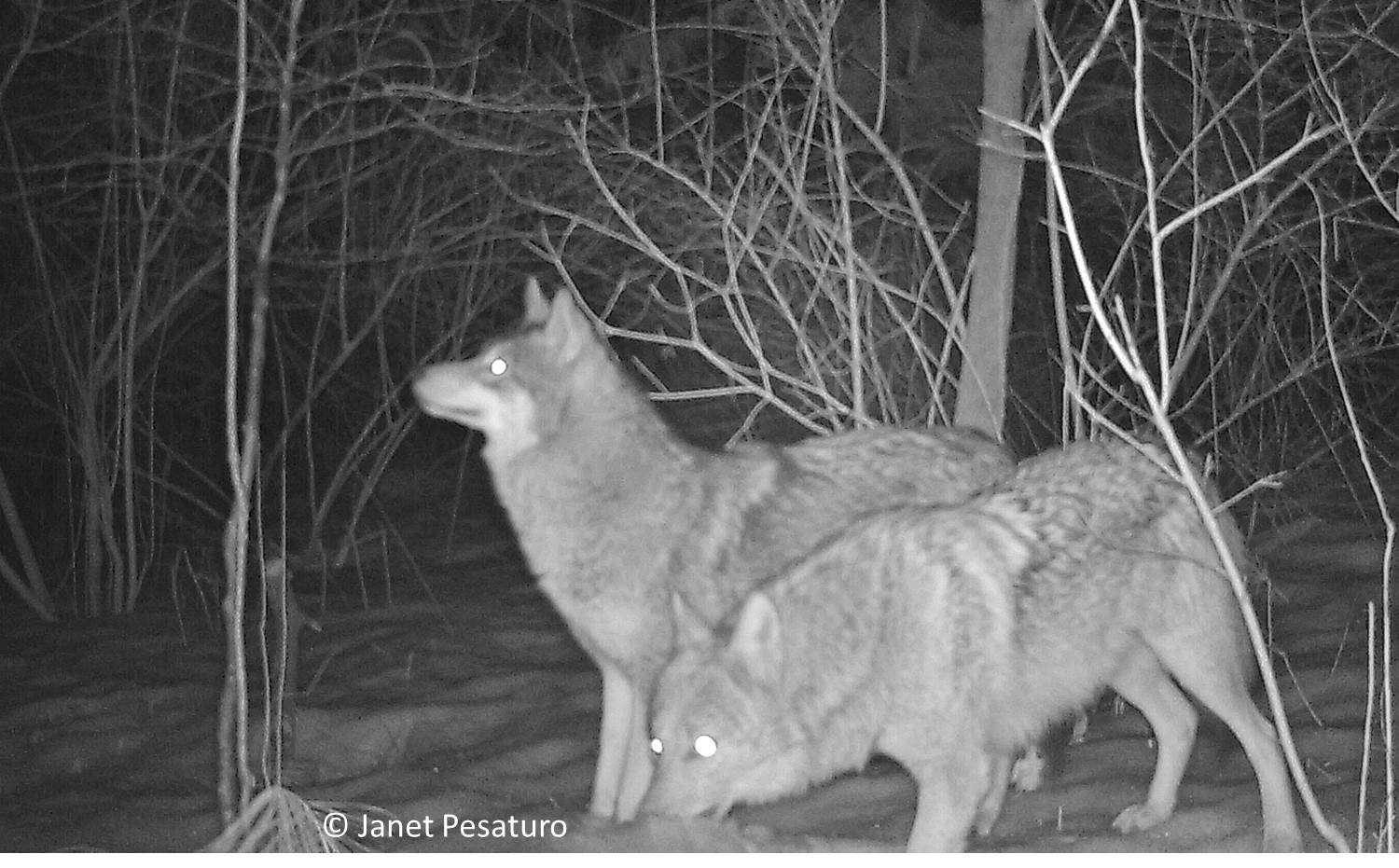
Beautiful pair of eastern coyotes. When together at the deer carcass, one seemed to stay on watch while the other ate.
What about this idea that the eastern coyote is a non-native, invasive species? That’s not an easy question to answer. Biologists define native species as those which evolved within the region, or arrived and established themselves without human assistance. That doesn’t help us too much, because, in my opinion, one could argue either way.
The sticking point is that human-induced landscape changes probably helped them move eastward. However, other human activity (namely relentless, direct killing) likely hindered them. So the coyote got here both because of, and in spite of, human activity. Finally, one could argue that even if it was encouraged by human induced landscape changes, the eastern coyote is merely reclaiming a pre-existing, wild canid niche, occupied by wolves before humans devastated them. In a sense, the eastern coyote is Nature’s way of returning wolf genes to the east, packaged in a smaller animal that can thrive within the highly fragmented, human dominated landscape.
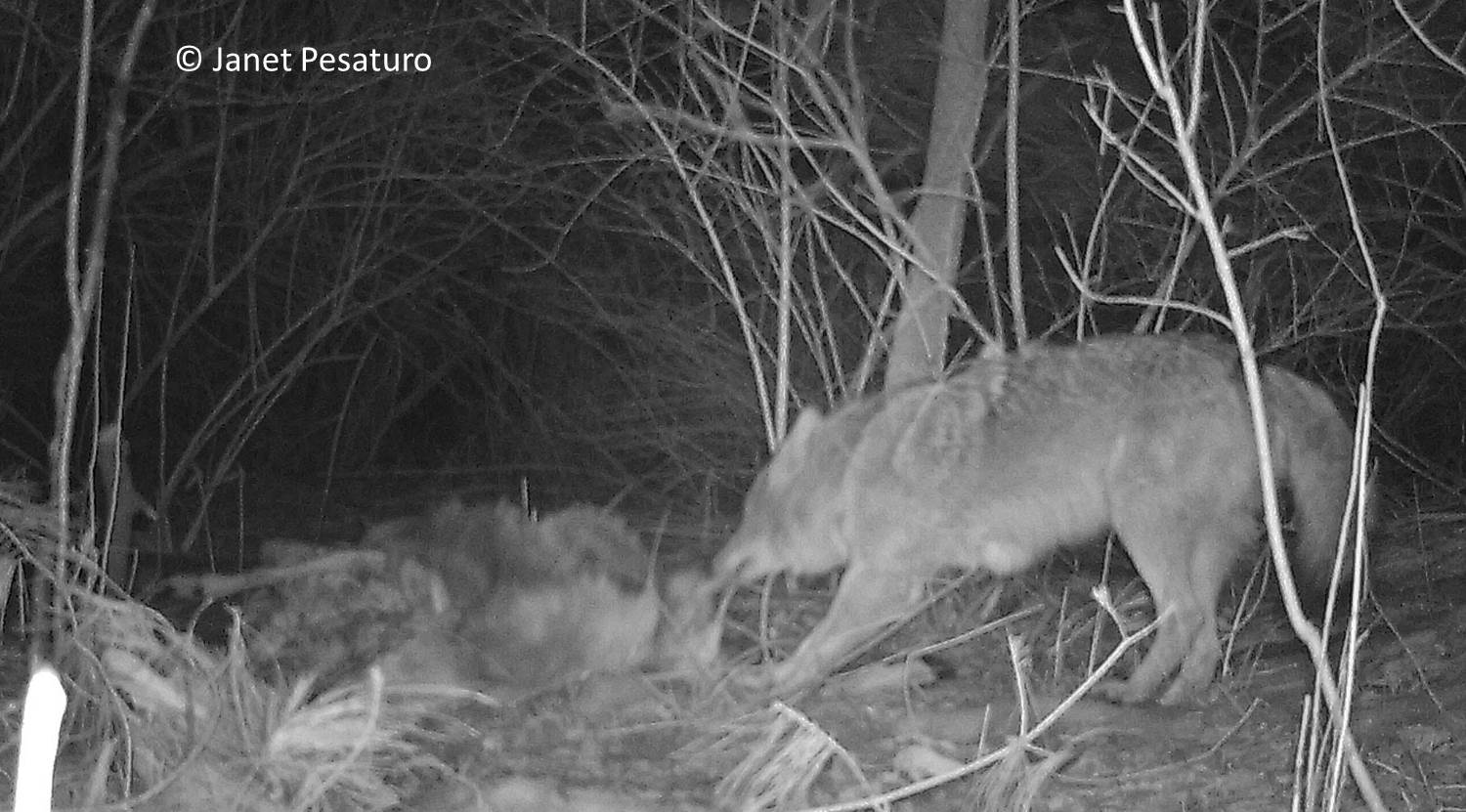
The deer carcass was frozen to the ground for days, but here the persistent canid finally succeeded in dragging it to a secluded spot, about 20 feet away. I then moved the camera to the new site of the carcass, but the coyotes dragged it away again.
The eastern coyote is an evolving entity, possibly on its way to becoming a new species, and perhaps already deserving of that distinction. Like all species, it emerged as a result of selection pressures and opportunities within the changing environment. Indeed, the eastern coyote’s story exemplifies evolution, the very process which allows for the continuation of life within the ever changing conditions on Earth. I find it hard to condemn the product of such a beautiful process.
Additional Sources of information:
- Coyote, (Schadler)
- Project Coyote
- Genetic Characterization of Eastern “Coyotes” in Eastern Massachusetts (Way, et al.)
How do you feel about coyotes? Fear, anger, hatred? Admiration, tolerance, love? Or ambivalence?
Shared on: Homestead Barn Hop #158, Heritage Homesteaders Hop #10, Thank Goodness it’s Monday #69, Backyard Farming Connection #79, Down Home Blog Hop #86, HomeAcre Hop #69, Wildcrafting Wednesday #136, From the Farm Blog Hop, Simply Natural Saturdays, Mountain Woman Rendezvous #45, Simple Life Sunday #17