
4 Benefits of a Mixed Flock of Backyard Chickens
4 Benefits of a Mixed Flock of Backyard Chickens
Never one to act on impulse, I perused one book cover to cover, and countless articles and internet posts on raising chickens, before I ever got them. I recall the wise words of one enlightened author who disparaged the silly “rainbow” flocks of frivolous suburban wannabe farmers. Because, of course, anyone who cares about food security, as we all should, would breed their own birds, contributing to the preservation of heritage breeds.
I care about food security, but I don’t think I need to breed chickens to prove it. Nonetheless, I carefully considered the possible advantages of a single breed for a small backyard flock. But I didn’t see any. At all. I might let a hen raise a few chicks every few years, but that wouldn’t impact the integrity of the breeds one way or another. Those “mutts” would live and die in my backyard. A single breed flock didn’t seem to be of any particular benefit, at least in our case.
Sure, my rainbow orders of 1 of this and 2 of that probably drive hatchery employees crazy, but hatcheries set their price and I pay it.
And now? So glad I caved in to frivolous desire, because I see great advantage to a mixed backyard flock.
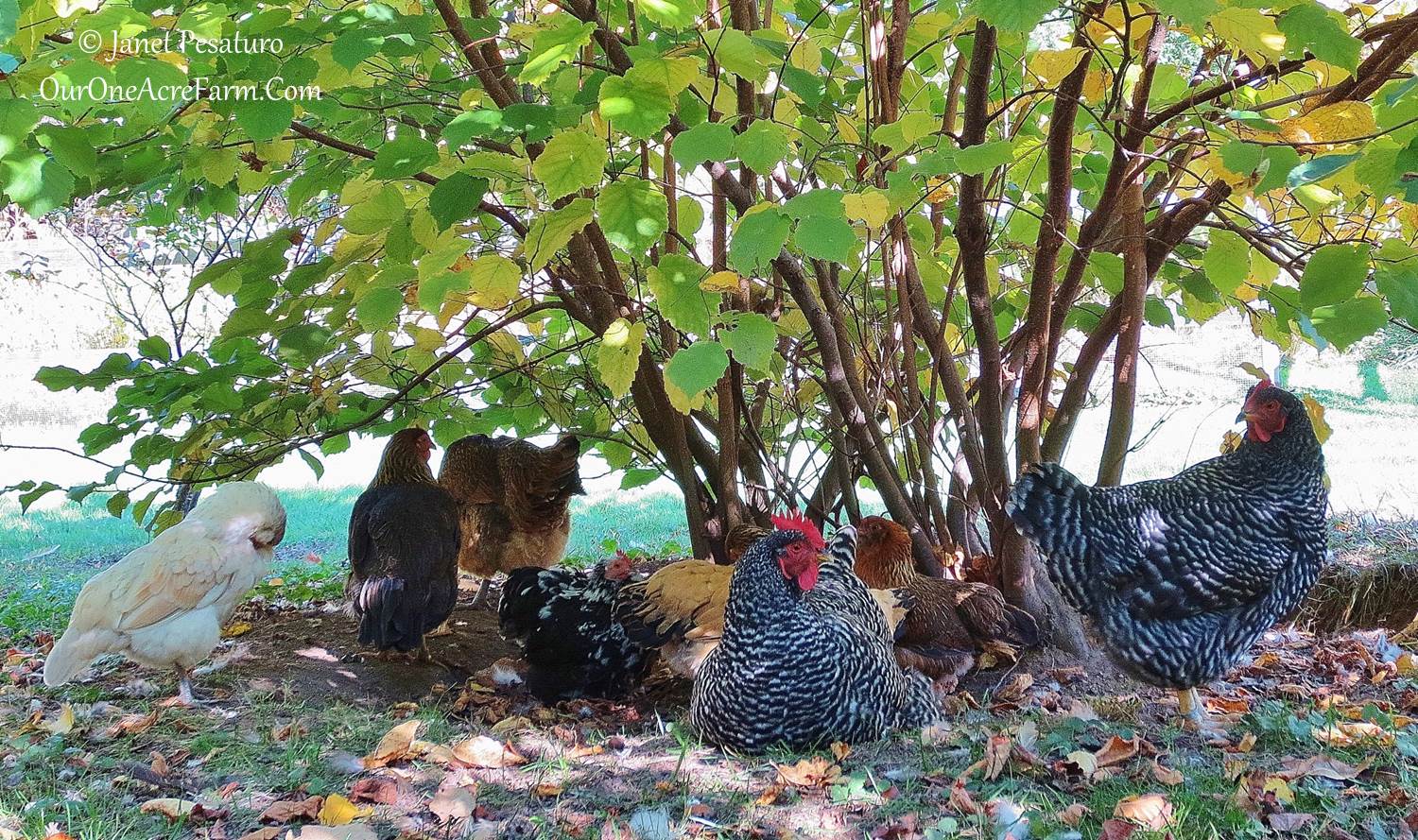
Here’s my motley crew of hens. They’re all unique individuals and lay beautiful eggs.
4 benefits of a mixed flock of backyard chickens
1. You can quickly and easily tell your birds apart
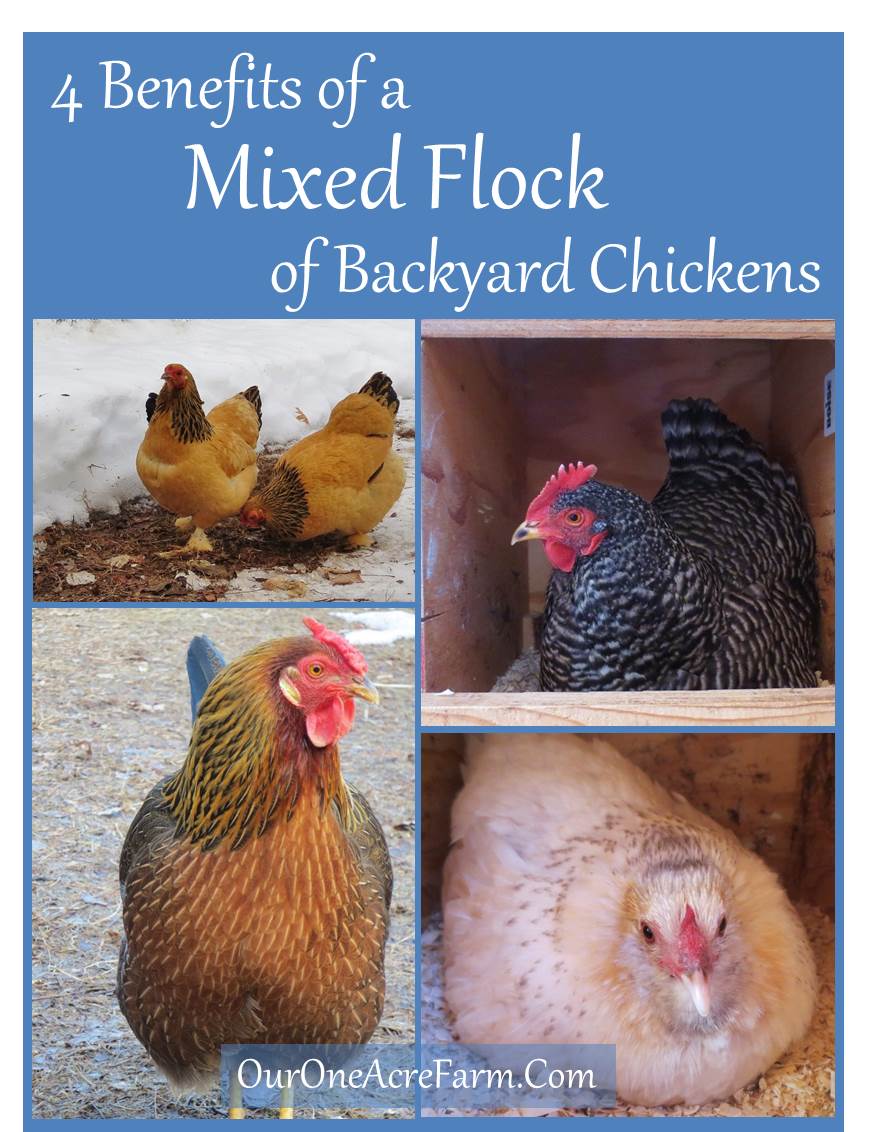
Individuals within a breed do vary somewhat in appearance, but the differences can be slight. But if you have only 1 or 2 of each breed, you can quickly and easily tell them apart. That is helpful for several reasons:
- You can easily follow the behavior of an ailing bird.
- You can better appreciate their fascinating social interactions and varied vocalizations, if you can observe who is doing and saying what.
- You come to appreciate the fact that chickens are all individuals with distinct personalities and preferences. This has tremendous implications for the welfare of “livestock”. People need to understand that farm animals are not food producing machines, incapable of experiencing pain and suffering. So if you have a “rainbow flock”, invite your friends and neighbors to get to know each member. Maybe they’ll funnel their dollars away from CAFO’s, and support humane farms.
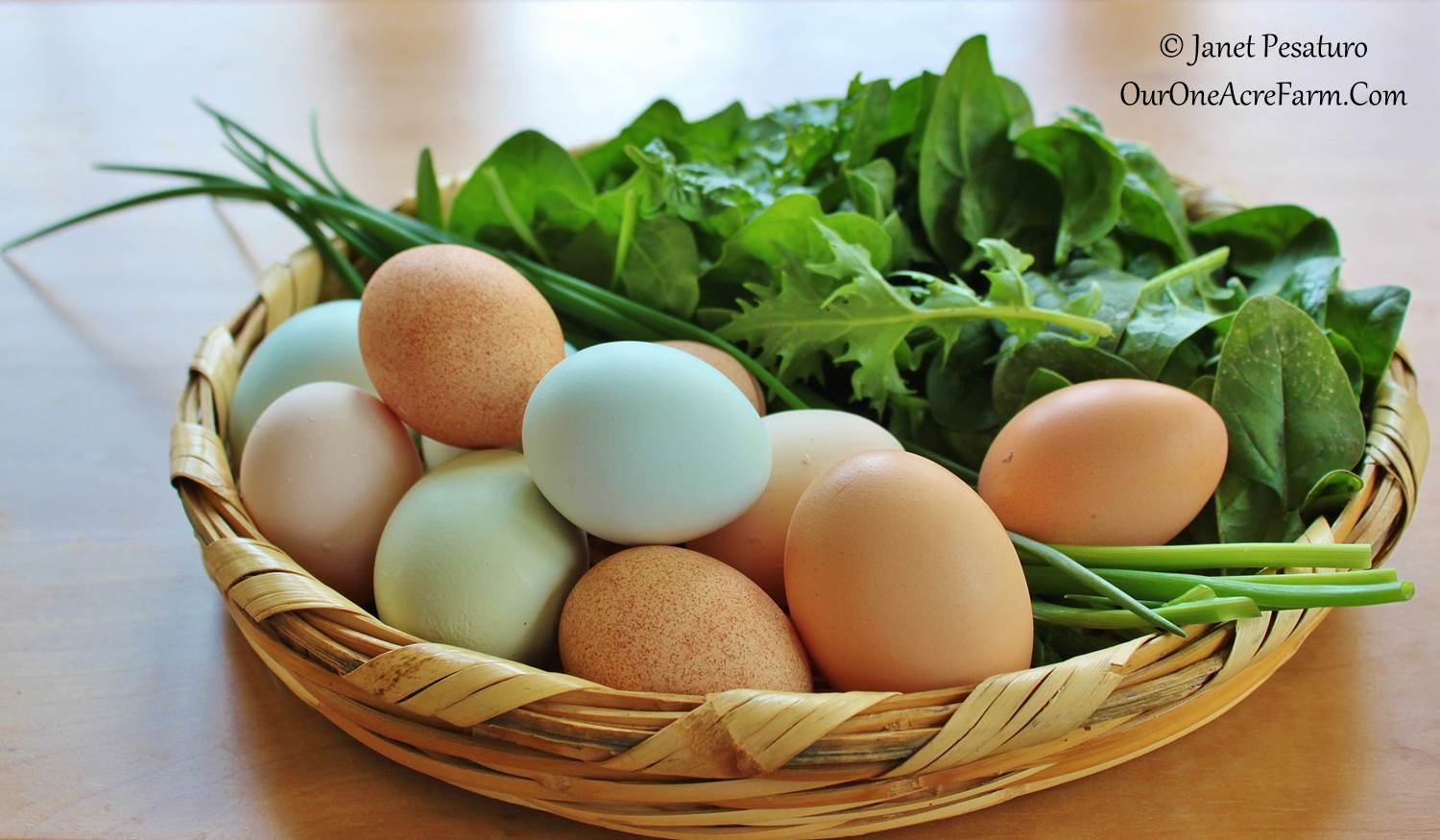
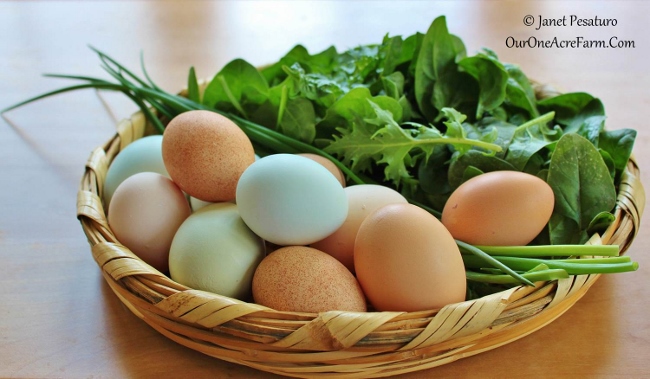
A pile of eggs from my flock. I can usually tell who laid each egg.
2. You can tell which hen laid which egg
Each breed lays eggs of a characteristic size and color. Color ranges from white to light brown to dark brown to olive to bluish. So, if you choose breeds that lay eggs of different sizes and colors, it’s possible to determine which hen laid which egg. And that is quite useful, if you want to know which hens are laying well, and which are not. It also makes it easy to determine who is laying the abnormal eggs, which can indicate illness.
I have a mix of bantams, full sized birds, brown egg layers, blue-green egg layers, and white layers. So it’s pretty easy to narrow it down when I want to know who is laying what.
Note that there is some individual variation within a breed, so you might be able to recognize the eggs of a given hen, even if you have a few others of her breed. The eggs will vary a little by color and shape. Some hens frequently lay speckled eggs, others don’t. Some hens lay long, narrow eggs, and others lay rounder eggs. However, you must see a hen actually lay an egg in order to know exactly what hers look like.
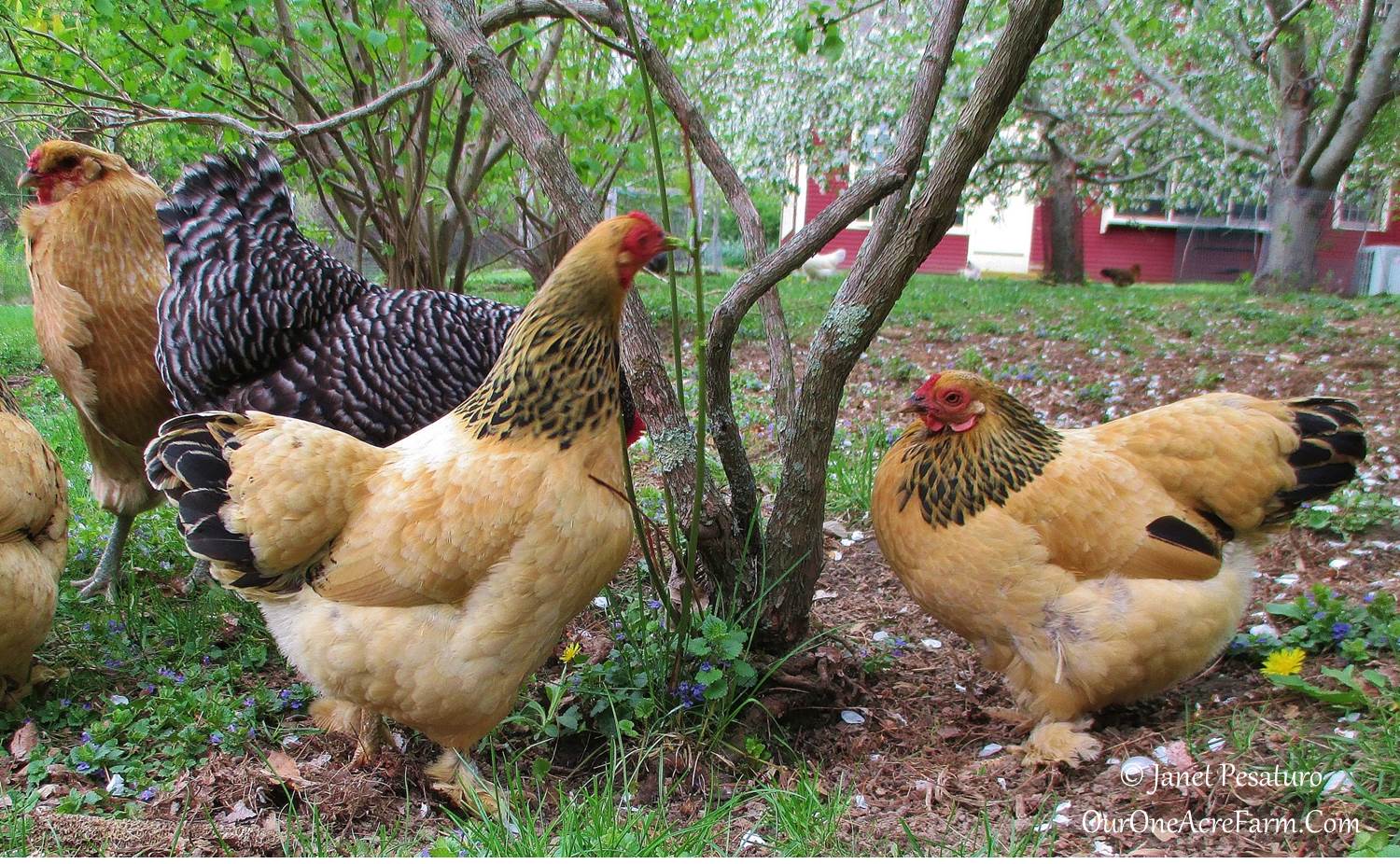
The 2 chunky bantam brahmas in front are good winter layers of brown eggs, but slender, white egg laying breeds, lay better in spring.
3. You get steadier year-round egg production
Different breeds lay better in different seasons. The brown egg laying heavier breeds, such as Wyandottes and Brahmas, lay better in winter. But the slender, white egg laying breeds, like Hamburgs, have a steeper surge of egg production in spring. I kind of like having the eggs spread out over winter and spring.
In fairness to the single breed philosophy, I should add that for excellent year round egg production, you could raise “production breeds”, such as leghorns, black stars, or red stars. However, extremely high egg production in these breeds is maintained at the expense of bone strength (Hoking et al. 2003). You can provide supplemental calcium, but the hen’s genetic make-up has a greater impact than nutrition, on her vulnerability to osteoporosis (Fleming, et al. 2006). In fact, the Animal Welfare Approved certification program prohibits highly bred chickens.
4. You can keep just a couple of broody prone birds
Broodiness, or the tendency to set on eggs, is necessary if you want the hen to hatch some eggs and raise the chicks. Hens don’t lay eggs while broody, so you don’t want a whole flock of broody hens if you want steady egg production. But you might want a couple of broody prone hens, just in case you want to let one hatch some eggs. For the rest of the flock, choose breeds that don’t tend to go broody.
There are many choices in both categories. I have a bantam cochin and 3 bantam Easter eggers all of which tend to go broody. But the remaining hens in my flock of 15 virtually never go broody, providing steady egg production.
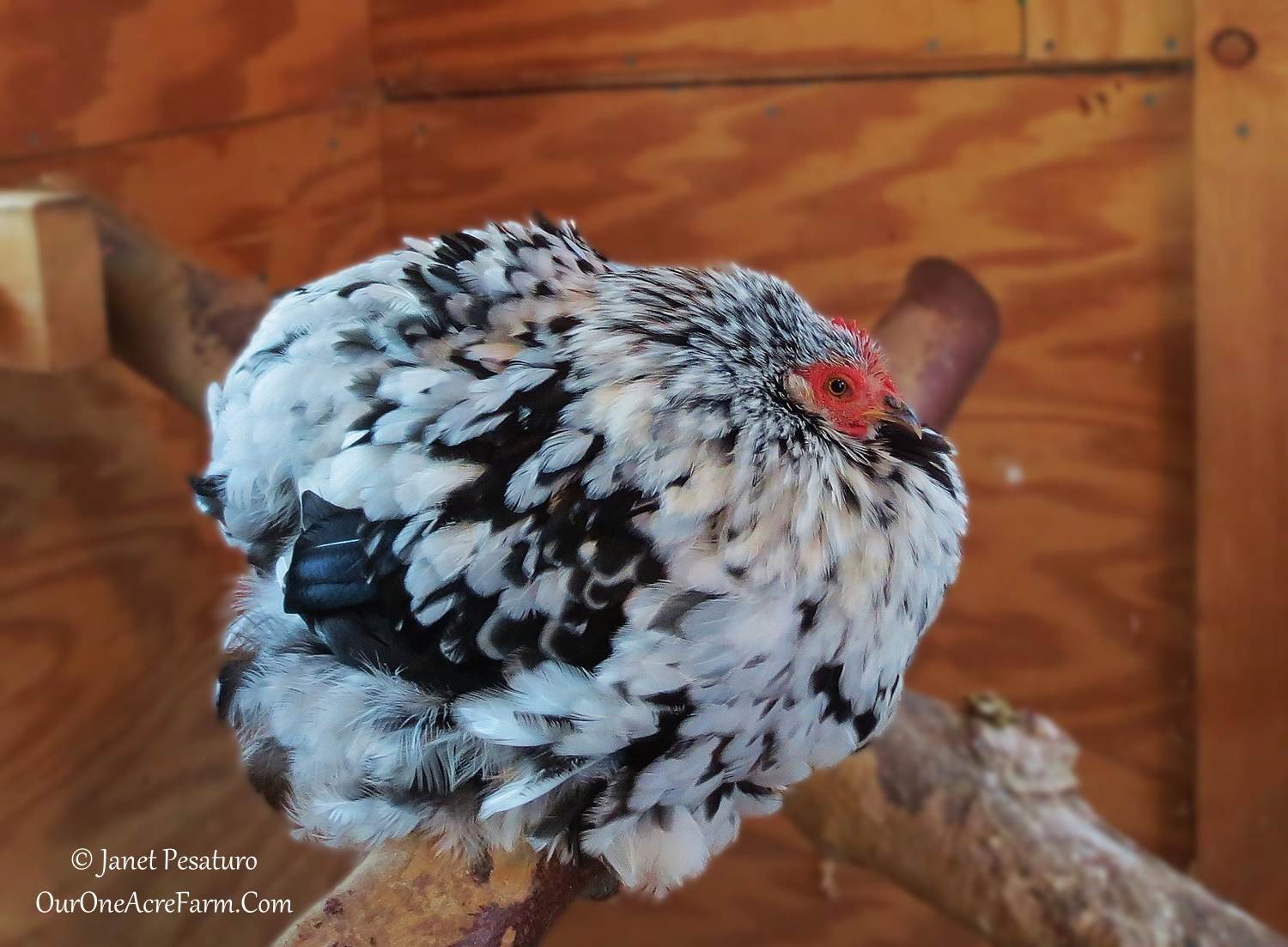
This bantam cochin goes broody every summer. She doesn’t lay many eggs, but she can hatch them.
Sources
- Fleming, R. H., et al. 2006. Relationships between genetic, environmental, and nutritional factors influencing osteoporosis in laying hens. British Poultry Science. 47(6): 742-55.
- Hocking, P. M. et al. 2003. Genetic Variation for egg production, egg quality, and bone strength in selected and traditional breeds of laying fowl. British Poultry Science. 44(3): 365-373.
Do you prefer a mixed or single breed flock? Why?
Shared On: Homestead Barn Hop, Thank Goodness it’s Monday, Natural Living Monday