
Autumn Olive Jam and Why You Should Make It

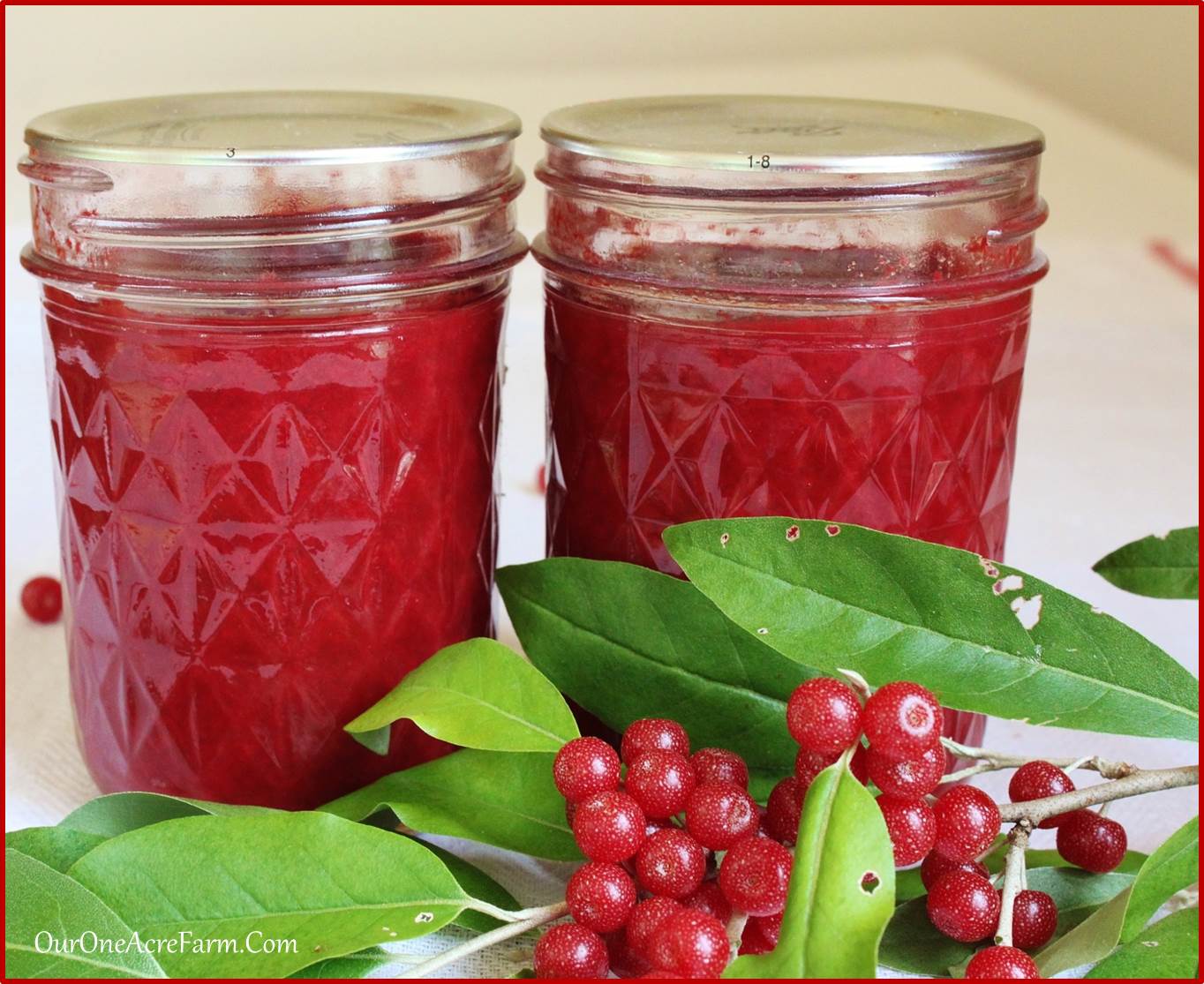
Autumn olive jam
This autumn olive jam is thick and delicious, and full of health-promoting anti-oxidants. I use the old fashioned cook down method, boiling off a lot of water. That helps prevent separation into a watery layer and a pulpy layer, which happens to autumn olive jam when you take a short cut and add pectin. Autumn olive is a great edible wild berry for jam, because it’s nice and tart. And also because the boiling process kills the seeds, preventing propagation of this invasive plant.
Native to Asia, Eleagnus umbellata goes by the common names of autumn olive and, more generously, “autumn berry”. Because it is an invasive, non-native plant, autumn olive is an ecological problem here in North America. Conservationists spend a lot of time, effort, and money poisoning it. You can help reduce the chemical warfare by eating the nutritious and delicious berries.
If you live in eastern or northwestern North America, chances are good that you have autumn olive growing right under your nose. For information on how it identify it and where to forage for it (as well as its health benefits), read this.
BUT, if you don’t have it in your area, please do not plant it. Instead, purchase frozen autumn olive berries from this company, which harvests them from the wild, for sale to you, and to restaurants. I wholeheartedly agree with their vision: “…by turning this invasive species into a useful commodity, we can transform land that is overcrowded with autumn olive trees into productive, diverse, and profitable forest farms.” Amen! Now isn’t that better than chemical control?
About autumn olive jam
- After boiling and straining, you can put the remains in the compost without worrying about spreading the plant, because boiling the berries kills the seeds.
- A couple of under-ripe apples are used because their high pectin content helps the jam to set. I use under-ripe McInthosh apples because they soften quickly when cooked and go through the food mill easily, and because I grow them in the backyard.
- I used 1/2 cup sugar for every 1 cup of juice/pulp, because I like the tartness. But in the past I have used 3/4 cup sugar for every 1 cup of juice/pulp, to get a more typically sweet jam. Use whichever you prefer.
Autumn olive jam recipe
Makes a little more than four 1/2-pint jars
- 7 and 1/2 cups ripe autumn olive berries
- 3 cups water
- 2 unpeeled, under-ripe apples (preferably McIntosh – see above), cored and chopped, to add a natural source of pectin
- 1 and 1/2 tbsp lemon juice
- 2 cups sugar
- Simmer the berries, apples, and water in a large pot for about 15 minutes, gently mashing the berries, and stirring frequently.
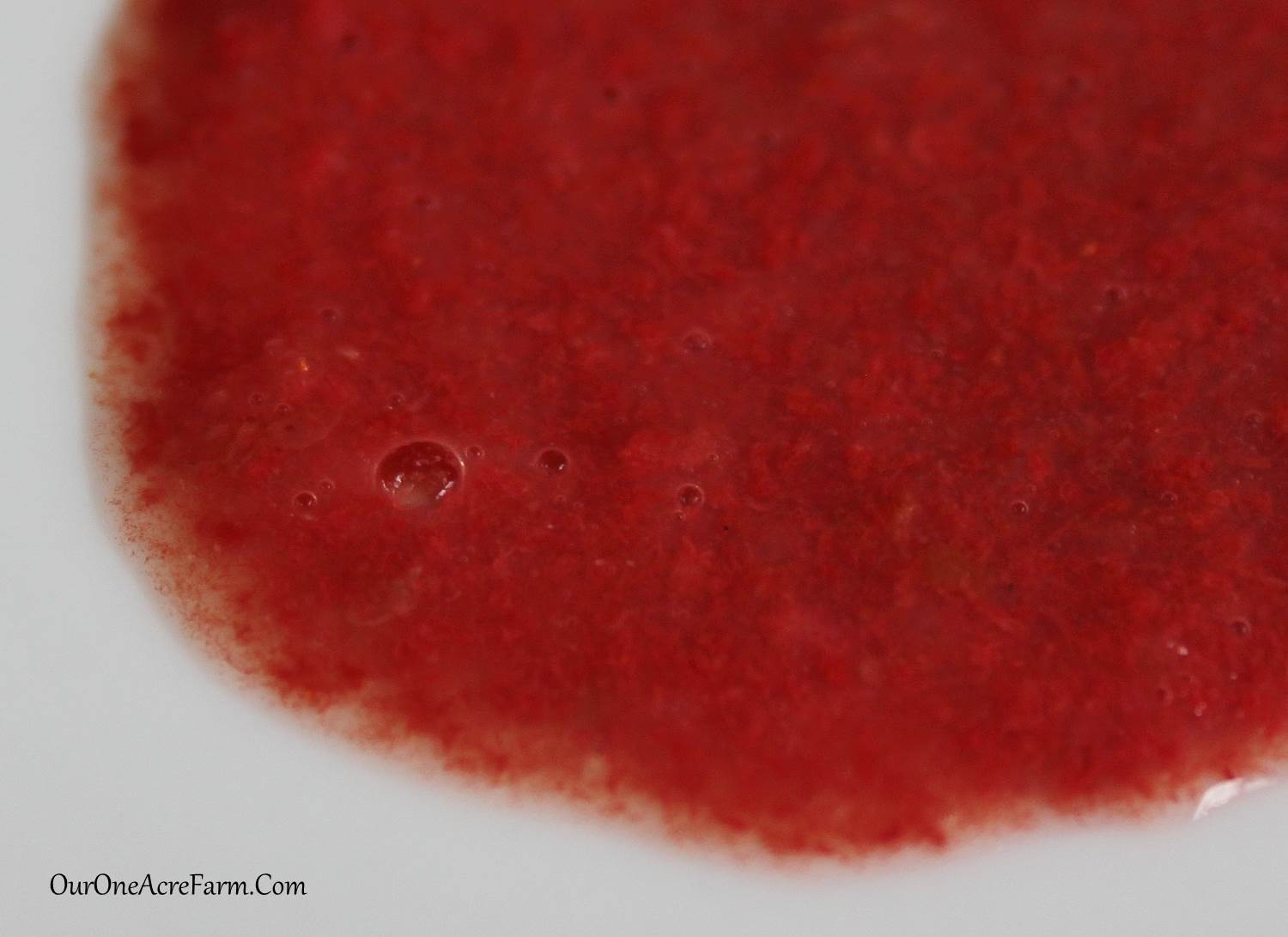
- Put the hot mixture through a food mill to remove the seeds and apple peels, pushing through as much pulp as possible. You should have about 4 cups of juice/pulp. The pulp tends to separate into a watery layer and a red pulpy layer, as you can see in the photo.
Pulp/juice after running the boiled berries through food mill. Note how it tends to separate.
- Add the juice/pulp to a large pot, with the sugar and lemon juice.
- Bring to a boil and simmer, stirring frequently (constantly towards the end, to prevent scorching), until it sheets off the spoon, or reaches desired thickness. It will take 15-20 minutes. Do not use temperature to test for doneness. It gets quite thick well before the “jelling point” of 220 degrees F, and sets into a firm jam as it cools.
- Pour into sterilized half-pint jars, leaving appropriate head space.
- Cover with sterilized lids, screw on the rings, and process in boiling water bath for 15 minutes.
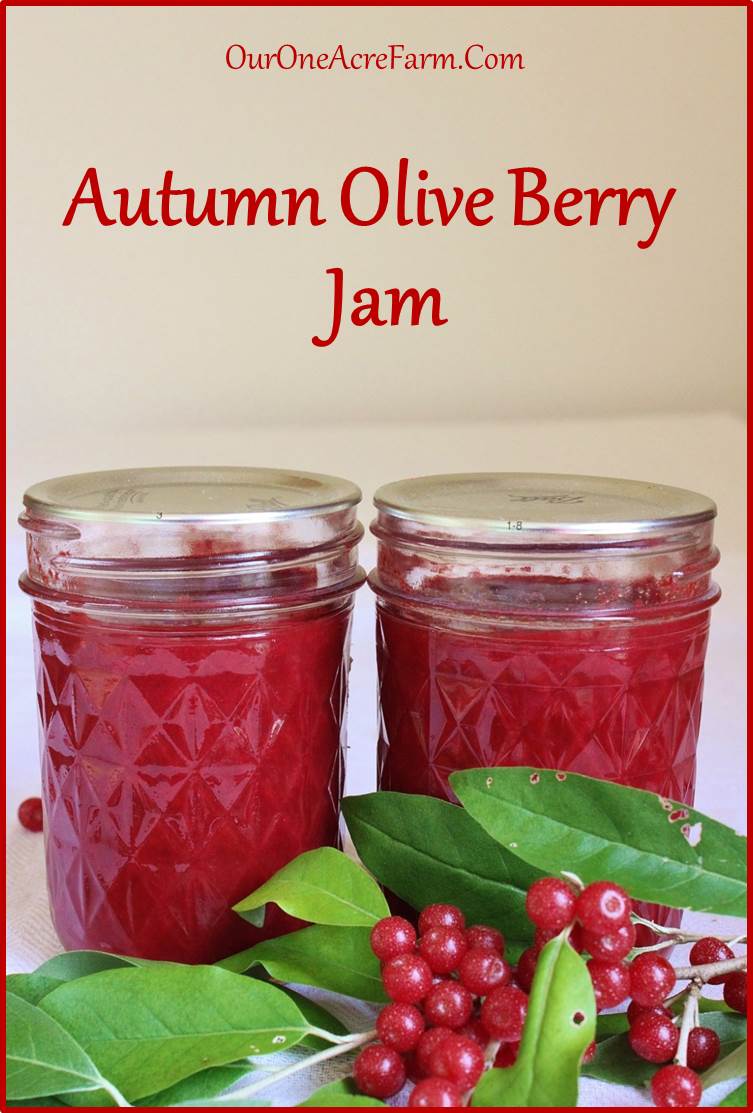
Autumn olive jam
Do you have autumn olive in your area? Have you made anything with it?
Shared On: Homestead Barn Hop, Thank Goodness it’s Monday, Natural Living Monday